
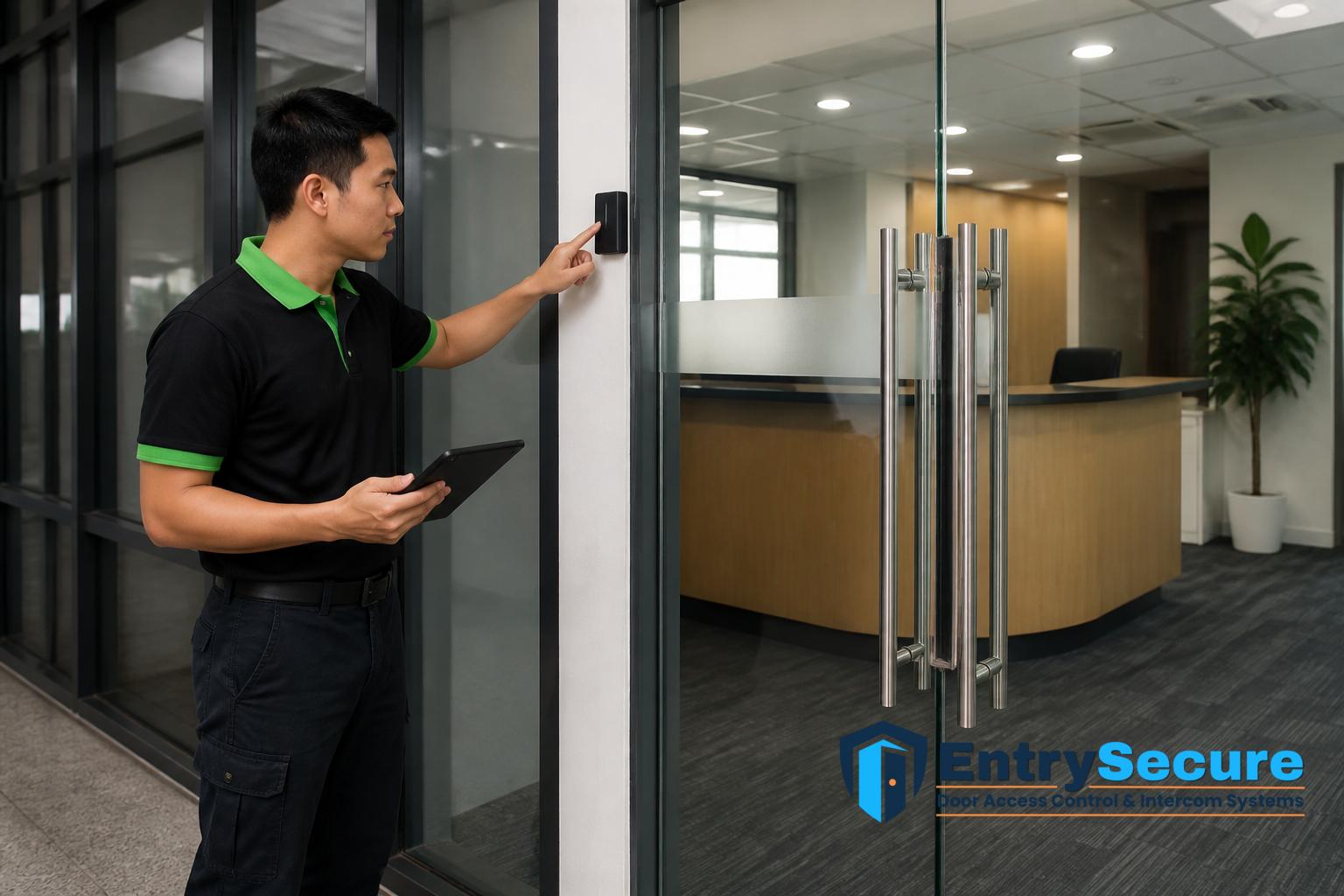
Planning a security system around entry points is less about adding devices at random and more about understanding how people, deliveries and visitors move through a Singapore property. Whether it is a home, strata unit, office or commercial premises, the entry points usually determine where control is needed first, where visibility matters most and how the system should be arranged for practical daily use.
For property owners and managers in Singapore, a well-planned system starts with the main access points, then looks at secondary doors, side gates, service entrances and any shared common areas. The aim is to support orderly entry, clearer monitoring and smoother operation without making the setup awkward for residents, staff or authorised visitors.
Start with a clear entry-point survey
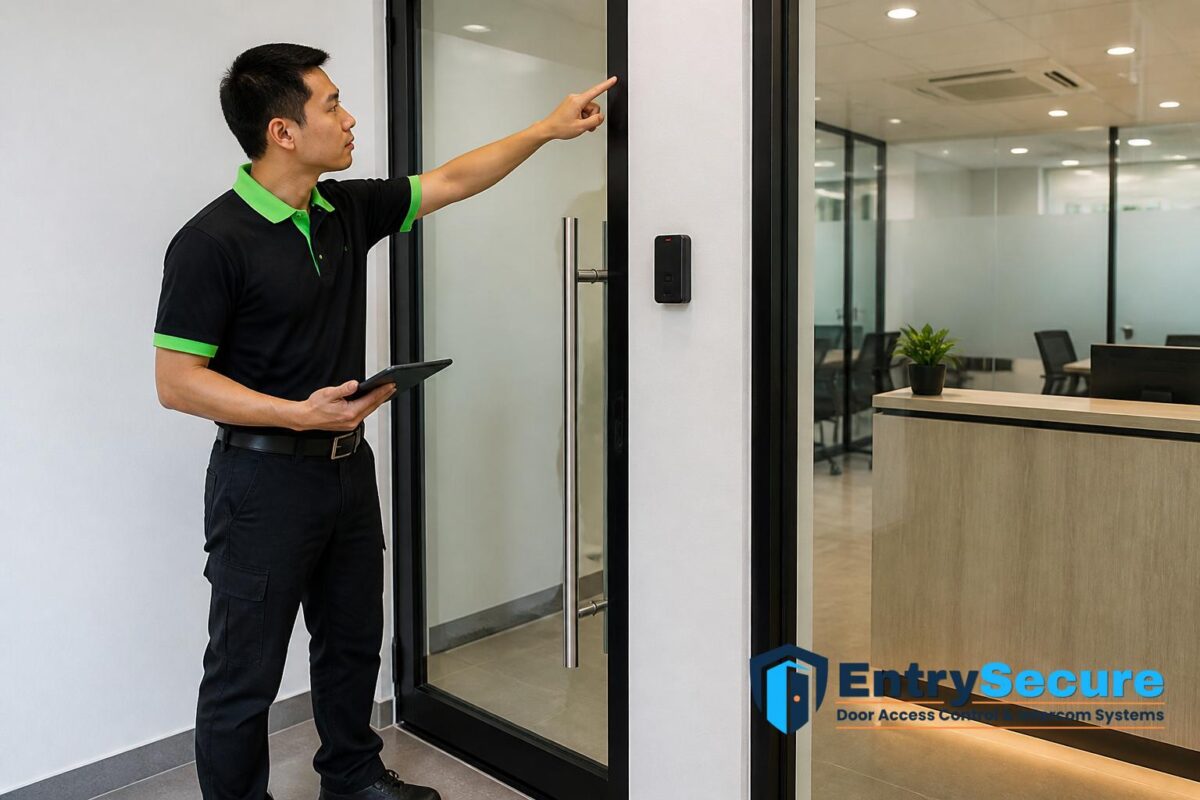
The first step is to identify every point where someone can enter or approach the property. In a residential setting, this may include the main gate, front door, side gate, lift lobby access and any rear service access. For commercial premises, the list often expands to include loading entrances, staff doors, reception access and back-of-house routes.
This survey matters because each entry point has a different level of use and risk. A front entrance used by visitors may need stronger visibility and communication features, while a side door used mainly by staff may need more controlled access. Planning around these differences helps avoid overspecifying one point while leaving another underconsidered.
In Singapore, many properties also have shared spaces or tight footprints, so the survey should note wall space, wiring routes, weather exposure and whether the entry point sits inside or outside a common corridor. These physical details influence what can be installed and how neatly it can be integrated.
Match the system to the role of each entrance
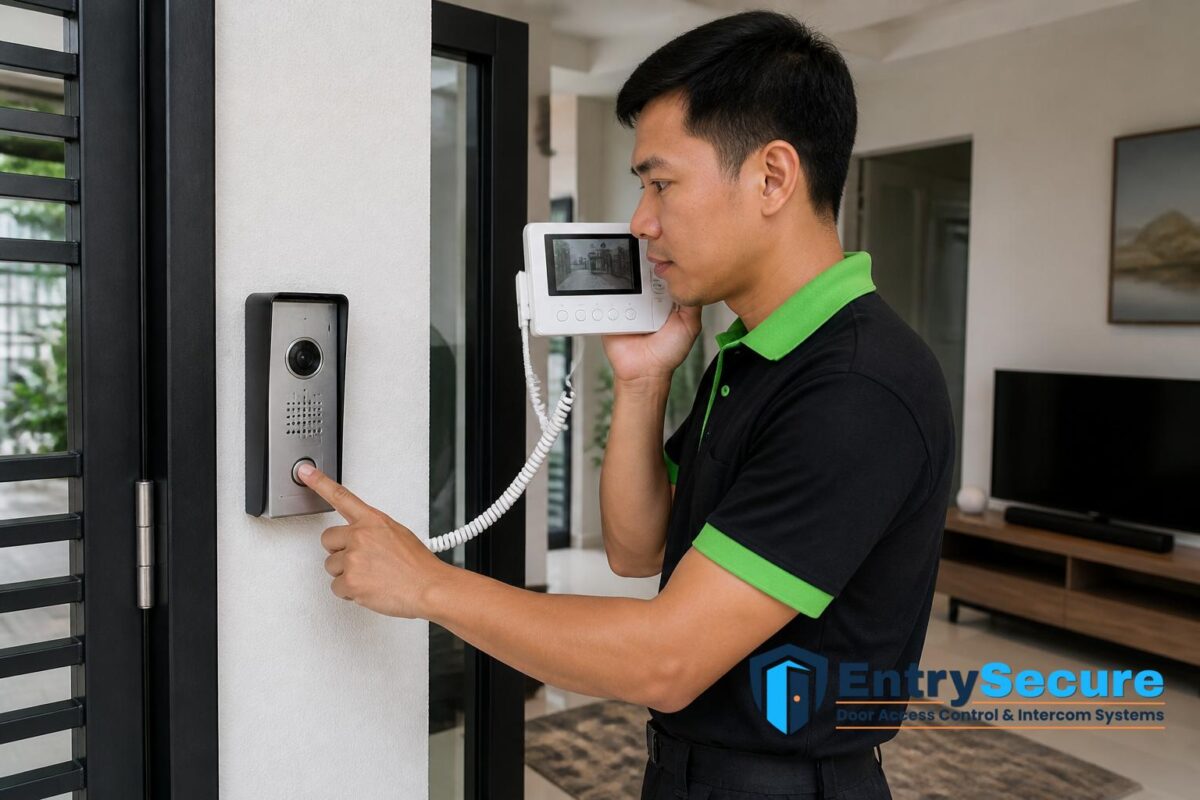
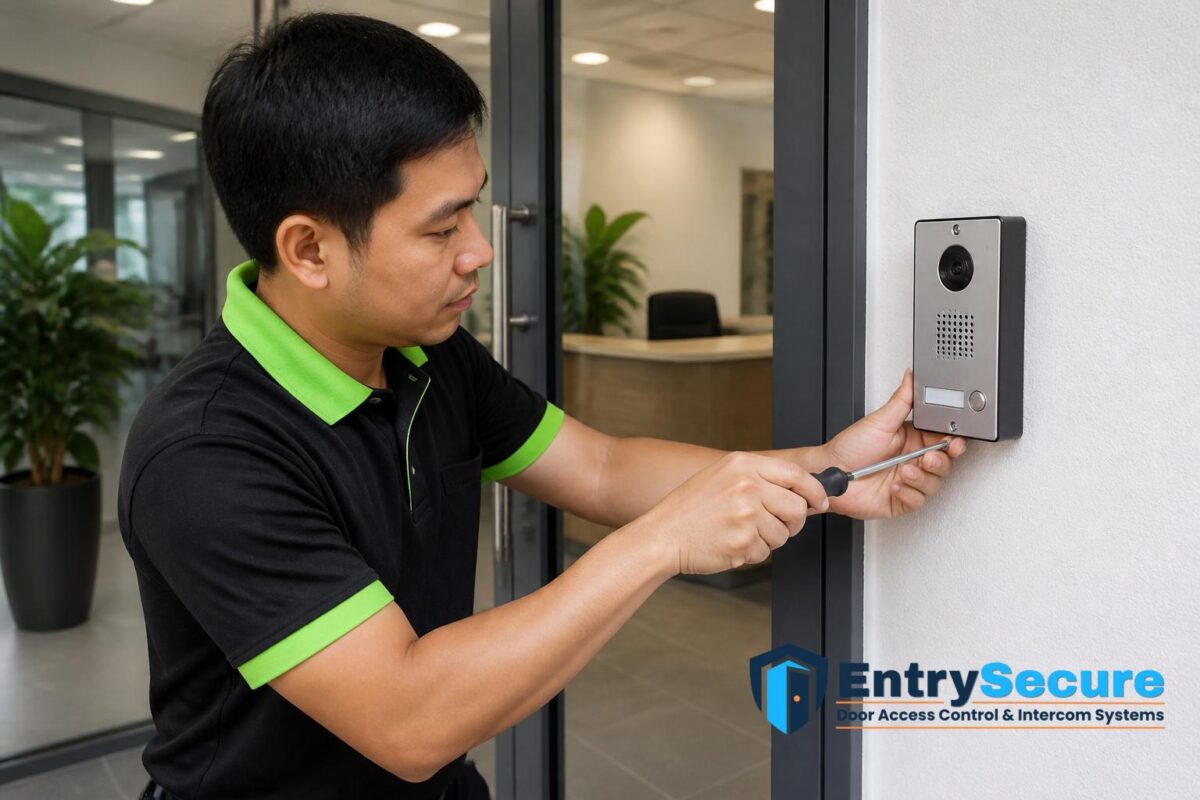
Not every doorway needs the same treatment. A main entry point often carries the highest level of interaction, so it is usually the best place for a central access device or intercom point. Secondary doors may need a simpler arrangement focused on controlled entry rather than frequent use.
For residential properties, the planning process typically distinguishes between the public-facing entrance and the private internal boundary. For offices and commercial premises, it may separate visitor access, staff access and operational access. This distinction helps shape how the system is used day to day and prevents unnecessary complexity.
It is also important to think about movement patterns. If visitors are expected to wait at one point, the device should be positioned so it is easy to reach and use. If authorised users pass through quickly and often, the setup should support efficient operation without creating bottlenecks at the doorway.
Consider device placement for visibility and practical use
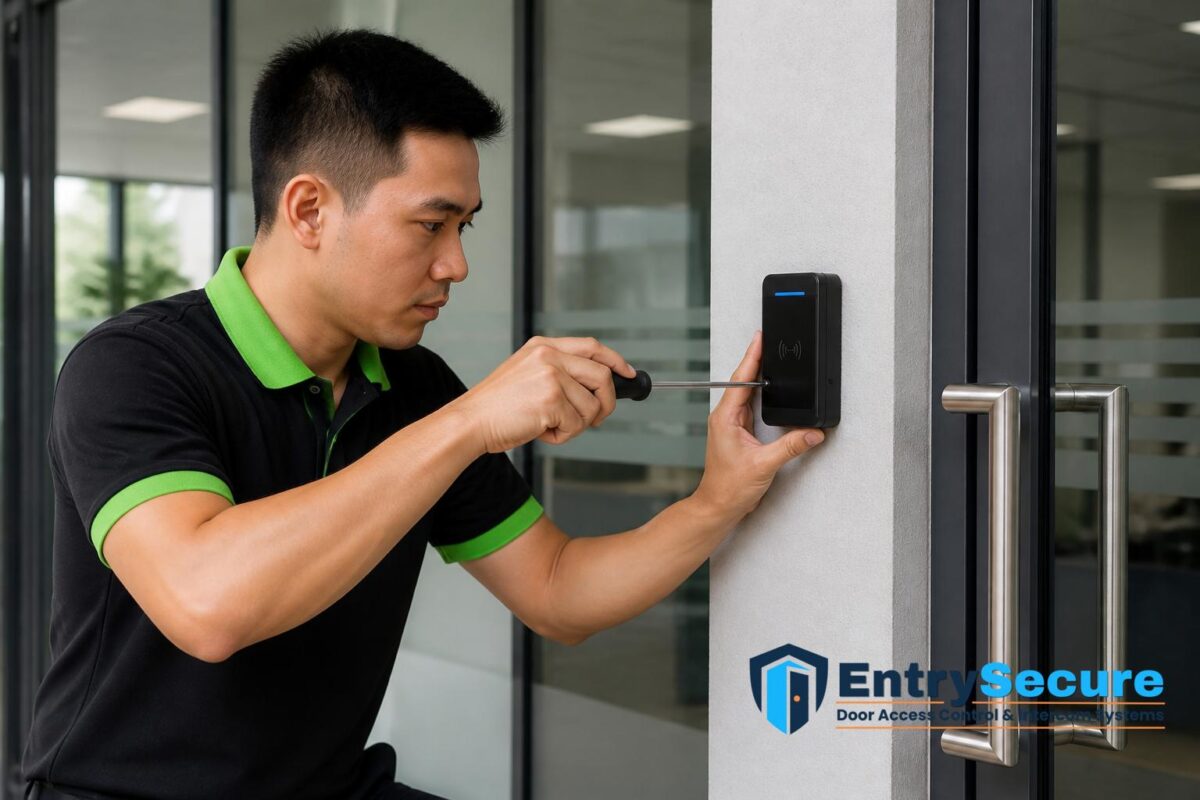
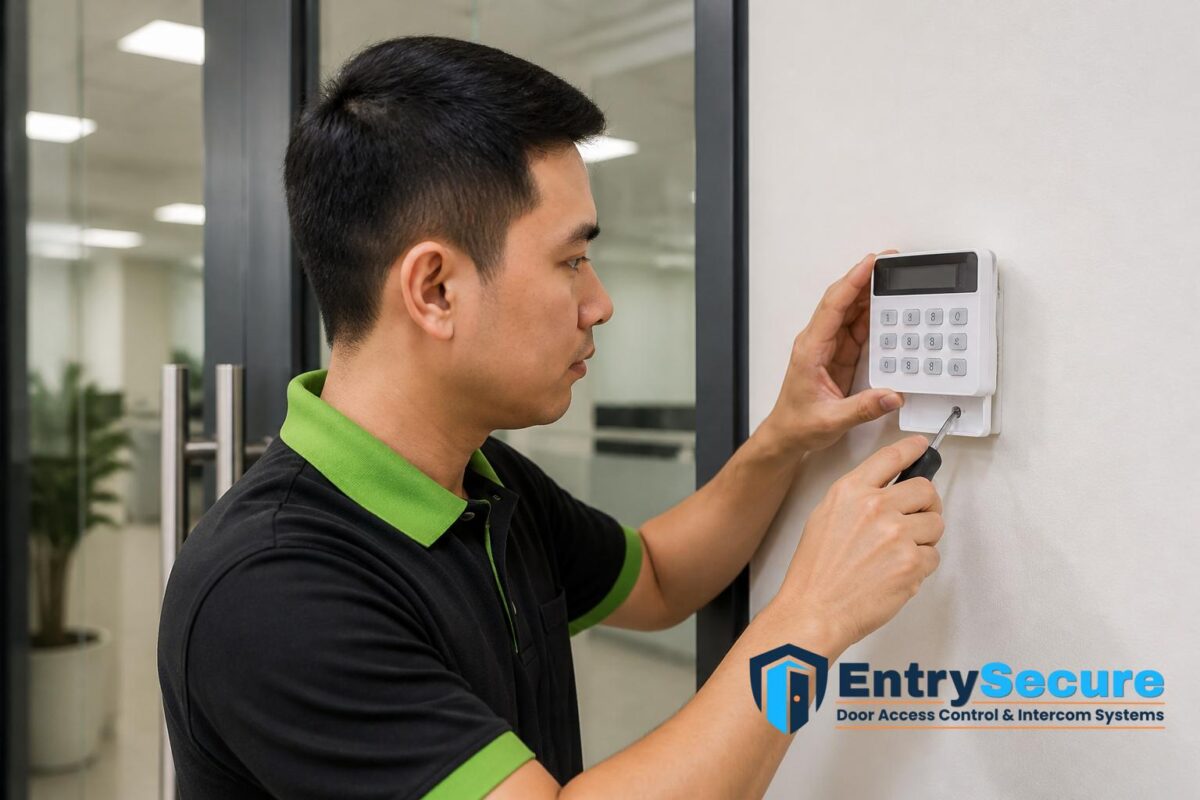
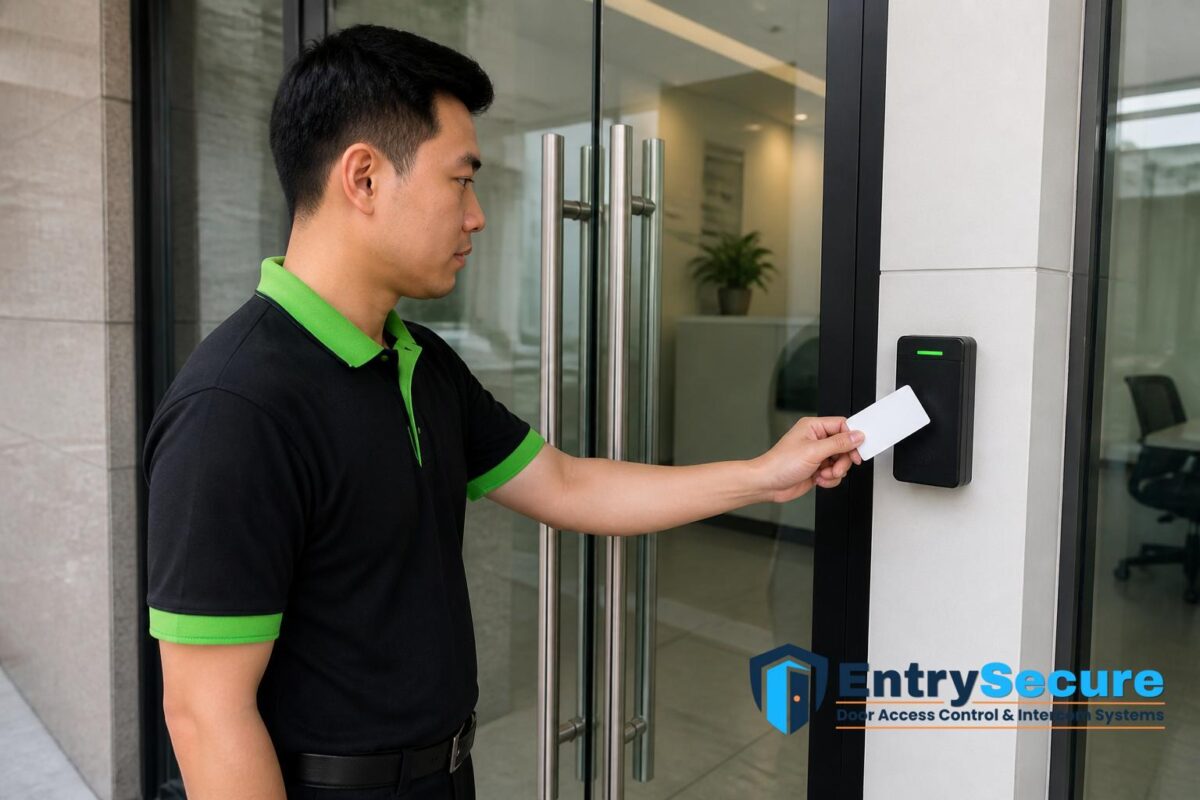
Device placement is a major part of planning because a poorly placed unit can be inconvenient even if the system itself is suitable. Access control or intercom points should be installed where users can easily see, reach and operate them without awkward stretching or obstructed movement.
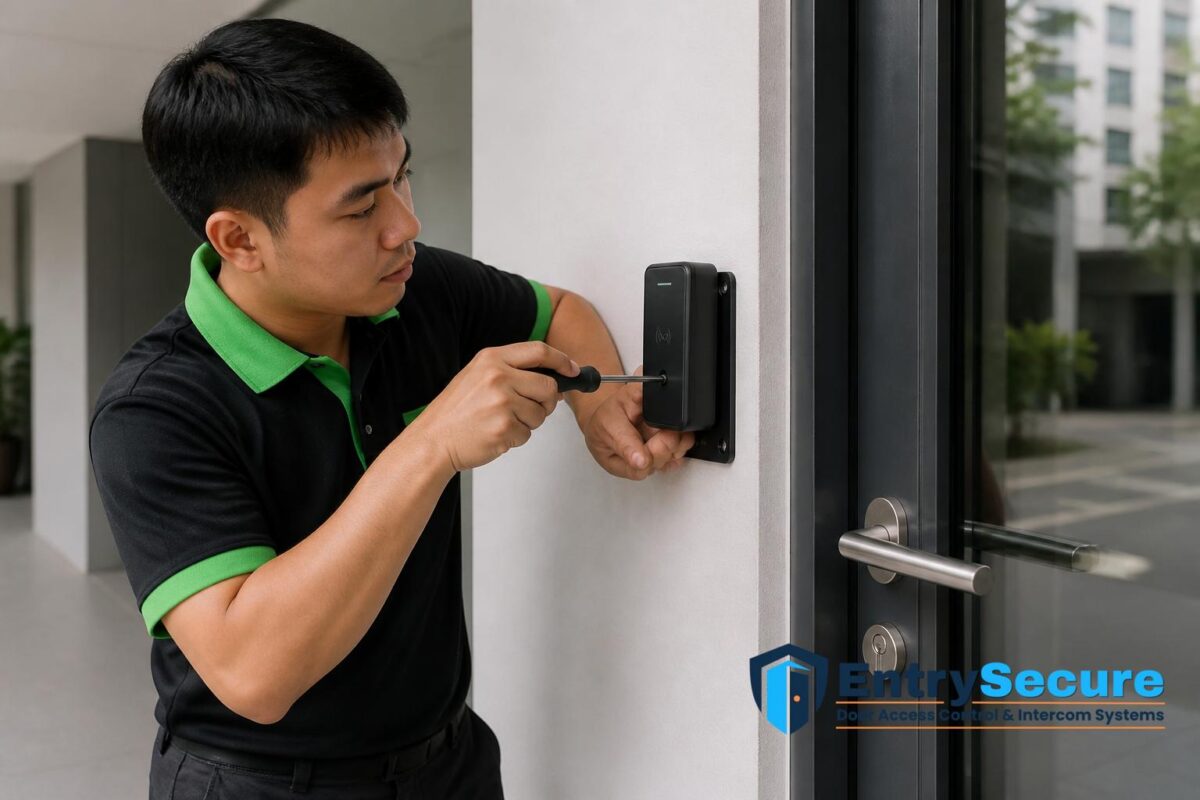
For Singapore properties, placement also needs to account for weather, sunlight and sheltered versus exposed entry points. A device near an outdoor gate or perimeter entrance may need a more protected position than one inside a lobby or corridor. The goal is to support usability while keeping the equipment appropriately situated for the environment.
Placement should also support the way the entrance is supervised. If the entry point is monitored by staff, reception or residents, the device should face a sensible direction and sit at a height that works for most users. Good placement makes routine use simpler and reduces mistakes during daily operation.
Plan cabling and power before installation begins
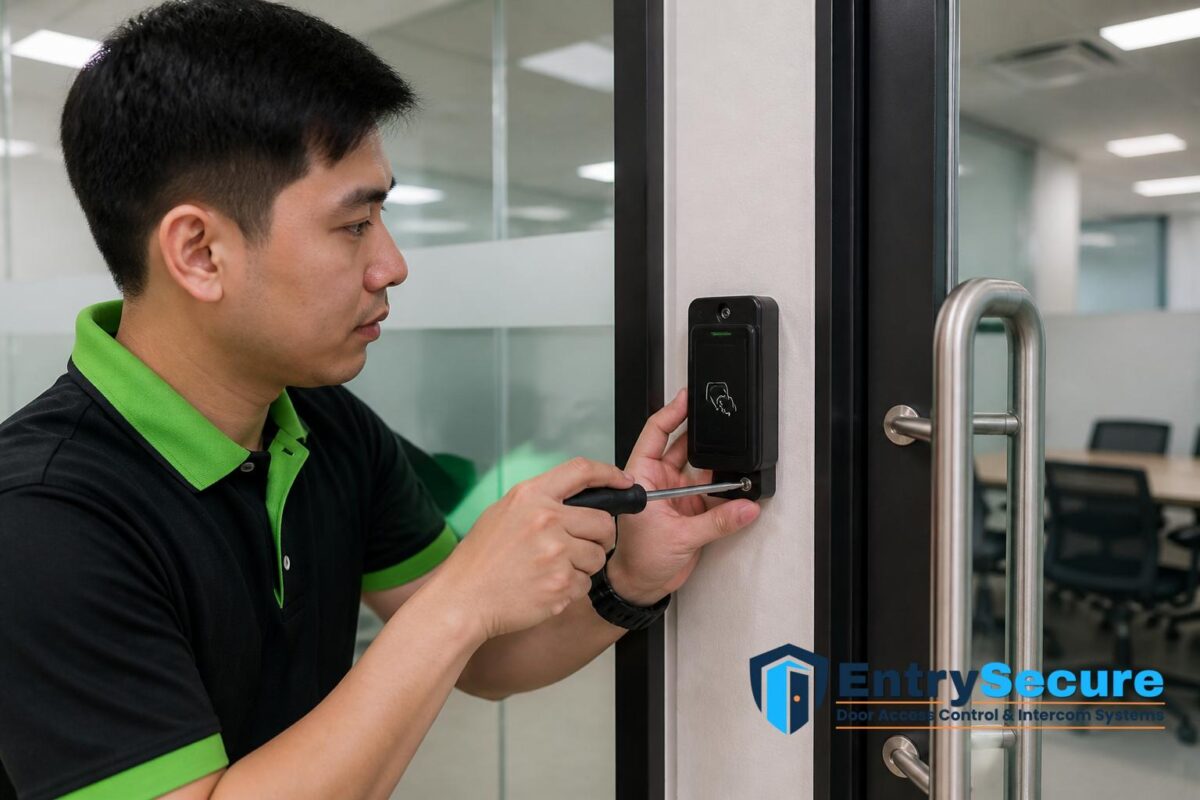
One of the most important planning steps is checking how cables and power will reach each entry point. This is especially relevant in Singapore properties where finishes may already be in place, walls may be concrete, and cable routes need to be planned carefully to avoid unnecessary disruption.
A practical plan considers where existing routes can be used, where new runs are needed and whether any entry point is too far from the main equipment location. It is much better to assess this early than to discover later that a chosen position is difficult to support neatly or safely.
For multi-entry properties, cabling should be organised in a way that is easy to identify and maintain. That helps during setup, future servicing and any later changes to the property. Clear planning around wiring also helps keep the finished installation tidy, which matters in both homes and commercial settings.
Think through user flow and daily operation
A security system should suit how the property is actually used. In a home, the question is often how family members, guests and service providers will interact with the entrance. In an office or commercial site, the main concern may be how staff, visitors and delivery personnel move through the entry points during busy periods.
Good planning reduces confusion at the doorway. If people do not understand which entrance to use or how they are expected to gain entry, the system becomes harder to manage. The design should therefore support simple, predictable use at each access point.
It is also worth considering what happens during peak times, after hours or when the usual occupant is not present. A system planned around entry points should support those day-to-day variations without requiring constant manual adjustments.
Set up testing and handover around each point
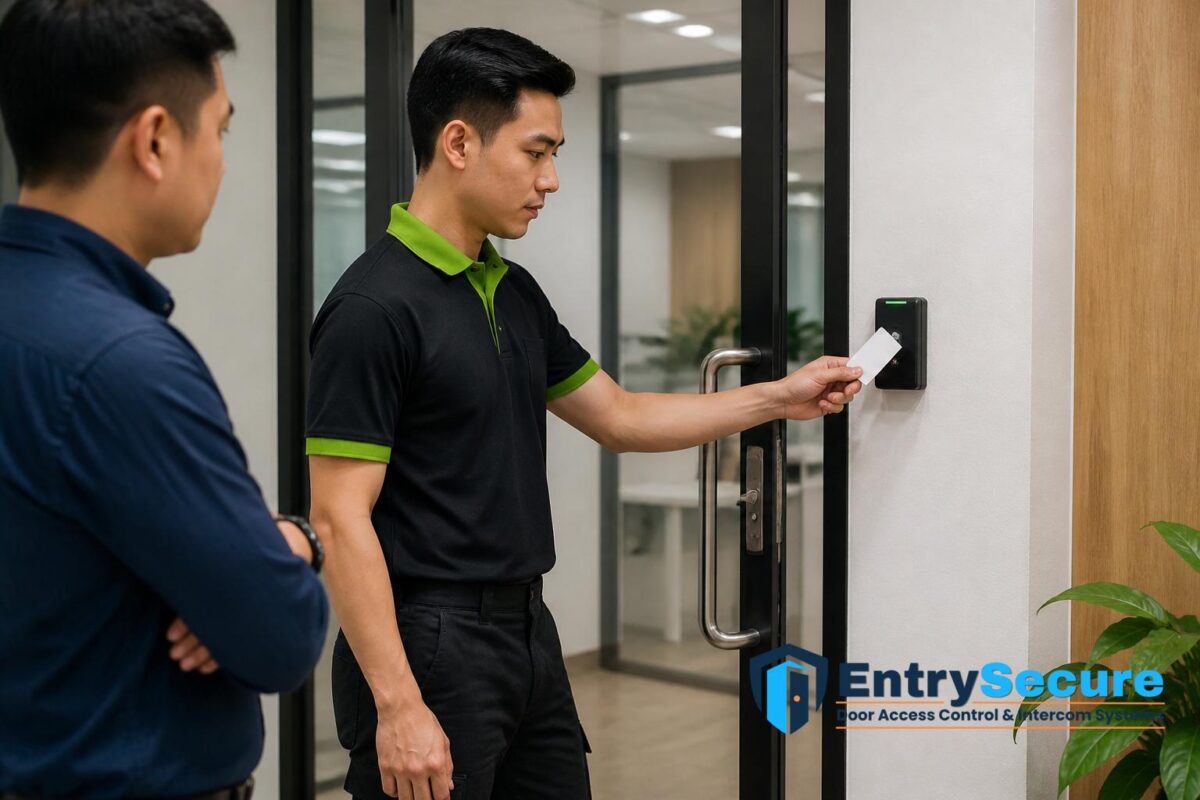
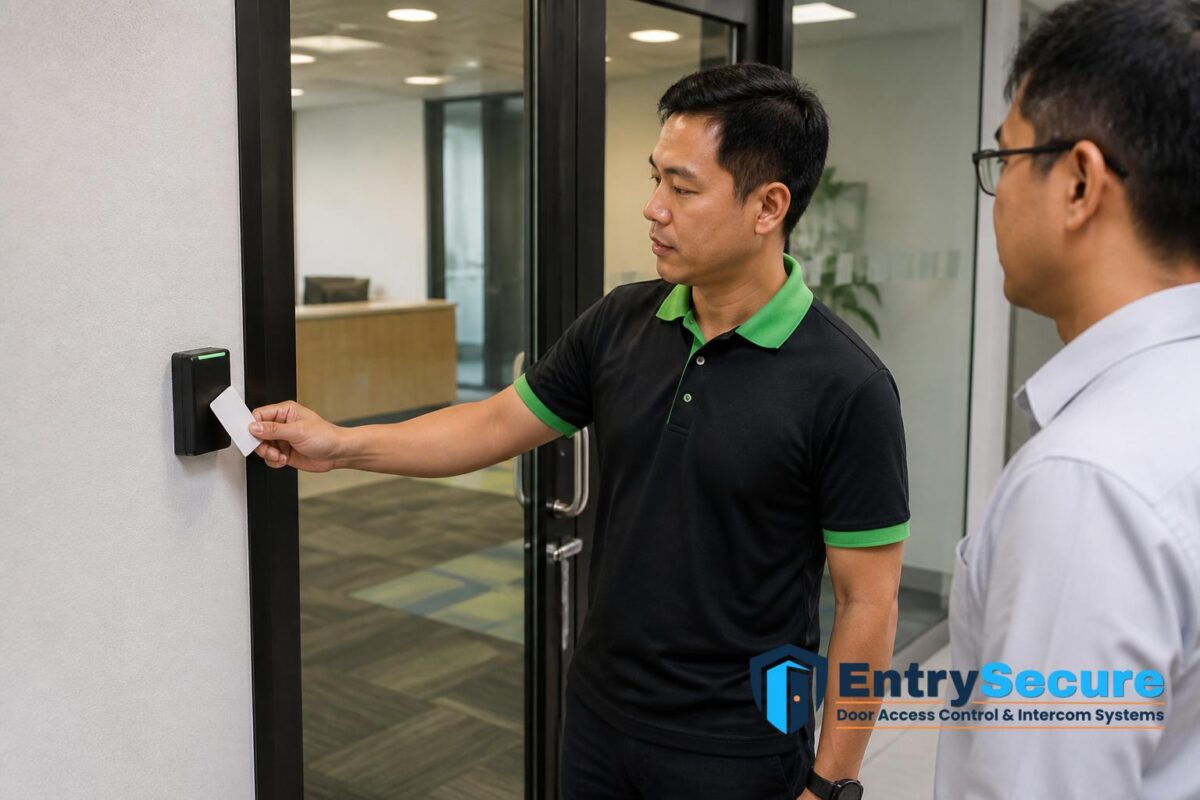
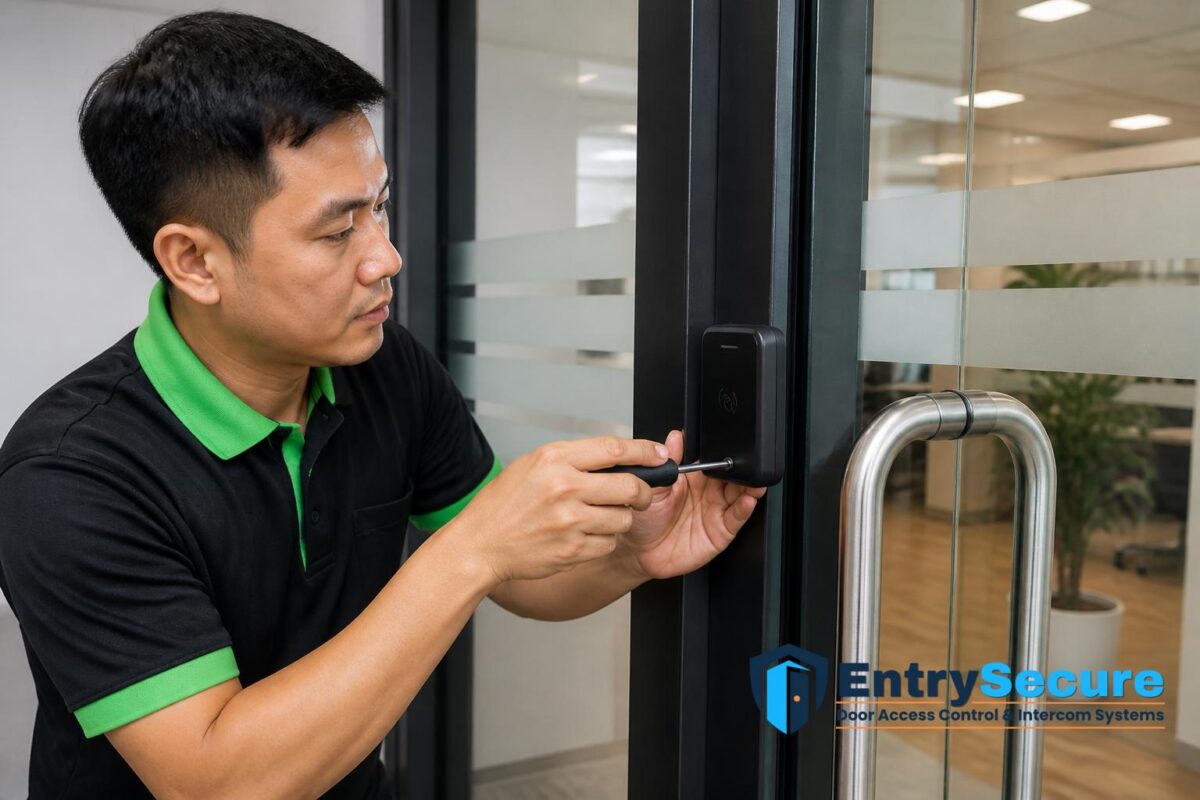
Once the system is installed, each entry point should be tested individually and as part of the wider arrangement. This includes checking whether the device operates as intended, whether users can interact with it easily and whether the installation aligns with the planned access flow.
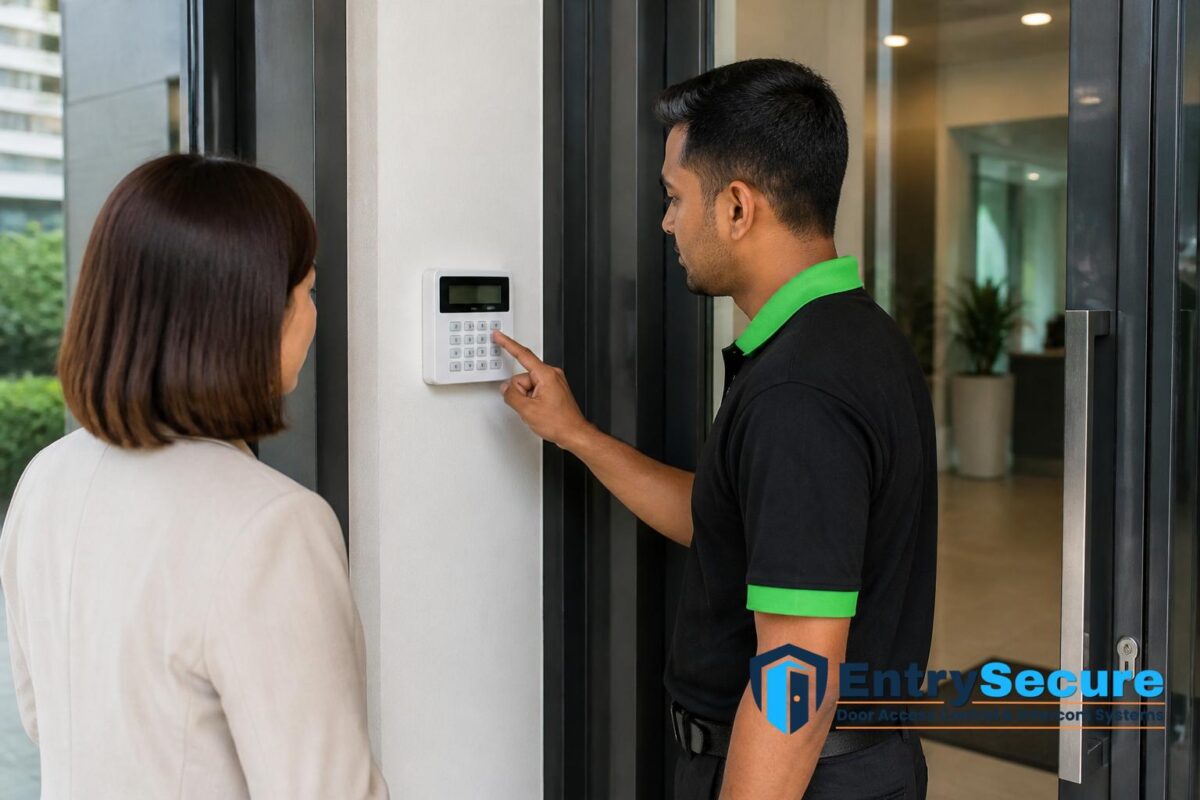
Testing should also confirm that the system is understandable for the people who will use it. A homeowner, tenant, receptionist or facilities representative should know which point does what and how to operate it in normal use. Any instructions should be clear and matched to the exact layout rather than given in a generic way.
A proper handover is part of the planning process as well. It should cover the device positions, basic operation and any points the property owner or manager should watch for over time. This is especially useful where a property has more than one entry point and different users need different levels of access.
Plan for future changes, not just the first installation
Entry-point planning should leave some room for future changes. Properties in Singapore may be renovated, reconfigured, leased to different occupants or managed under changing operational requirements. A system that is planned only for today may become inconvenient later if the layout or use of the property changes.
That is why it helps to think beyond the initial door or gate. If there is a likely need for additional entry points later, the current plan can take that into account through sensible equipment placement and wiring considerations. This makes the system easier to adapt without unnecessary rework.
For commercial properties, future planning may also include changes in reception flow, staff access needs or delivery arrangements. For residential properties, it may relate to renovation, common area access or adjustments to household routines. A flexible plan makes the system more practical over time.
WhatsApp EntrySecure Door Access Control & Intercom Systems Singapore to discuss your entry-point planning needs for a security system. Share your property type, entry point photos, current equipment and the security scope you want to cover so the team can recommend a suitable arrangement and quotation.
Conclusion
Planning a security system around entry points in Singapore properties begins with understanding how each entrance is used, then matching the right arrangement to that specific location. When entry-point survey, placement, cabling, setup and testing are handled carefully, the result is a more practical system that suits daily use and the structure of the property.
Whether the property is residential or commercial, the most effective plan is one that is built around the real entry points rather than forcing a one-size-fits-all approach. That is what makes the installation easier to use, easier to manage and more suitable for the space.
Choose EntrySecure Door Access Control & Intercom Systems Singapore
EntrySecure Door Access Control & Intercom Systems Singapore provides access and security solutions for homes, offices and commercial properties across Singapore. Our services cover access control, door access systems, intercom systems, security systems, alarm systems and security alarm systems to support safer and more convenient entry management.
Based on your property layout and security needs, our team can recommend a suitable setup for controlling access, managing visitors and improving overall premises security. We also provide CCTV services for customers who require additional monitoring alongside their access or alarm system.
Whether you need a new door access system, intercom installation, alarm setup or a more complete security solution, our team can assist with a practical arrangement for your property. WhatsApp us at +65 8241 0032 to enquire about our access and security system solutions.
Frequently Asked Questions
What entry points should be reviewed first when planning a security system?
Start with the main entrance, then review any secondary doors, side gates, service entrances and shared access points. The most frequently used entry points usually need the most careful planning because they affect daily movement and access control the most.
Why is device placement important at an entry point?
Device placement affects how easy the system is to use, how well it fits the space and how neatly it can be installed. A well-placed unit supports normal movement at the doorway and helps the system work in a practical, everyday way.
Should cabling be considered before choosing the final entry-point position?
Yes. Cabling and power routes should be checked early so the chosen position can be supported properly. This is especially important in Singapore properties where wall structure, finishes and space constraints can affect installation planning.