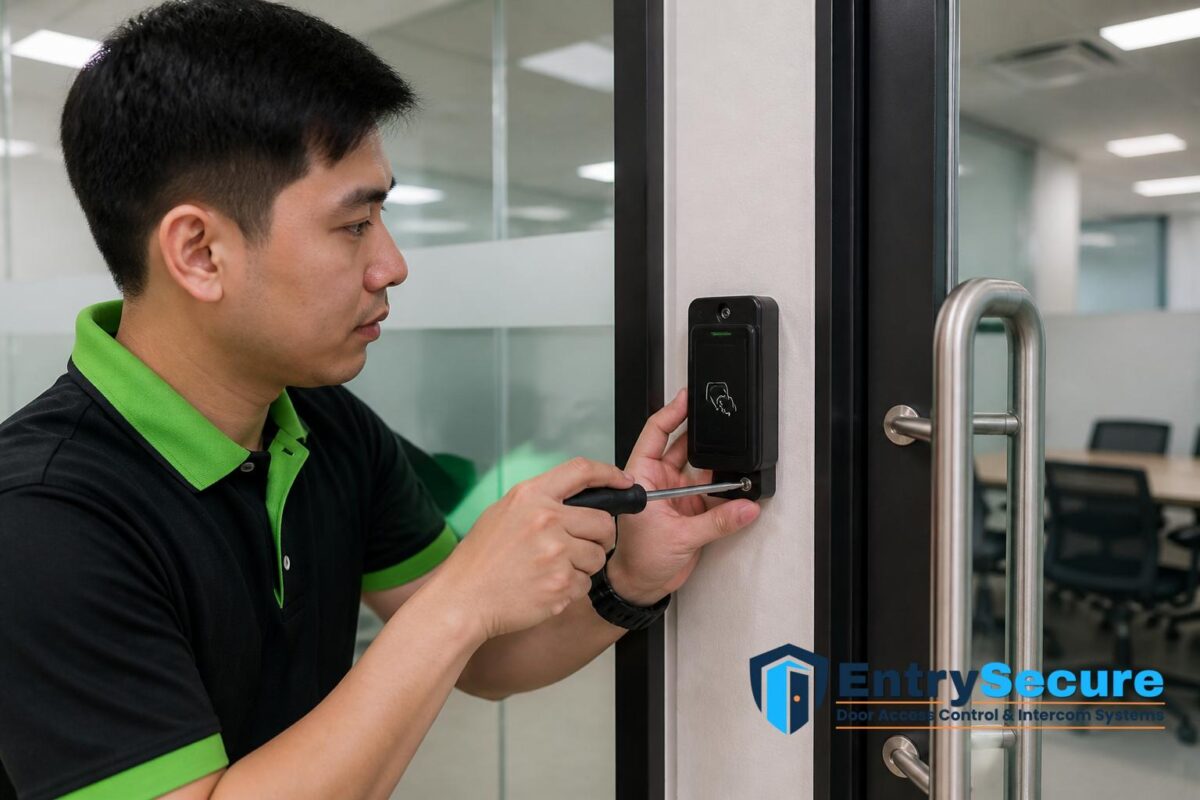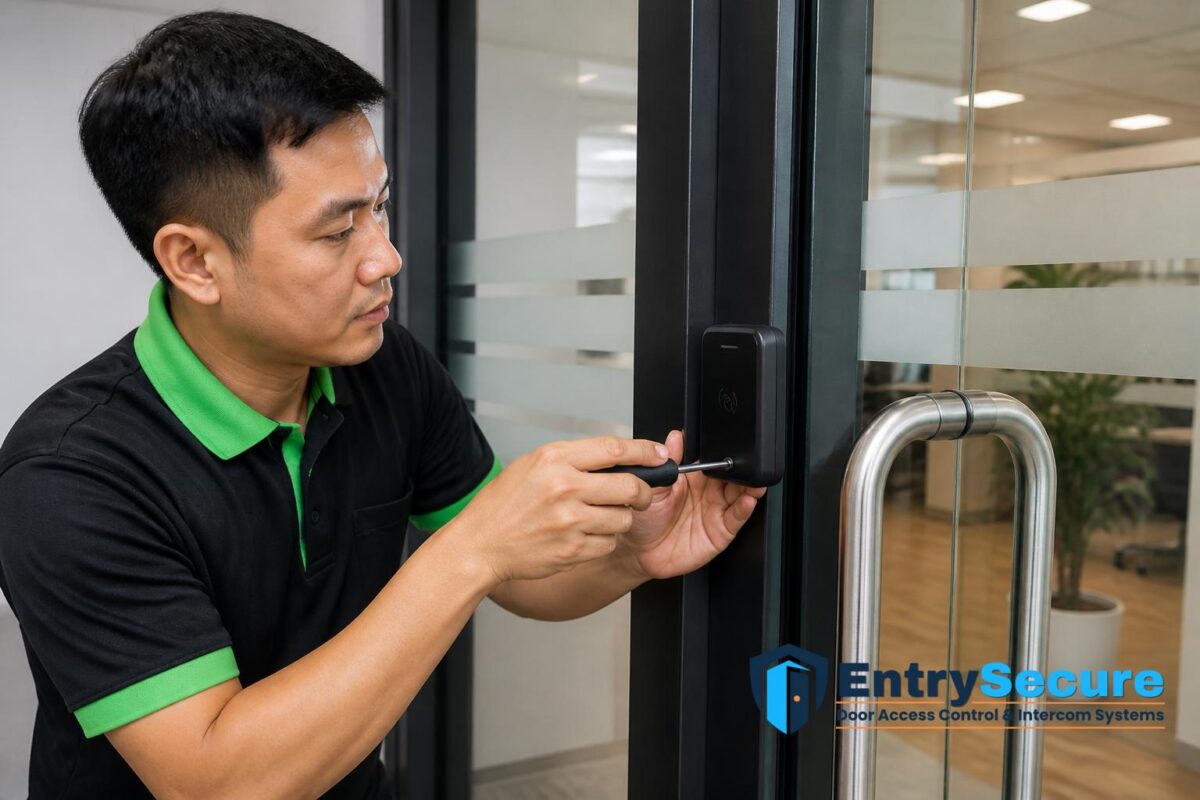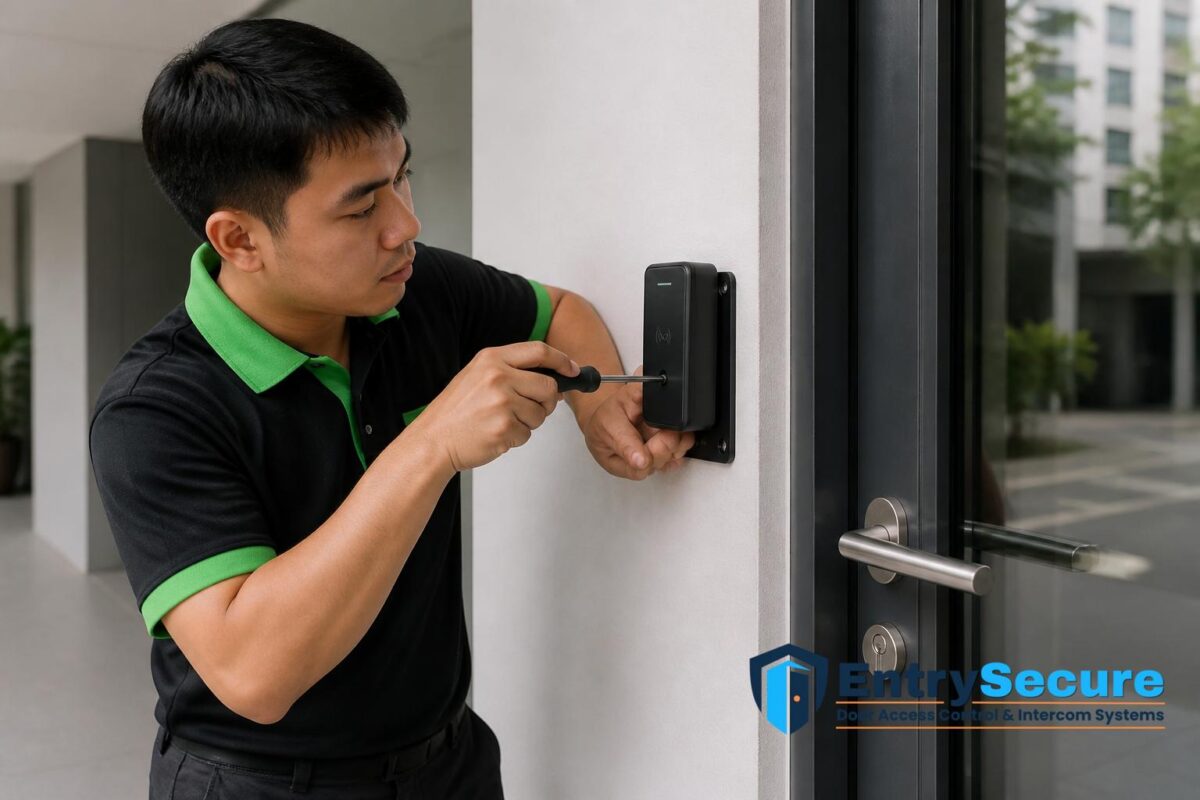

Replacing an existing door access system at a Singapore workplace is usually a planned facilities task rather than a simple like-for-like swap. The process typically involves assessing the current entry points, understanding how staff and visitors are authorised to enter, identifying what can be retained, and then carrying out the replacement with minimal disruption to the premises. For offices, retail units, industrial units and other commercial sites, the goal is to restore reliable access control while keeping the workplace safe and operational.
When a workplace door access system needs replacing
A replacement is often considered when the current system becomes unreliable, difficult to maintain, or no longer suits how the workplace operates. Common signs include repeated reader failures, controller issues, damaged wiring, outdated cards or fobs, or parts that are no longer supported. In some workplaces, the issue is not a total breakdown but an older system that no longer matches the site’s current access needs.
Singapore workplaces also change over time. A tenant may expand into adjacent units, reorganise staff entry points, or introduce new visitor control processes. When that happens, the existing door access arrangement may need to be replaced so that access can be managed more cleanly across different entrances and internal doors.
Assessing the existing setup before replacement
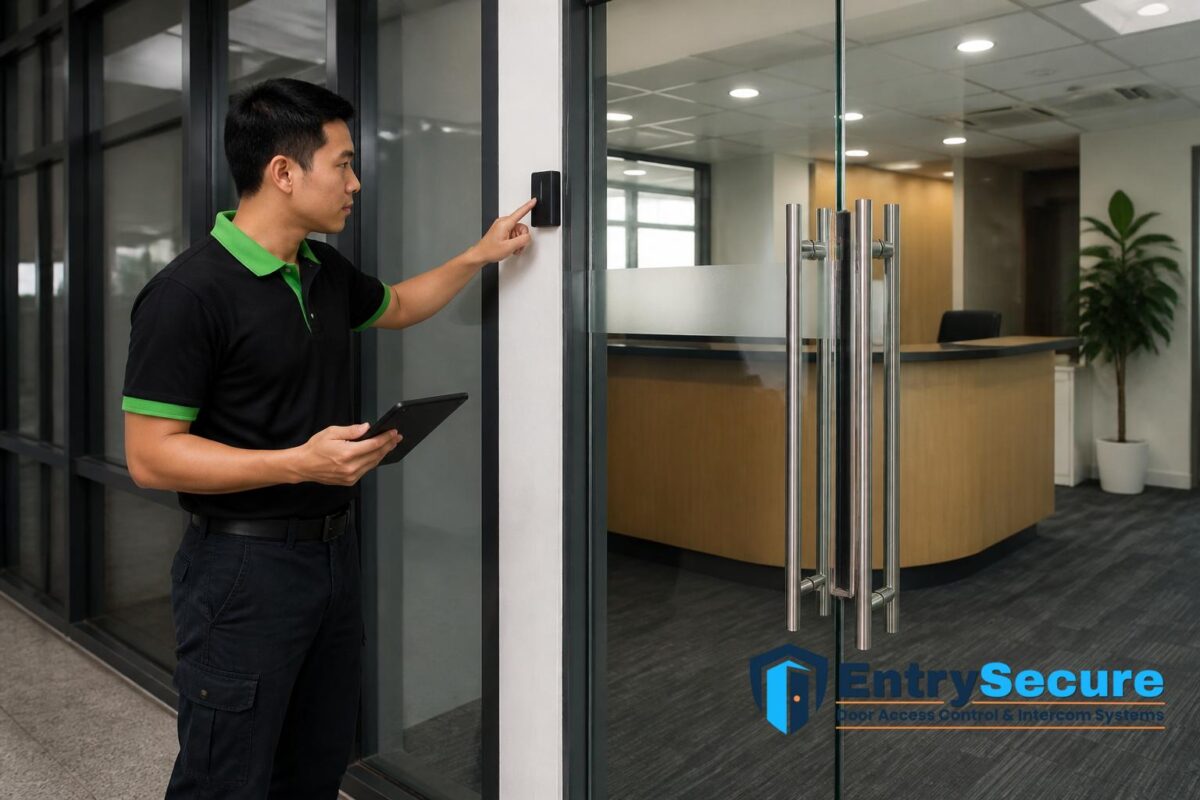
The first practical step is a proper assessment of the current installation. This usually means reviewing the doors involved, the access control devices already in place, the controller location, power supply arrangement, cabling routes, and how the system is used day to day. It is also helpful to check whether the system serves a single entrance or multiple entry points across the workplace.
A workplace replacement is easier when the installer can see what is currently installed and what must remain in service during the changeover. For example, some sites may have a main entrance, side door, store room, or staff-only access point that all need different treatment. Understanding these details early helps avoid unnecessary downtime and reduces the chance of rework later.
Deciding what can stay and what should be replaced
Not every component has to be changed at once, but the decision depends on the condition and suitability of the existing parts. In some cases, the readers, controller, power supply, exit devices and wiring may all be integrated into one ageing setup that is best replaced together. In other cases, a newer control unit or a suitable cabling route may be retained if it still supports the new arrangement.
For a workplace, the replacement plan should focus on reliability and clear access management. If a door is heavily used, or if the existing arrangement has become difficult for facilities teams to support, a full replacement is often more practical than trying to patch individual faults. The installer should explain which items are likely to be replaced, which may be reused, and why.
Planning the changeover to reduce disruption
Workplace replacement is best carried out with an installation plan that considers business hours, access needs and staff movement. The installer may need to schedule work outside peak periods, such as before opening, after office hours, or during quieter periods, depending on the premises. This helps avoid interrupting daily operations while the old system is removed and the new one is brought online.
Planning should also cover temporary access arrangements during the replacement. If the main entrance is affected, the site may need a controlled alternative route for staff or authorised visitors. Good planning keeps the workplace functioning while the system is changed, and it helps ensure the replacement is completed in a tidy, orderly sequence.
Wiring, power and device placement considerations
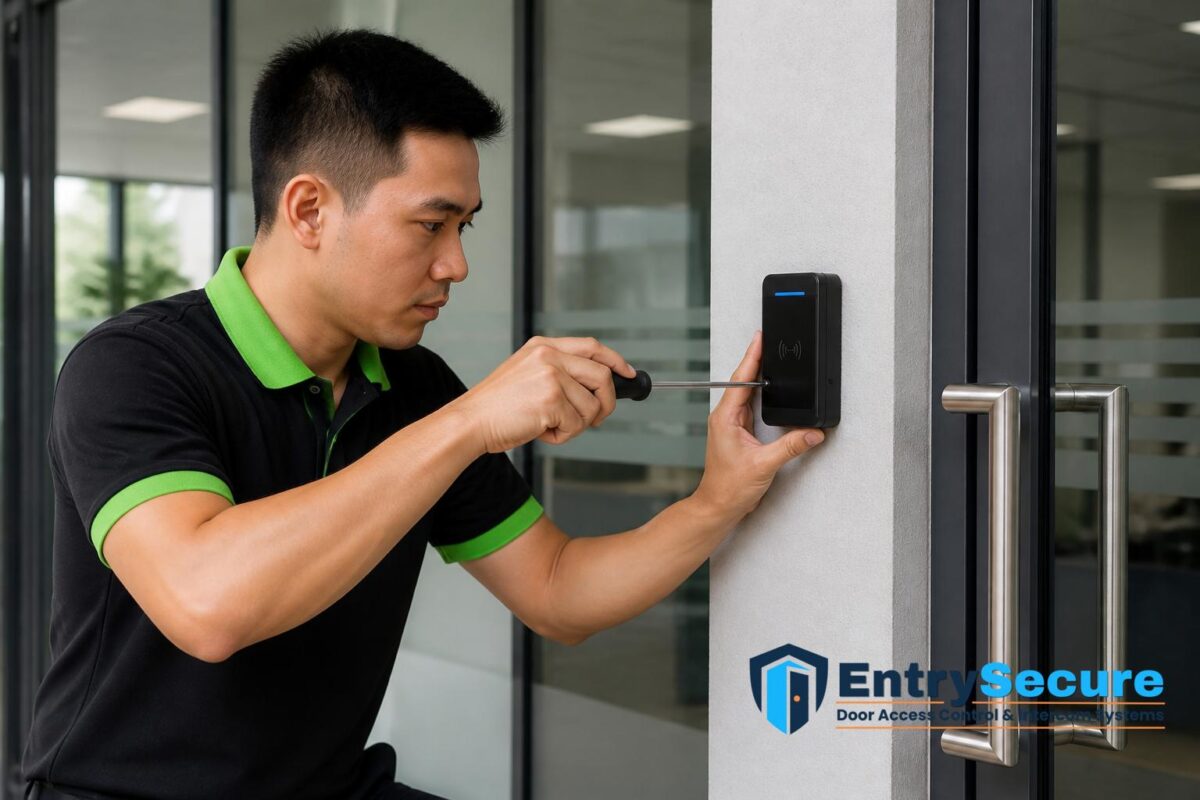
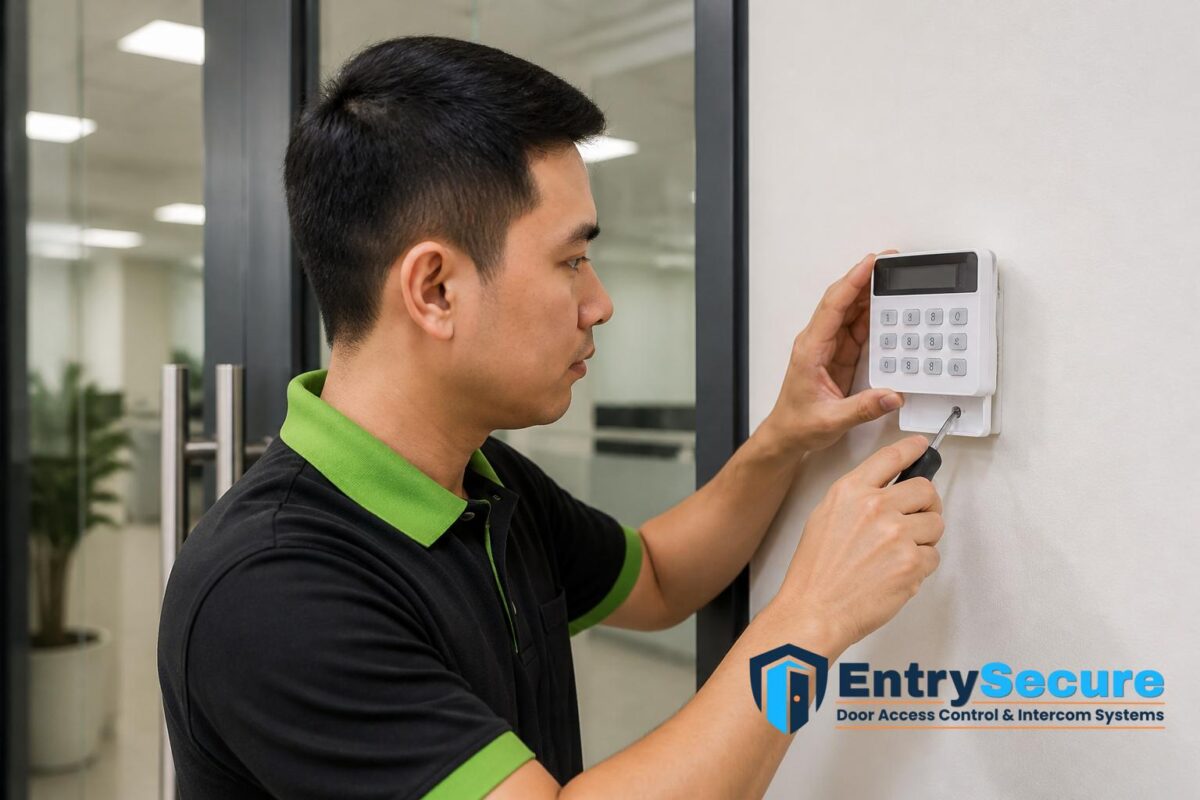
Replacing a door access system often involves more than swapping a reader at the door. Cabling, power supply positioning and device placement all need to be checked carefully. If the existing cabling is damaged, poorly routed or unsuitable for the new equipment, the installer may need to reroute or replace sections so the new system can operate properly.
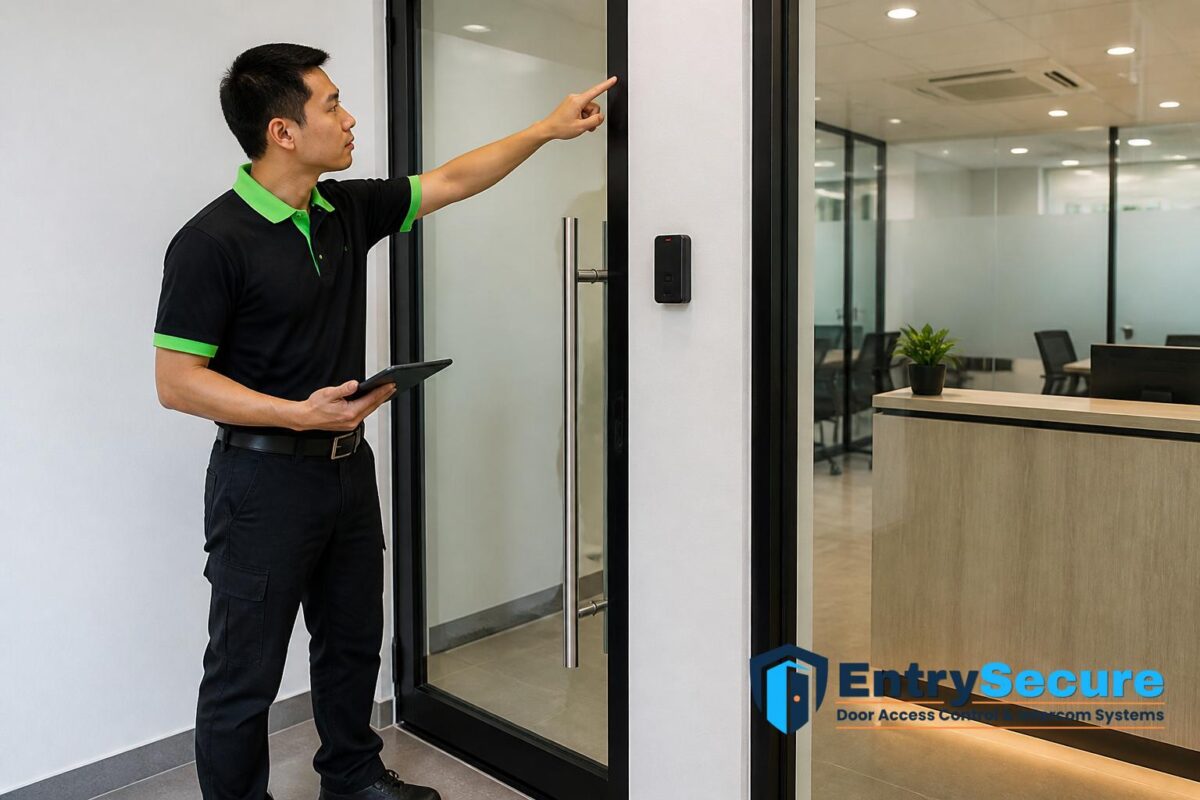
Device placement matters in a workplace because different entry points have different usage patterns. Readers should be positioned where staff can use them comfortably, while controllers and power equipment are usually placed in a practical internal location that can be accessed for maintenance. A neat installation also makes future servicing easier for the facilities team.
Testing the new access control arrangement
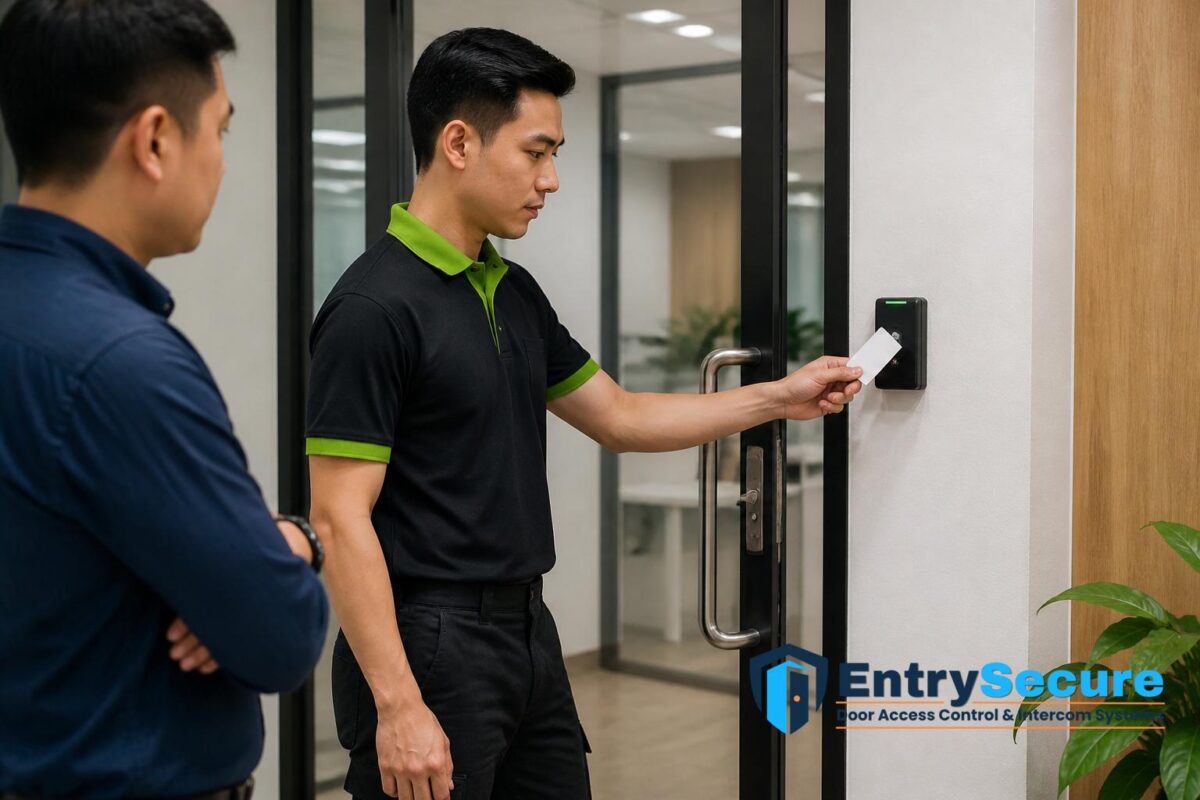
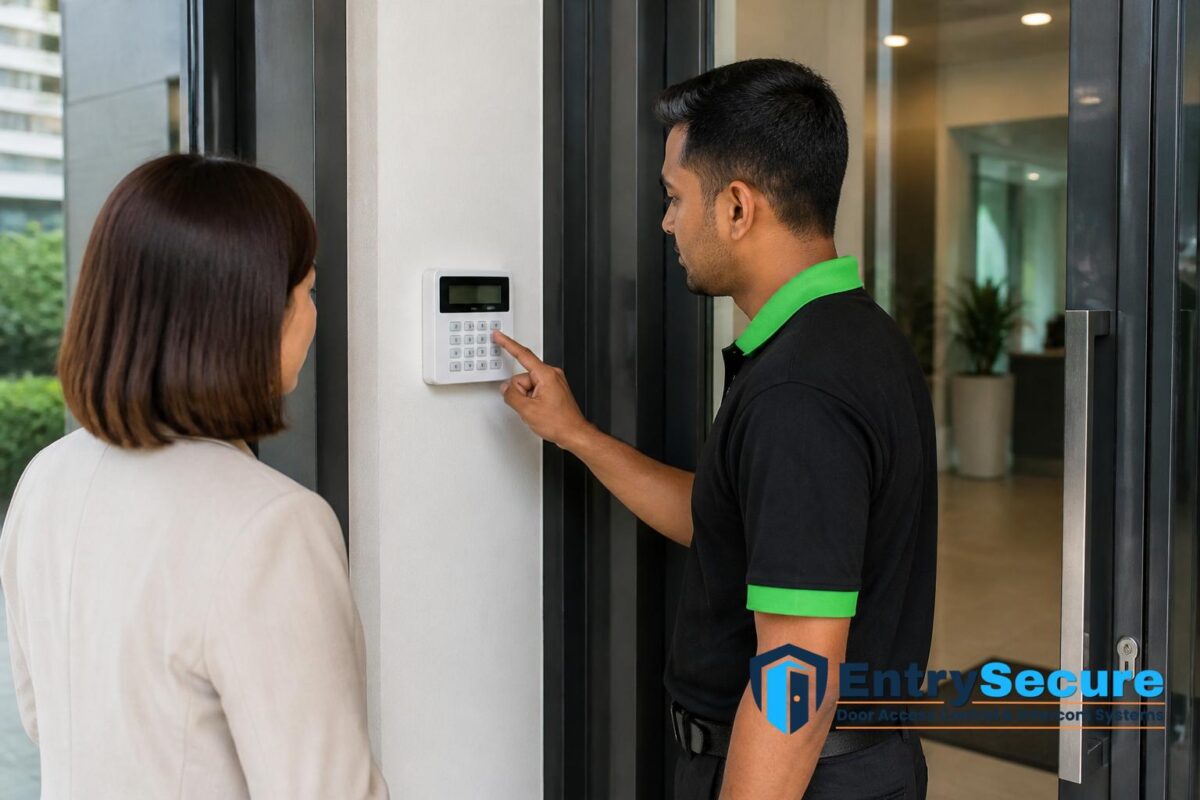
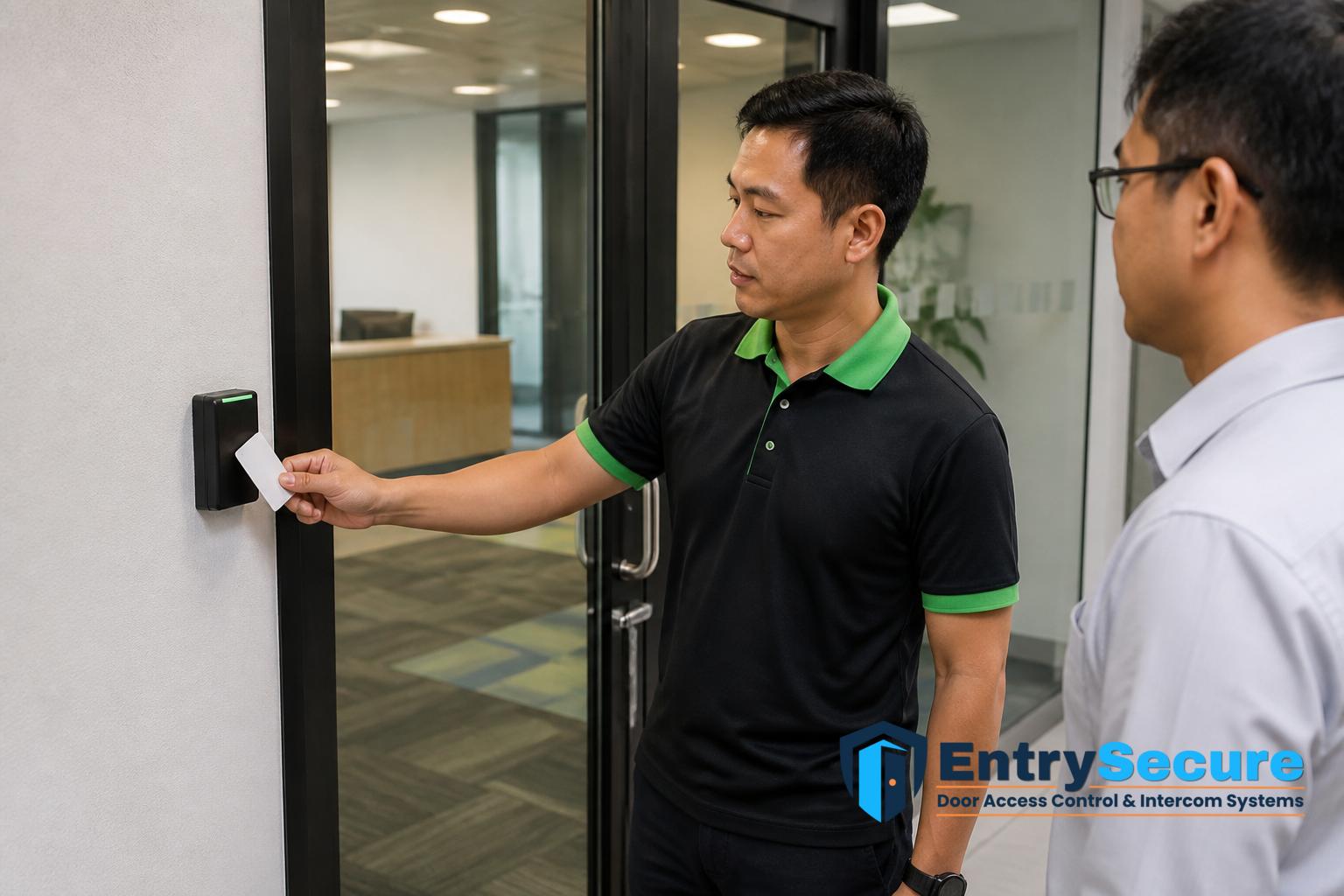
Once the replacement is installed, the system should be tested door by door and function by function. This includes checking that authorised entry works as expected, that the door releases correctly, and that exit operation is smooth. The installer should also confirm that the system behaves properly during a power interruption or reset, according to the installed setup.
Testing is particularly important in workplaces because multiple people may depend on the same door every day. A proper handover should show the site contact how the replacement operates, how to recognise a fault, and what basic checks can be done before requesting further support. Clear testing at the end of the job reduces avoidable disruption after installation.
Managing access changes during the replacement
If the workplace is changing from an older door access system to a new one, access permissions may need to be recreated in the new arrangement. This is especially relevant when staff groups, tenant users or department-based access differ across doors. The replacement process should include planning for how credentials or authorised entry methods will be issued and managed after installation.
Facilities managers should also consider record-keeping and day-to-day administration. A replacement is a sensible time to simplify how access is handled, particularly where the previous system had become difficult to update. A more maintainable arrangement can save time for the workplace team long after the installation is complete.
If you need to replace an existing door access system at a Singapore workplace, WhatsApp EntrySecure Door Access Control & Intercom Systems Singapore with your workplace type, entry point details, photos, current equipment and the access control scope you need so the team can suggest a suitable replacement arrangement and quotation.
Conclusion
Replacing an existing door access system at a Singapore workplace is best handled as a structured project: assess the current setup, decide what can be retained, plan the changeover carefully, and test the new arrangement thoroughly before handover. With the right approach, the replacement can support smoother access control, better day-to-day management and a more dependable workplace entry setup.
Choose EntrySecure Door Access Control & Intercom Systems Singapore
EntrySecure Door Access Control & Intercom Systems Singapore offers practical security solutions for residential and commercial premises in Singapore. We provide access control, door access systems, intercom systems, security systems, alarm systems and security alarm systems for customers looking to improve access management and property protection.
Our team can recommend solutions based on your premises, entry points and security requirements, whether you need controlled access for an office, an intercom for visitor communication or an alarm system for added protection. CCTV services are also available for customers who want to include surveillance as part of their overall security setup.
From standalone installations to combined access and security solutions, we aim to provide straightforward recommendations and dependable installation. WhatsApp us at +65 8241 0032 for your door access, intercom, alarm and security system needs.
Frequently Asked Questions
How do I know if a workplace door access system should be replaced rather than repaired?
If the system has frequent faults, uses outdated components, is difficult to maintain, or no longer suits the workplace’s entry arrangement, replacement may be more practical than repeated repairs. A site assessment helps determine whether the existing setup can still be supported.
Can a workplace replacement be done without stopping normal operations completely?
In many cases, yes. Replacement work is often planned around business hours or quieter periods so the workplace can continue operating as much as possible. The exact method depends on the doors involved and how critical each entry point is.
What information should I prepare before asking for a replacement quotation?
It helps to share the workplace type, the number of entry points, photos of the existing door access equipment, and any current issues you are facing. This gives the installer a clearer picture of the site and the replacement scope needed.