
Installing a door access system in a Singapore workplace is usually a planned, step-by-step process rather than a quick swap of hardware. For office managers, facilities teams and commercial property operators, the main aim is to improve controlled entry without disrupting day-to-day operations more than necessary. A proper installation covers site assessment, equipment placement, cabling, configuration, testing and handover, all tailored to the workplace’s entrances and internal access points.
Initial workplace assessment and planning
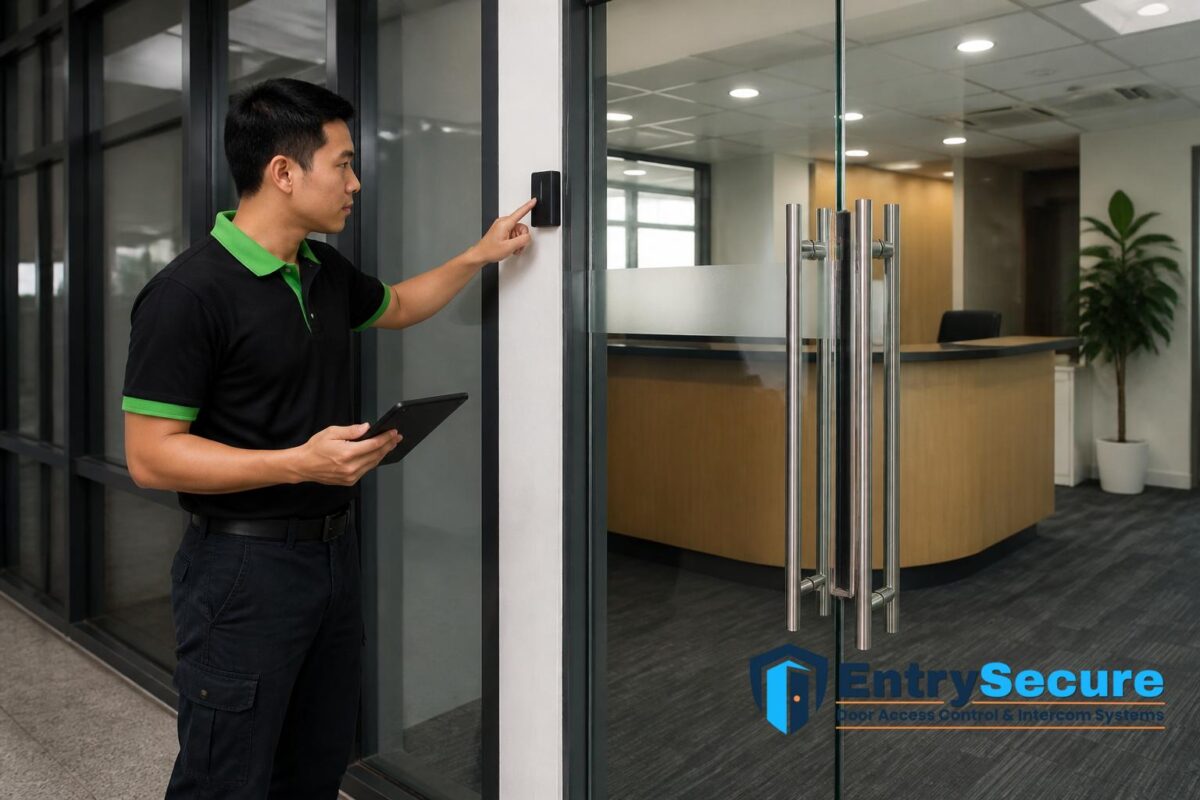
The process typically begins with a site visit or review of the workplace layout. The installer will look at which doors need controlled access, how staff and visitors move through the premises, and whether the building already has any existing cabling, locks or access equipment. In Singapore workplaces, this is especially useful because different units and office layouts can vary greatly, from small professional suites to larger commercial floors.
During this stage, the installer will also identify practical details such as the type of door material, available wall space for readers or panels, and where power or network connections can be routed. Good planning helps avoid unnecessary drilling, awkward device placement and later disruptions to the office routine.
Choosing the right entry points for installation
Not every door needs to be part of the access control setup. In many workplaces, the installation focuses on key entry points such as the main office entrance, internal doors to restricted areas, store rooms, server rooms or staff-only sections. The exact arrangement depends on how the workplace operates and which areas need controlled entry.
The installer will usually discuss the flow of people through the premises so the system supports normal operations. For example, a reception-facing entrance may need a different arrangement from a back-of-house door used by staff or contractors. This helps the system fit the workplace instead of interrupting it.
Mounting the access control components
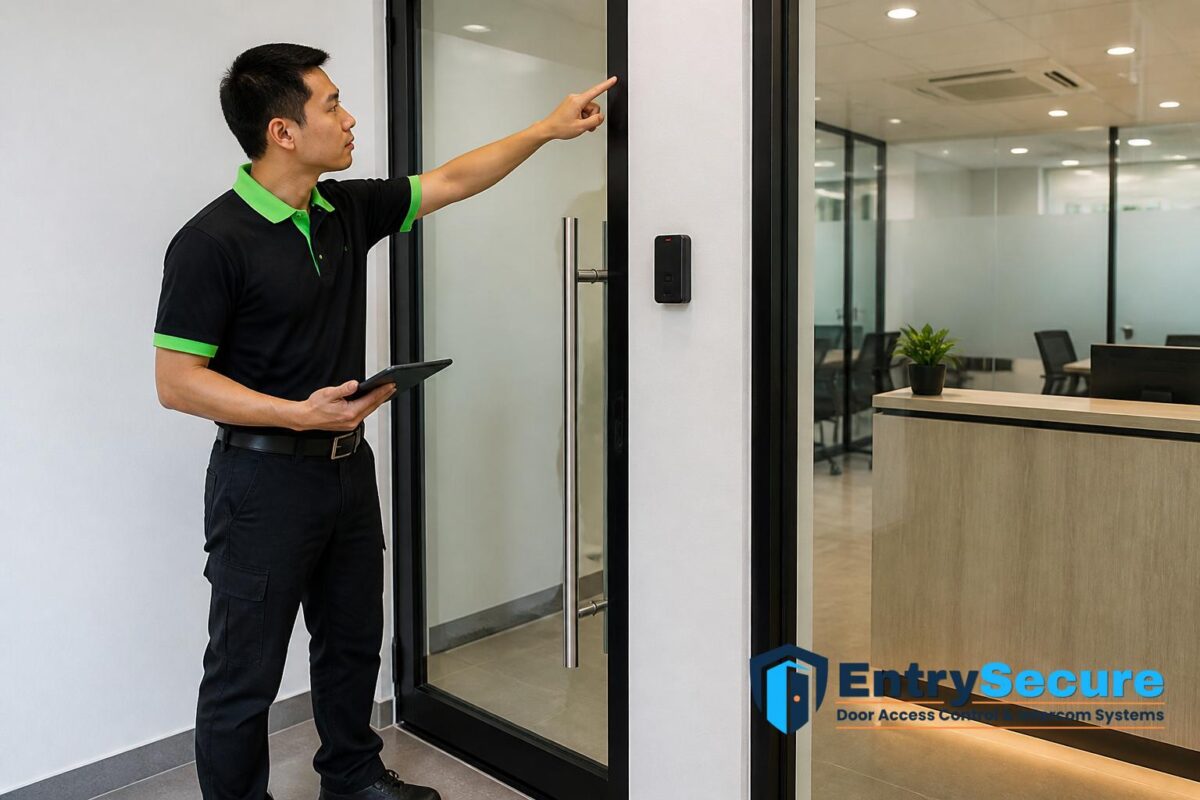
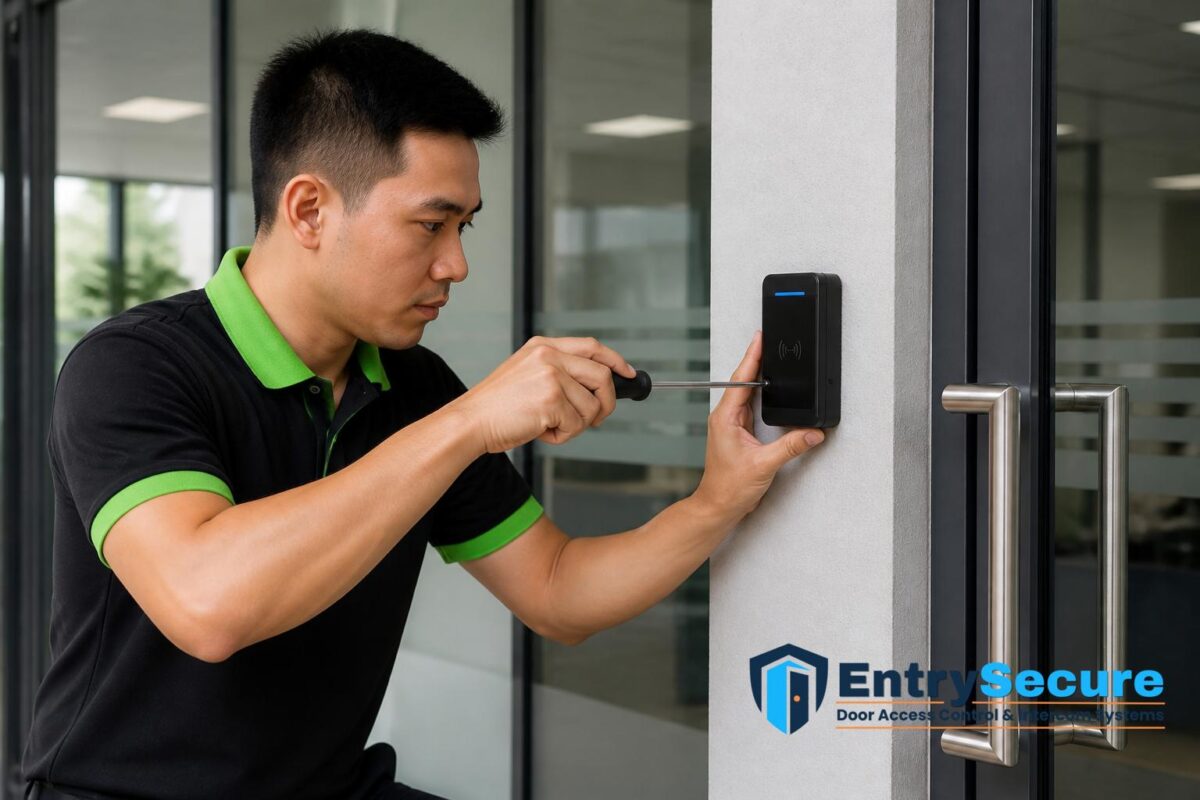
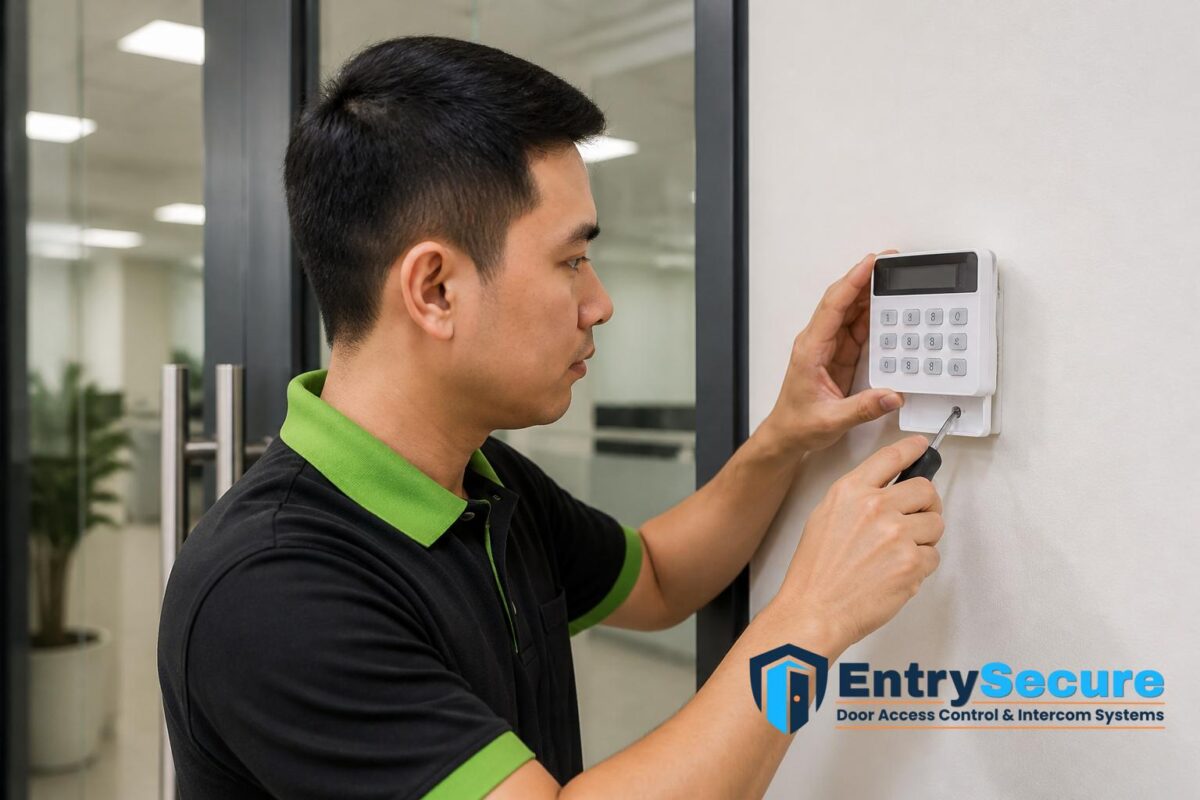
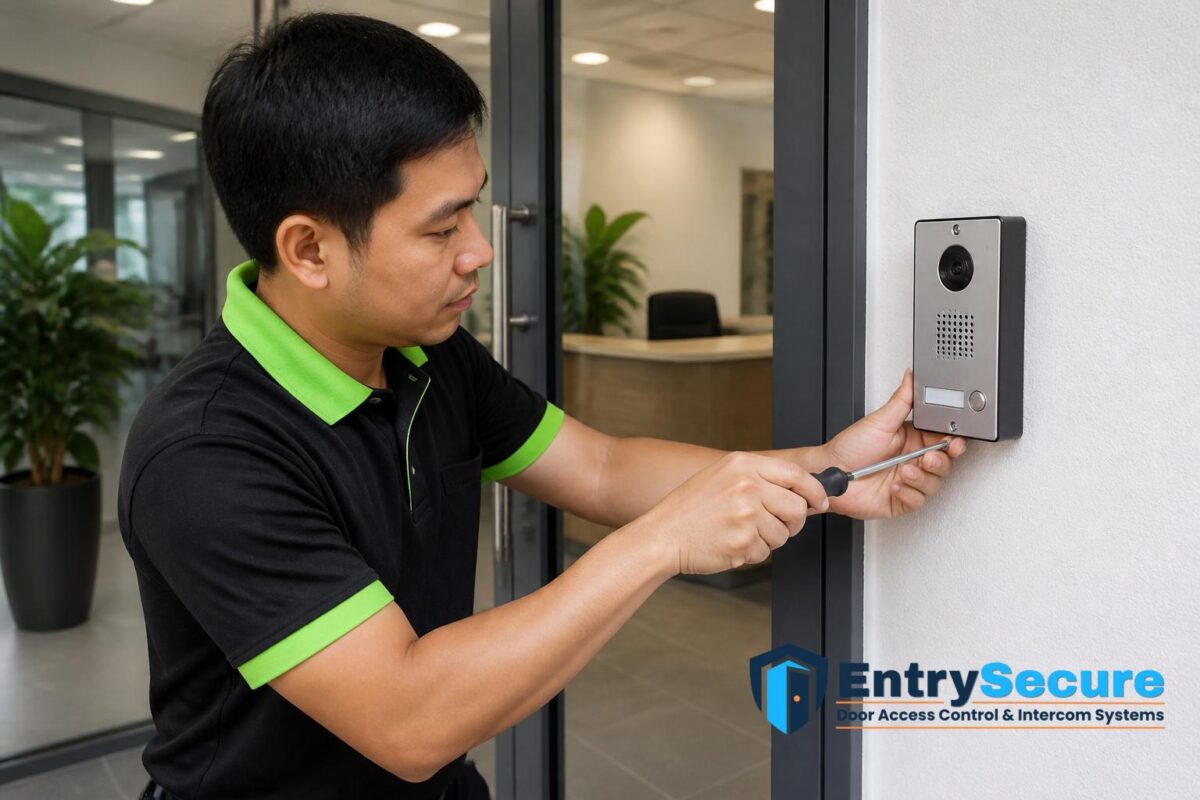
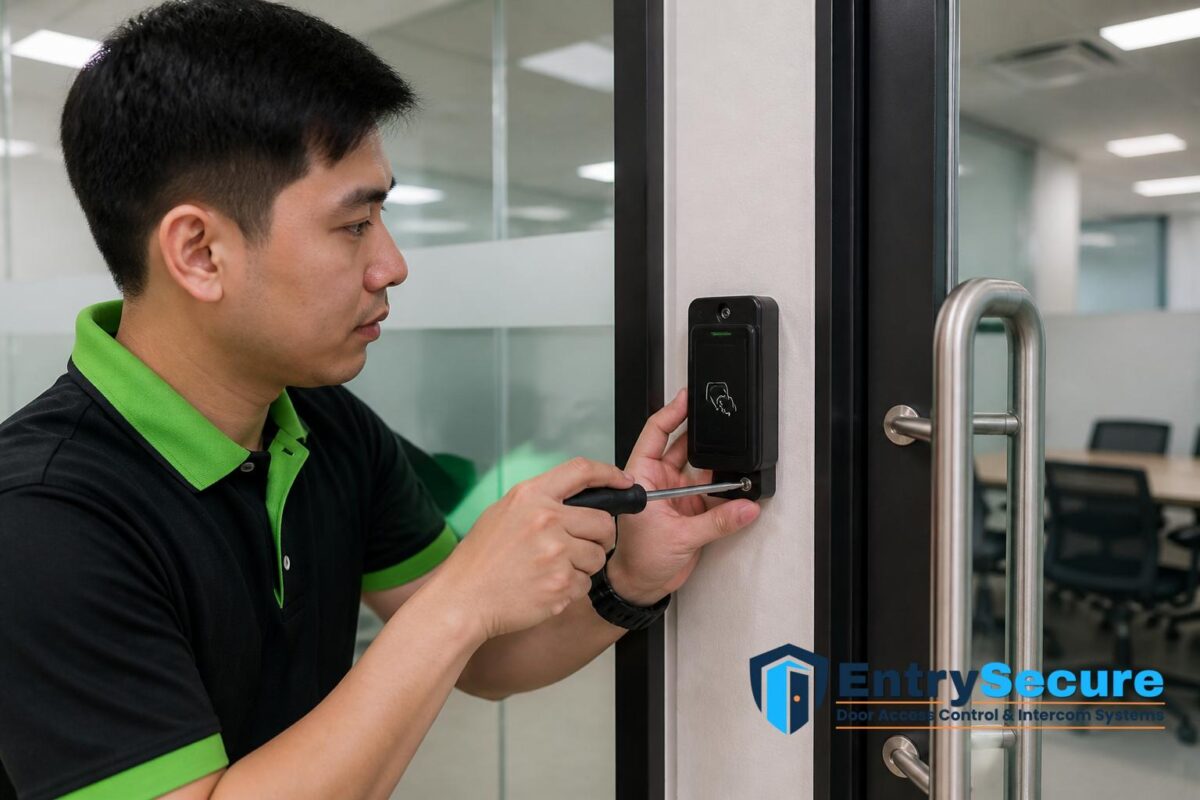
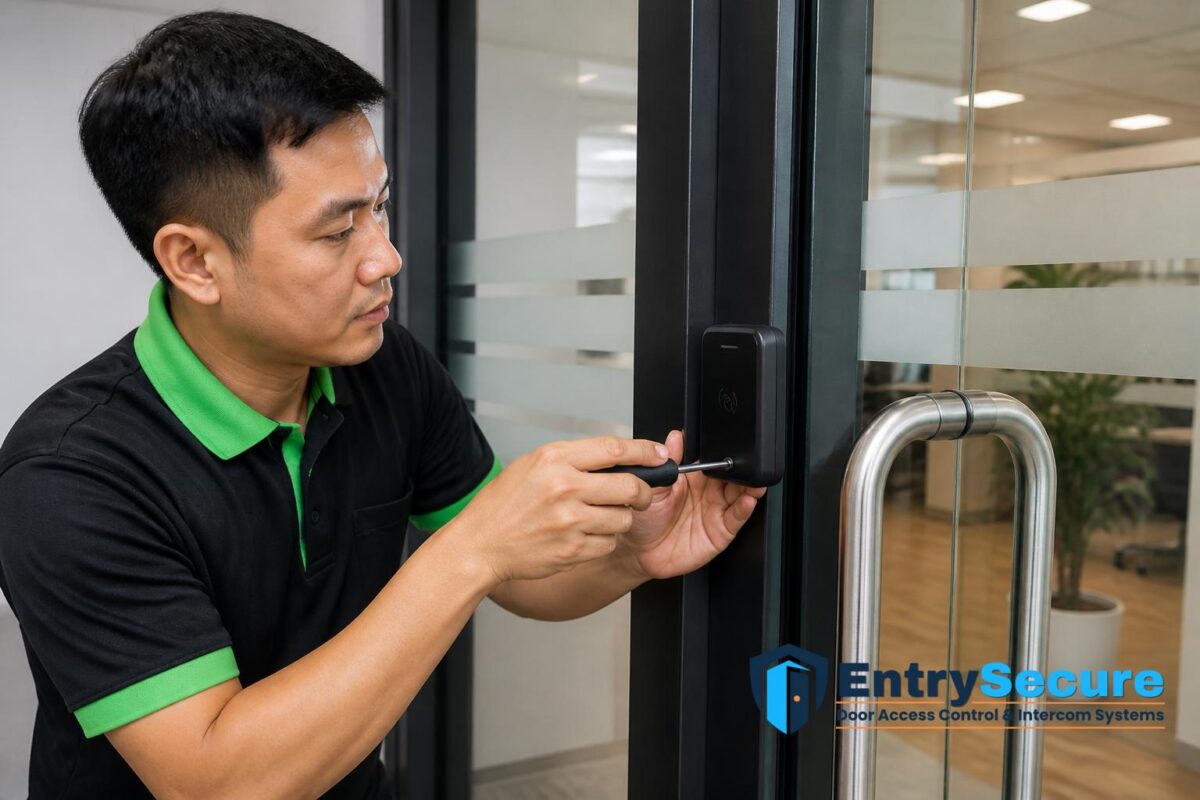
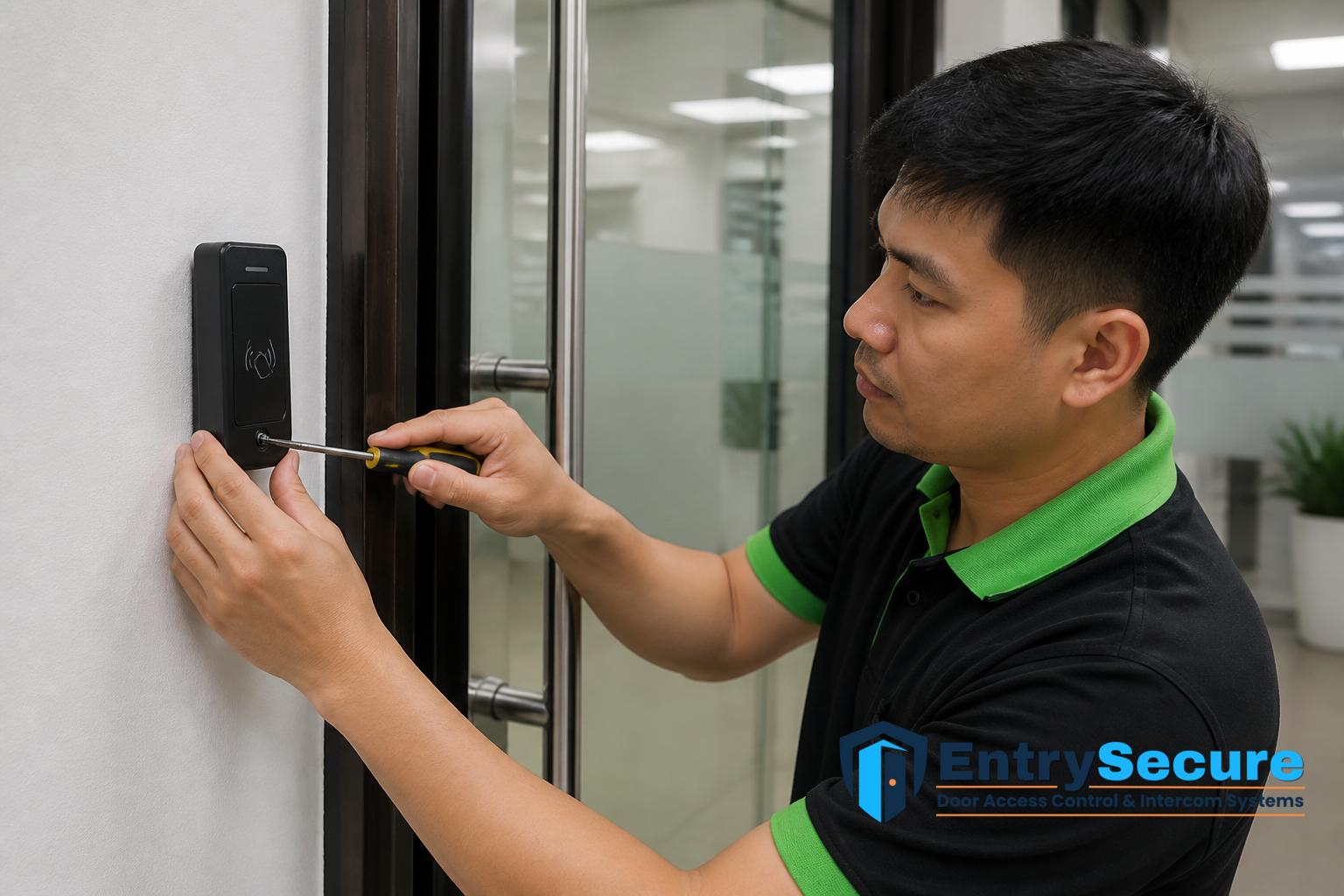
Once the plan is agreed, the physical installation starts. This may include mounting the access reader or access point hardware beside the door, positioning the control panel in a suitable internal location, and fitting any associated release mechanism required for the door setup. The installer will work carefully around the existing door frame, wall finishes and office fixtures to keep the installation neat and practical.
Placement matters. If a reader is too far from the door or mounted in an inconvenient spot, staff may find it awkward to use. If the control equipment is positioned poorly, it may also be less convenient for maintenance. A professional installer aims for a tidy finish that suits regular workplace use and servicing.
Cabling, power and workplace infrastructure
Door access system installation often involves running cabling between the reader, controller, power supply and door hardware. In a workplace, this part of the job must be managed carefully to reduce visible clutter and minimise disruption to staff. Installers may route cables through trunking, ceiling voids or discreet wall paths where practical.
The installer will also check that there is a suitable power source and that the wiring layout supports reliable operation. In commercial premises, this is important because workplace access systems are often used throughout the day and need a stable setup rather than a temporary arrangement. Good cabling practice helps the installation look professional and function consistently.
System setup and access configuration
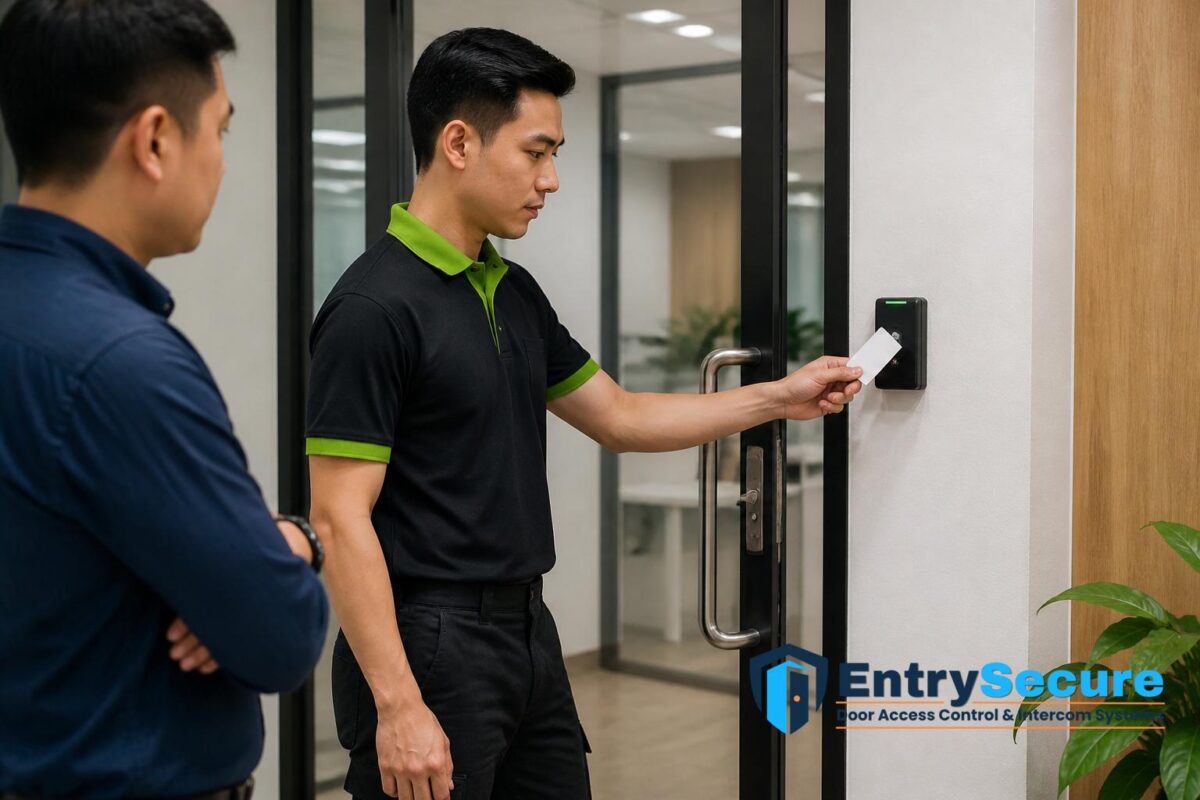
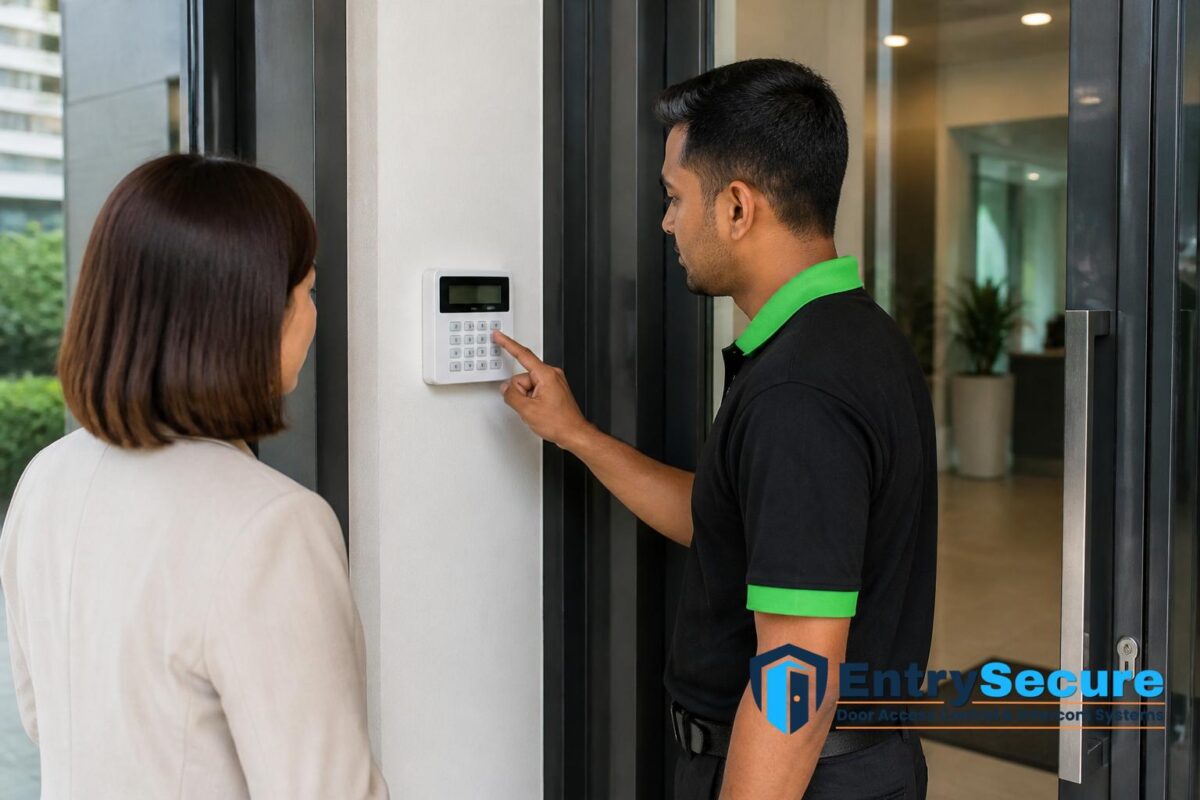
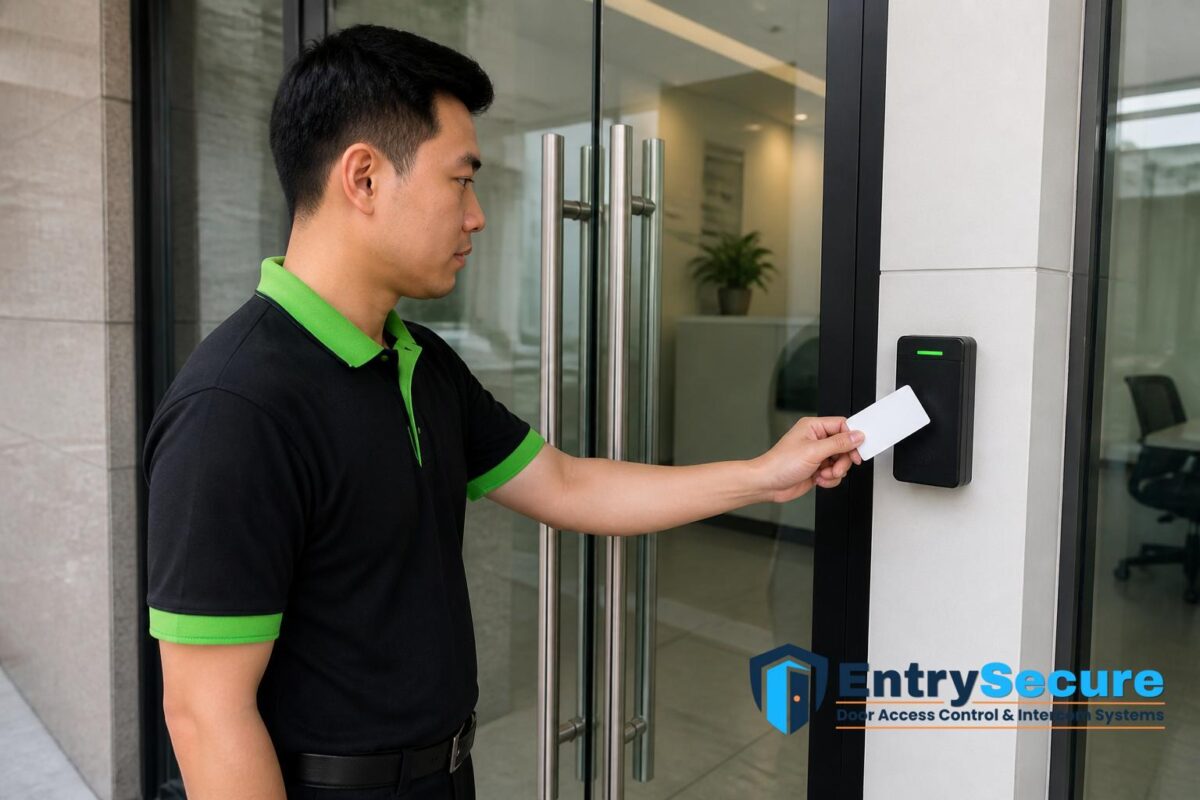
After the hardware is in place, the system is configured for the workplace’s intended use. This stage may involve setting up the controller, programming the access points and arranging how the system recognises authorised users. The exact method depends on the equipment selected and the workplace’s operational needs.
For offices, setup usually focuses on making entry straightforward for approved staff while keeping restricted areas properly controlled. If the workplace has separate zones for administration, operations or storage, the installer may configure different access points accordingly. The objective is to create a practical system that matches the way the business works each day.
Testing, adjustments and handover
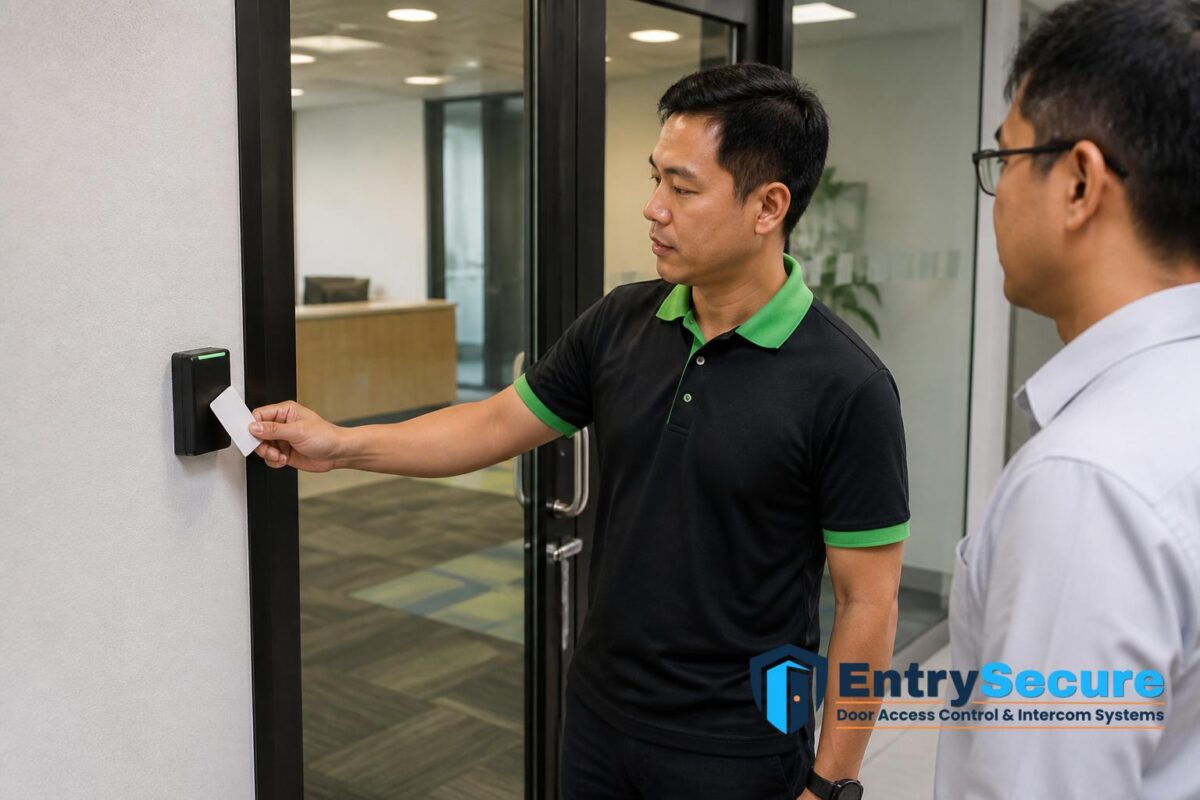
Before the installation is considered complete, the system is tested to confirm that each door responds correctly and that the setup works as expected. The installer will check the physical door operation, access response and any related functions to make sure the installation is dependable. If anything needs adjusting, it is usually handled at this stage.
There may also be a short handover for the workplace team. This can include basic guidance on how to use the system, who should manage access changes and what to do if a door or device needs attention. A clear handover helps facilities teams and office managers feel confident about operating the system after the installer leaves.
Minimising disruption in an active workplace
One of the most important parts of workplace installation is managing disruption. Offices and commercial units in Singapore often need access kept open for staff, deliveries or visitors while work is being carried out. A professional installer will usually plan the sequence of work carefully so essential areas remain usable where possible.
In some cases, installation may be scheduled outside peak business hours or in phases to reduce interruption. This is particularly helpful when the workplace has multiple tenants, busy reception areas or sensitive operational schedules. The aim is to complete the work neatly without affecting day-to-day productivity more than necessary.
If you need door access system installation for a Singapore workplace, WhatsApp EntrySecure Door Access Control & Intercom Systems Singapore with your office or commercial property details, entry point photos, current equipment and the access control scope you want to arrange a suitable recommendation and quotation.
Conclusion
Door access system installation at a Singapore workplace usually follows a clear sequence: assessment, planning, component placement, cabling, setup, testing and handover. When handled professionally, the process is designed to suit the workplace layout, support normal operations and provide a practical access arrangement for staff and restricted areas.
For office managers and commercial property operators, understanding what happens during installation makes it easier to prepare the site, coordinate with the installer and keep disruption low. A well-planned installation is the foundation of a dependable workplace access control setup.
Choose EntrySecure Door Access Control & Intercom Systems Singapore
EntrySecure Door Access Control & Intercom Systems Singapore provides access and security solutions for homes, offices and commercial properties across Singapore. Our services cover access control, door access systems, intercom systems, security systems, alarm systems and security alarm systems to support safer and more convenient entry management.
Based on your property layout and security needs, our team can recommend a suitable setup for controlling access, managing visitors and improving overall premises security. We also provide CCTV services for customers who require additional monitoring alongside their access or alarm system.
Whether you need a new door access system, intercom installation, alarm setup or a more complete security solution, our team can assist with a practical arrangement for your property. WhatsApp us at +65 8241 0032 to enquire about our access and security system solutions.
Frequently Asked Questions
How long does door access system installation usually take in a workplace?
The time required depends on the number of doors, the site layout and whether there is existing infrastructure in place. A small office entrance may be quicker to install than a multi-door commercial setup, especially if cabling and equipment placement need more planning.
Will installation disrupt normal office operations?
It can cause some disruption, but this is often managed through careful planning and scheduling. Installers may work around office hours or phase the work to reduce interference with daily operations, especially in active workplaces.
What should a workplace prepare before installation?
It helps to identify which doors need access control, provide photos of the entry points and share any relevant details about current equipment or site restrictions. This gives the installer a clearer picture of the workplace and helps shape a suitable installation plan.