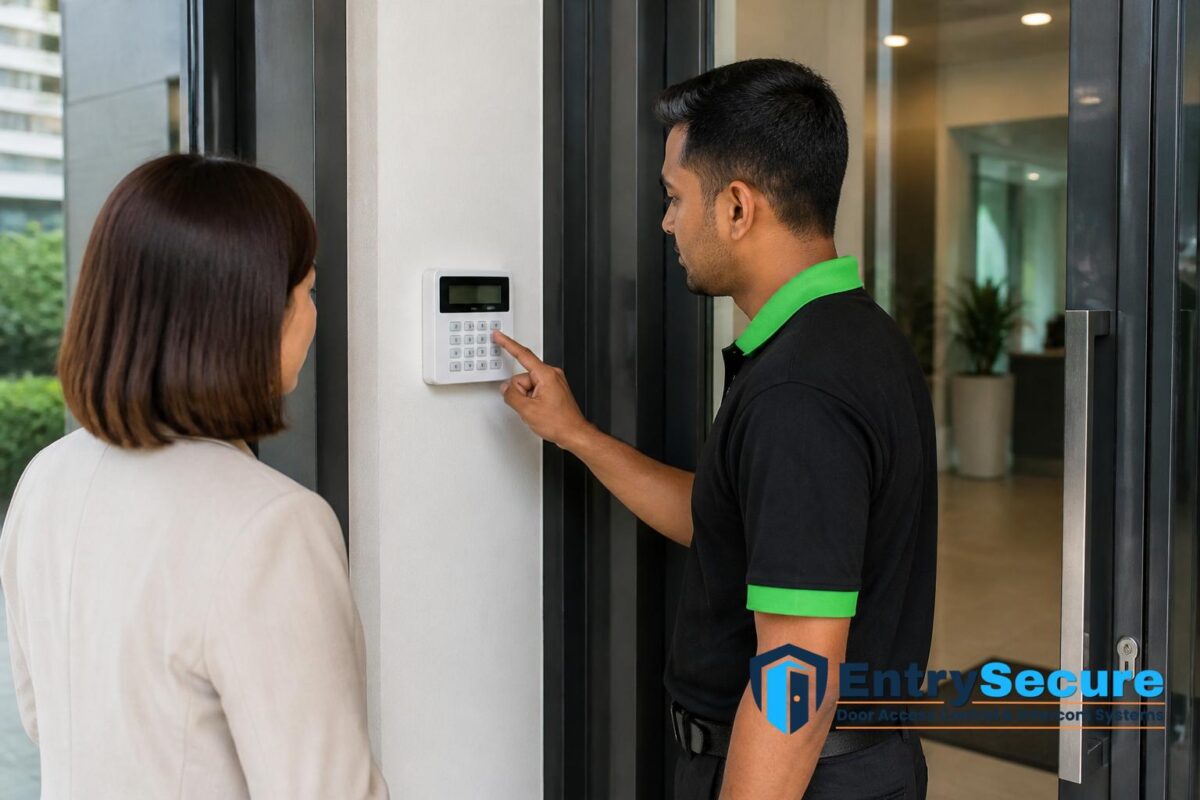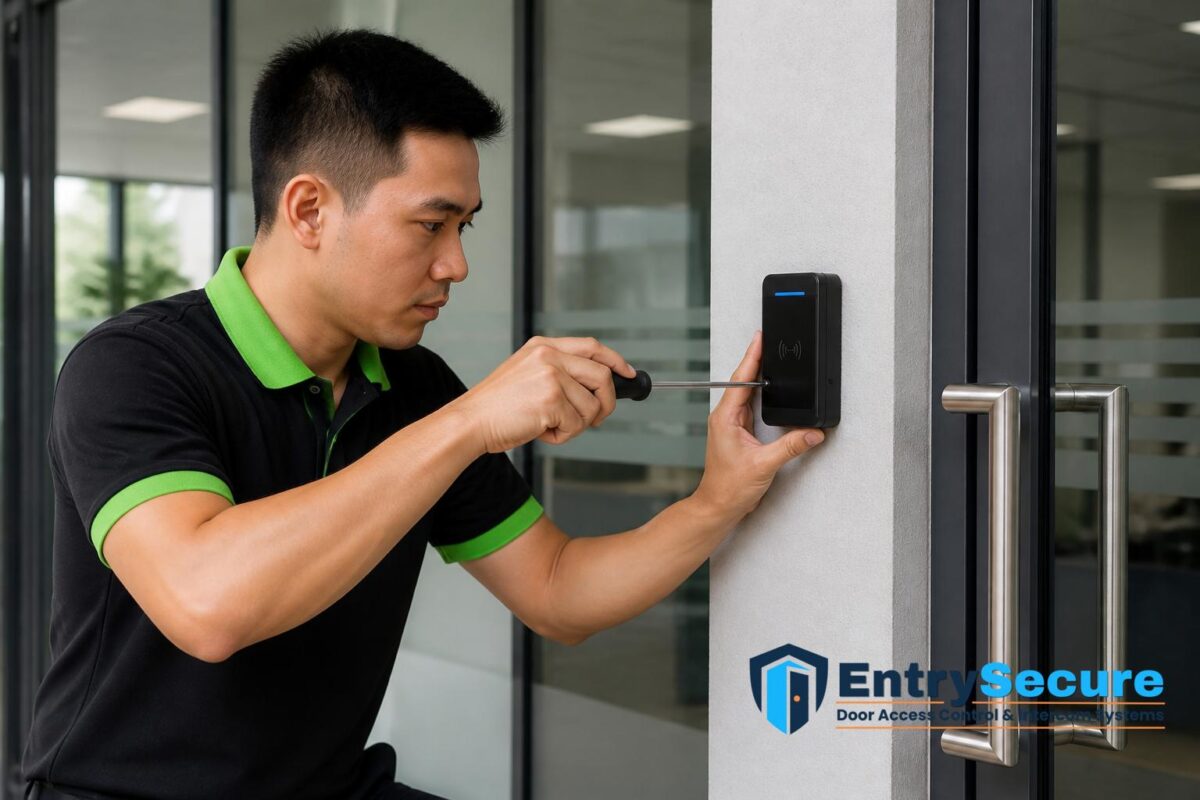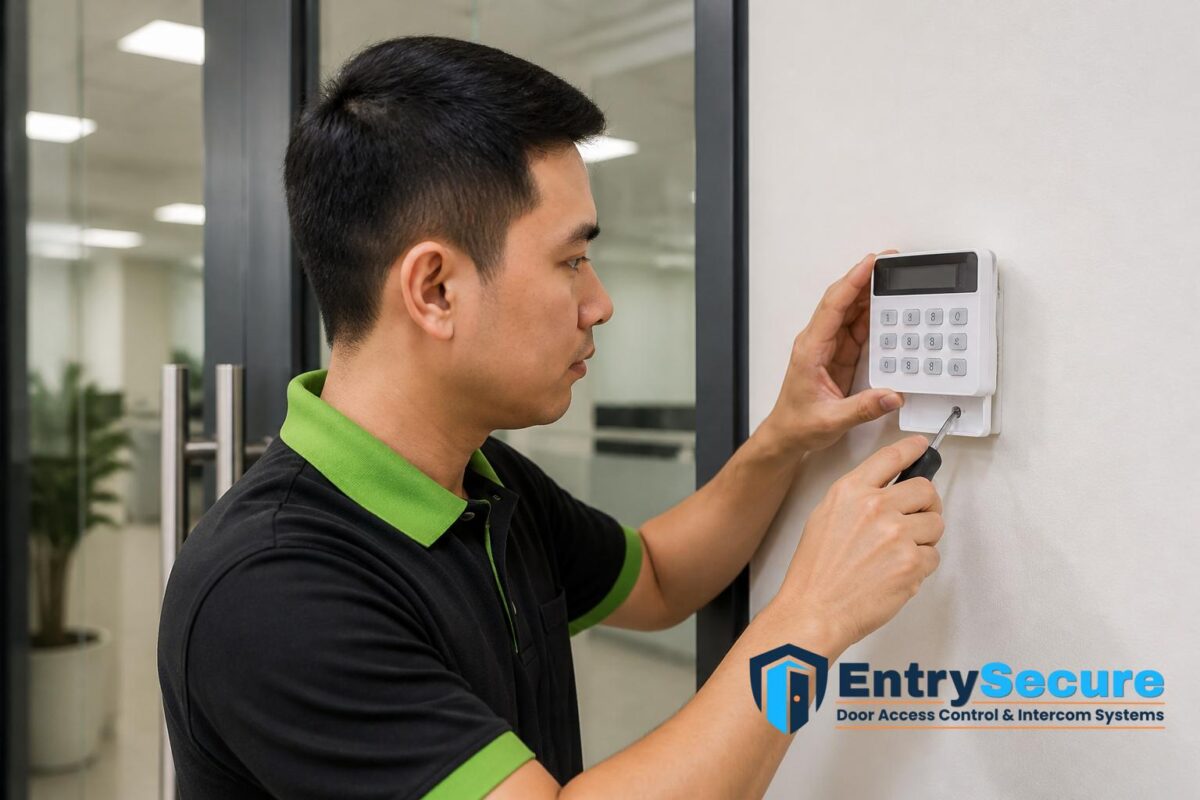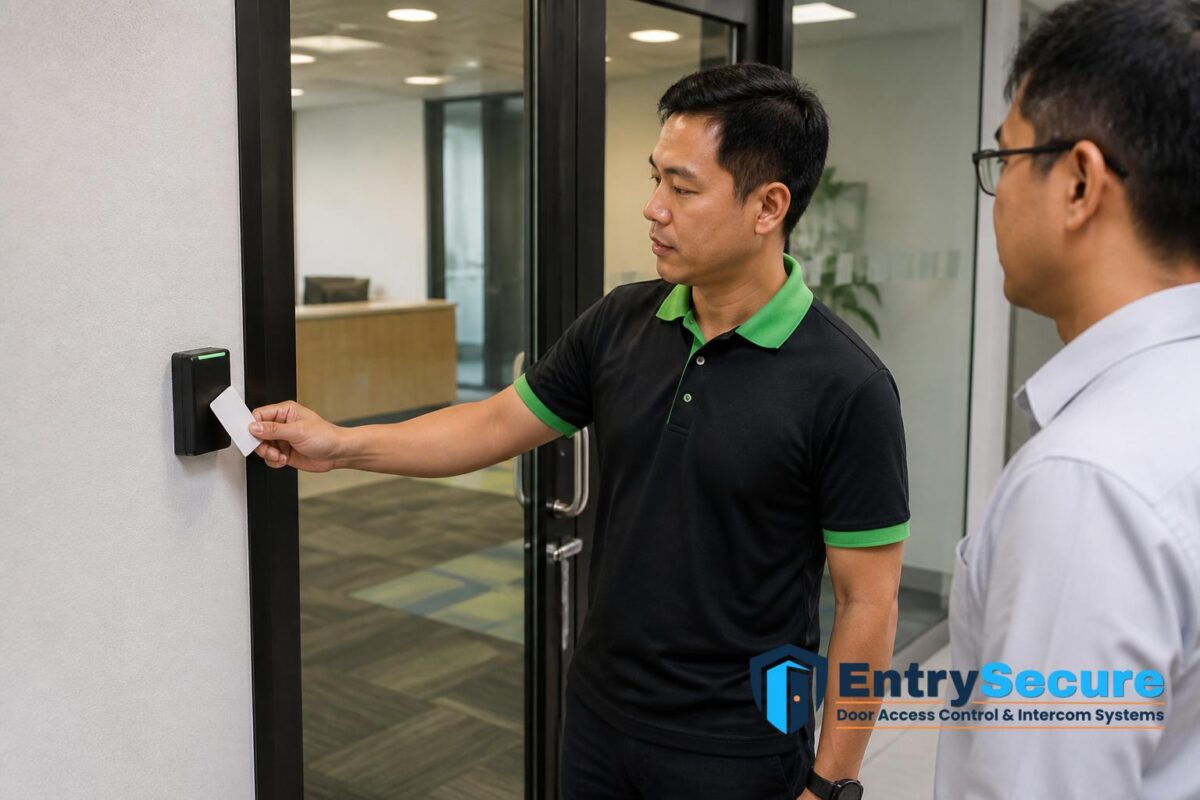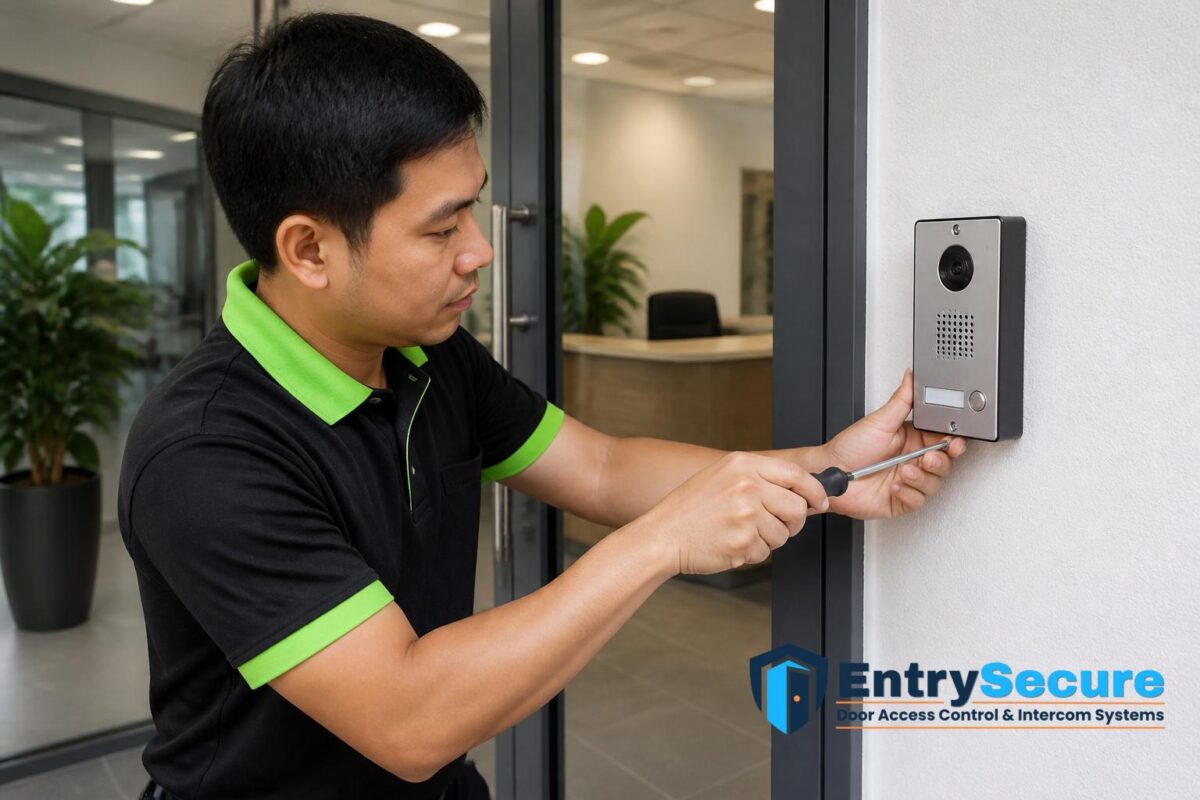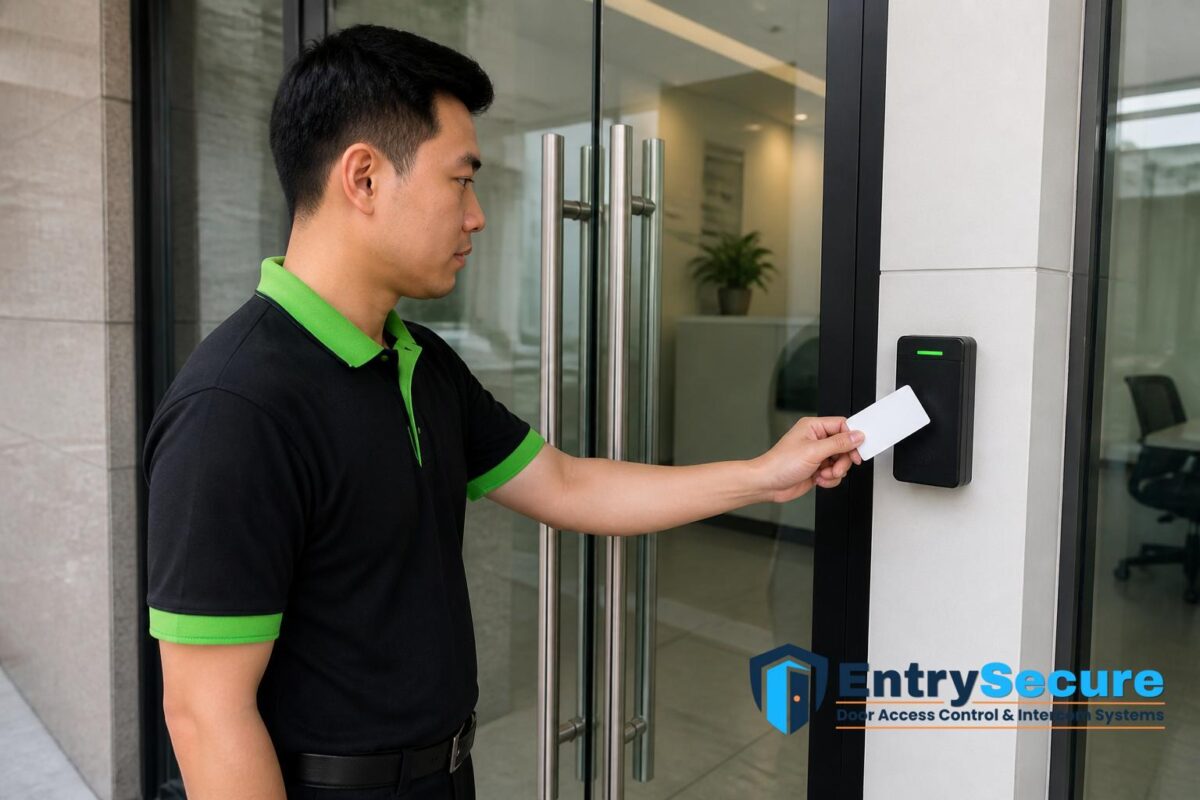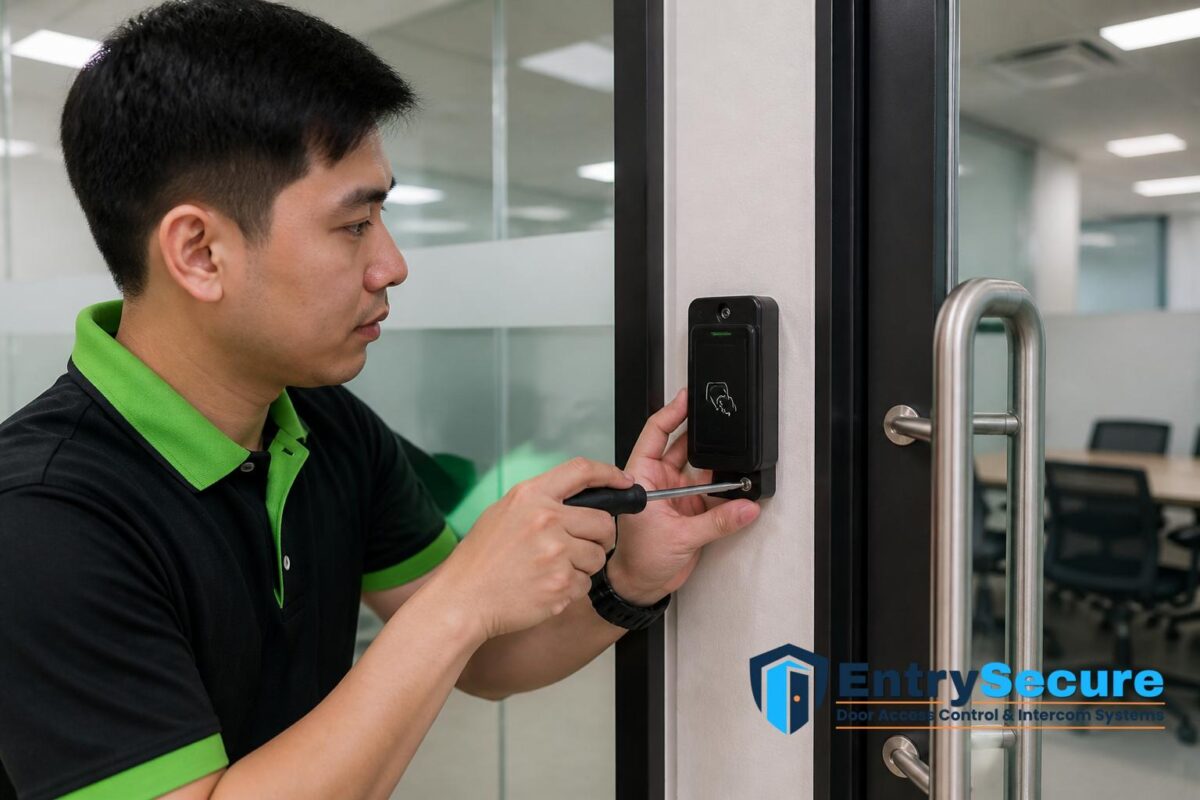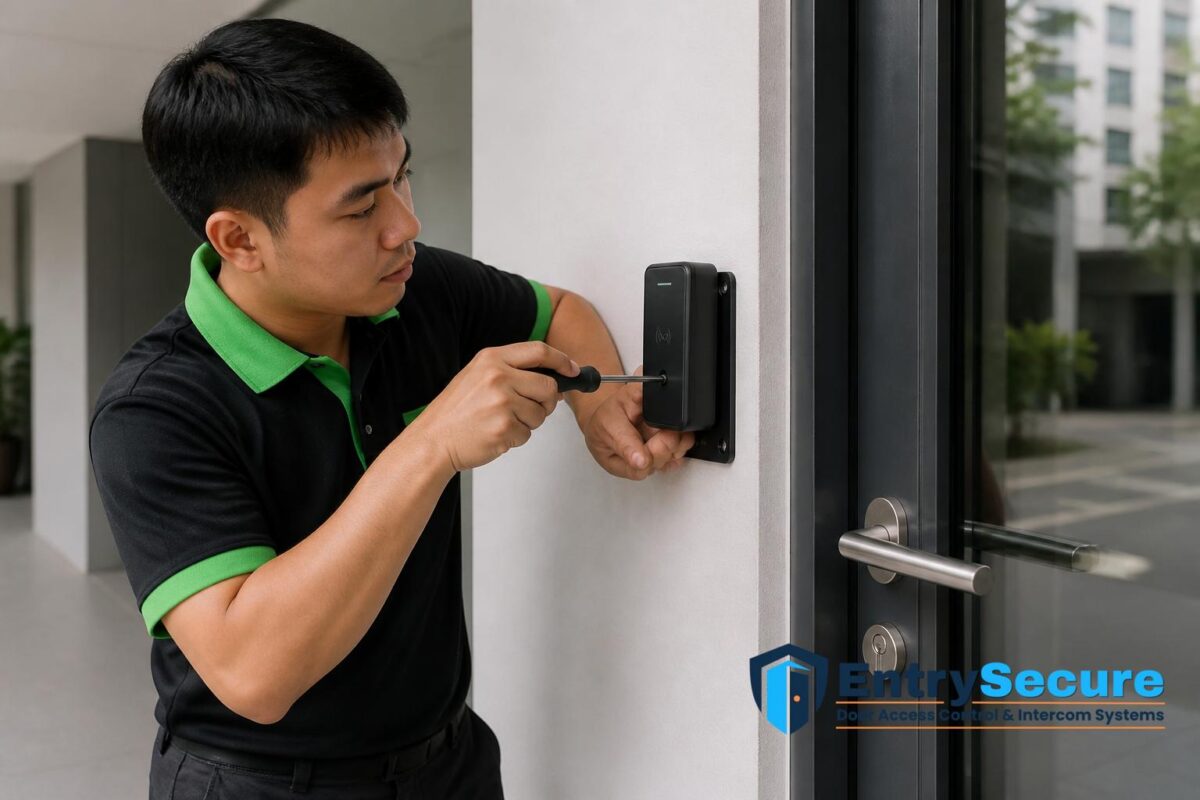

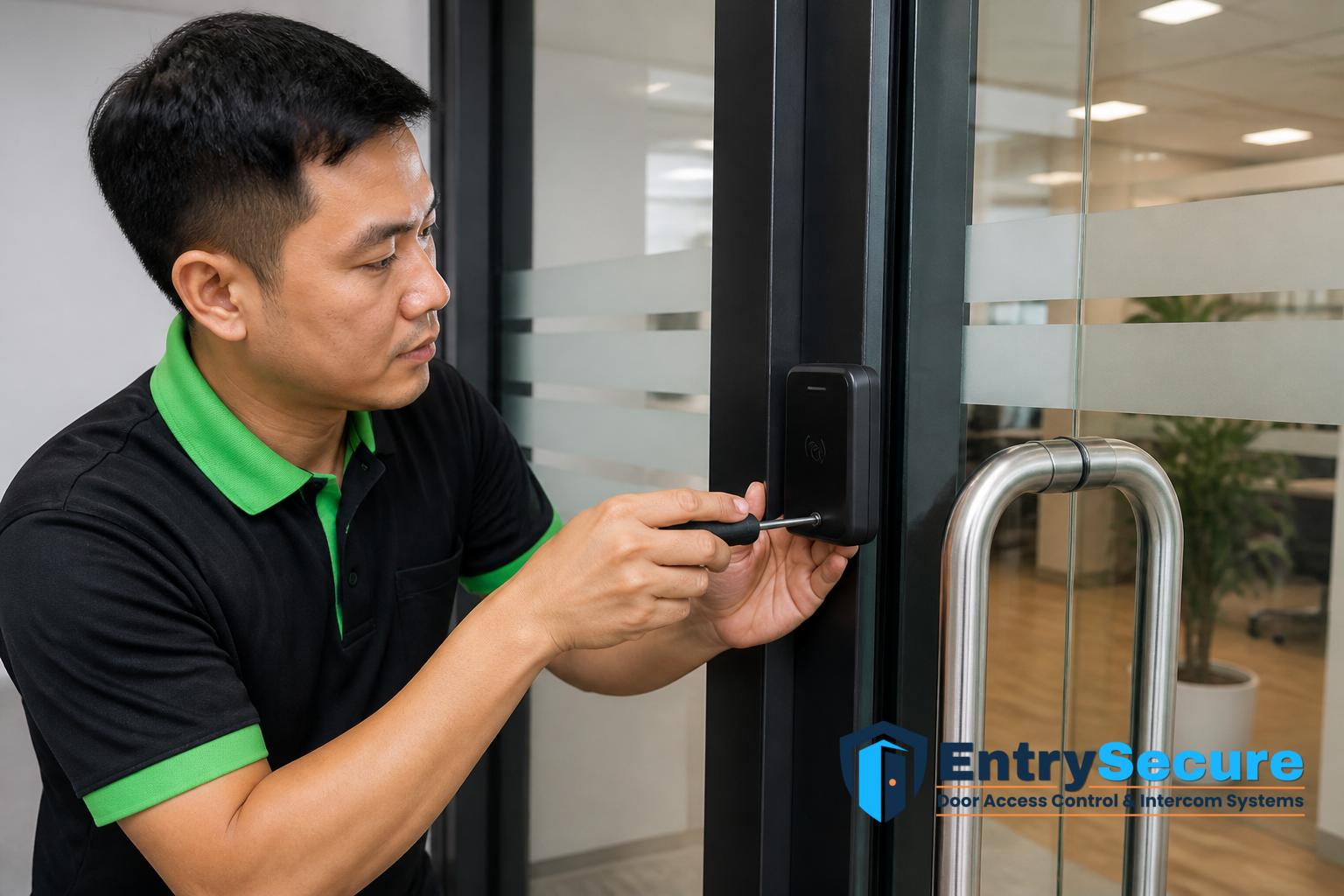
Installing door access on glass doors in Singapore offices needs careful planning because glass behaves differently from timber, metal or solid-core doors. The method used must suit the door’s thickness, the frame type, the available fixing points and the day-to-day movement of staff and visitors. In office settings, the aim is to achieve controlled entry without compromising the door’s function, appearance or practical use.
For that reason, professional installation is usually more than simply fixing a reader beside the entrance. It involves assessing the glass door type, choosing suitable mounting locations, routing cables neatly and setting up the access control components in a way that supports reliable daily use. A proper approach also helps avoid unnecessary damage to the glass or surrounding frame.
Why glass doors need a different installation approach
Glass doors in offices are common because they create a clean, modern look and allow natural light into reception areas, meeting rooms and internal corridors. However, they are not installed in the same way as solid doors. Drilling directly into glass is generally not appropriate, so installers must work with the surrounding structure, compatible fittings and the existing door assembly.
That means the mounting method often depends on whether the door is framed, frameless, sliding or part of a glass partition system. In Singapore offices, the entrance may also include a narrow aluminium frame, a closer, a floor spring or a side panel, all of which affect how the door access system can be positioned and supported.
The key point is that the installation plan must suit the physical structure of the glass door rather than forcing a standard solution onto it. This is especially important in office buildings where the entrance sees frequent use throughout the day.
Assessing the door, frame and entry point first
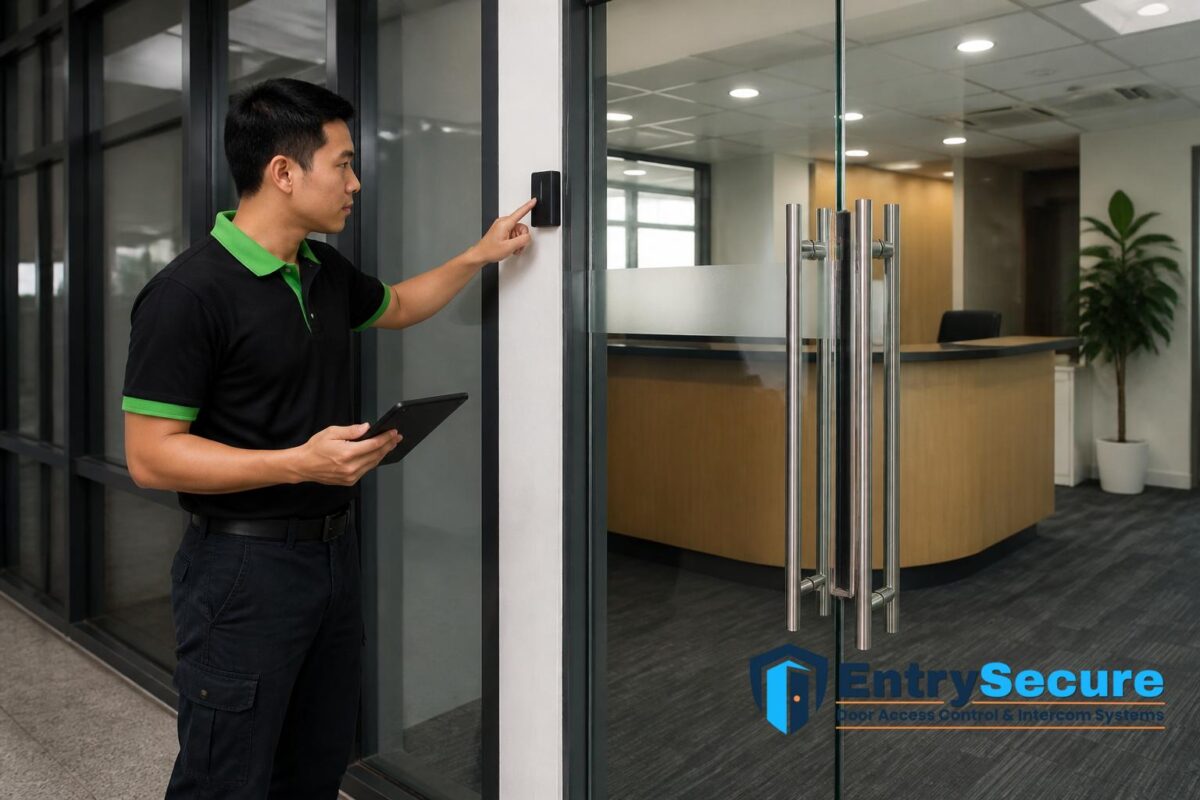
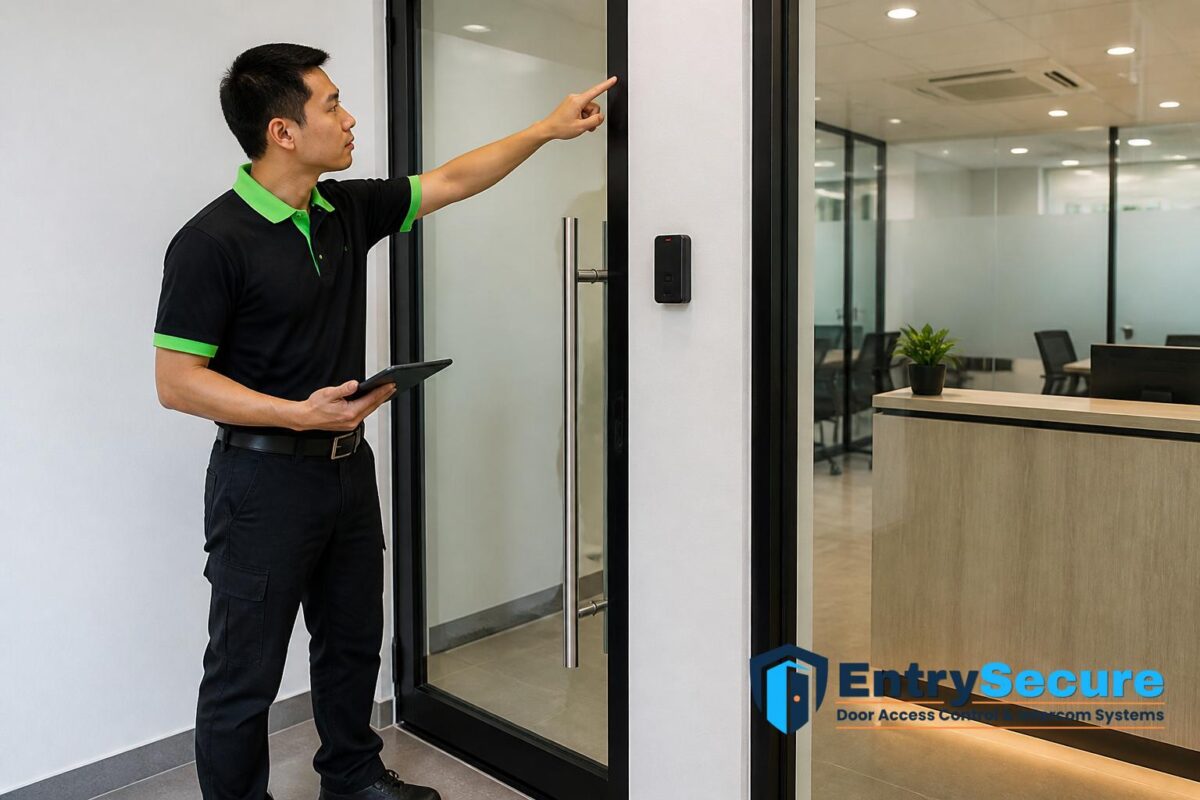
Before any installation begins, the entry point should be checked carefully. The installer needs to understand how the door opens, where people naturally approach it, and how much space is available for the reader, request-to-exit device and any supporting components. In a glass-door office, even small changes in position can affect usability and appearance.
The assessment should also confirm whether the access control components can be mounted on adjacent wall surfaces, side frames or other structural points rather than directly on the glass itself. This is often the cleanest approach for office installations, particularly where the glass panel is frameless or where the door must keep its original look.
For offices in Singapore, it is also sensible to think about daily traffic flow. A main entrance may need a different arrangement from a meeting-room entry or a back office glass door. The correct placement should support smooth movement while keeping entry controlled.
Where the access control components are usually placed
On glass doors, the access reader is often placed on a nearby wall, a side pillar or a frame member rather than on the glass panel. This allows the system to remain accessible while reducing the risk of stressing the door surface. The exact position should be chosen so users can present their credential naturally without crowding the doorway.
Other components, such as the control panel and power supply, are typically installed in a secure internal location away from public reach. This helps keep the system tidy and easier to maintain. If a door release device or lock interface is needed, it should be matched to the door’s structure and the office’s entrance configuration.
For glass office doors, cable routes should be planned early so they do not interfere with visibility or create a cluttered look. Where possible, wiring is concealed through suitable routes in the frame, wall or adjacent structure, depending on what the site allows.
Cabling and power planning for office glass doors
Good cabling is central to a reliable installation. Because glass doors do not offer the same fixing flexibility as solid doors, installers often need to route cables carefully through nearby surfaces rather than across the door itself. This helps maintain a neat finish and reduces the chance of movement-related wear.
Power supply planning is also important. The access control system should have a stable source of power and an organised layout for its connections. In office environments, this is especially useful because the system may be in use for long hours each weekday, and maintenance access should remain straightforward.
Where the office layout includes glass partitions, reception desks or concealed service areas, the installer may need to plan cable paths around those features. The aim is to keep the installation functional, tidy and practical for future servicing.
Choosing installation methods that suit glass office entrances
The right installation method depends on the door construction and the desired control point. Some office glass doors can accept hardware on the frame or surrounding structure, while others need solutions that avoid direct door modification. A professional installer will consider whether the access control setup should be mounted beside the doorway, integrated with the frame or supported by adjacent surfaces.
In a shared office or business unit, the entrance may also need to balance security with convenience. A receptionist area, internal staff entrance or meeting room access point may each call for slightly different placement and wiring arrangements. That is why the site survey matters so much before work starts.
It is also important not to assume that one door type can take the same fixing approach as another. Frameless glass, framed glass and glazed partition doors all behave differently, and the installation should respect those differences from the outset.
Testing, alignment and handover after installation
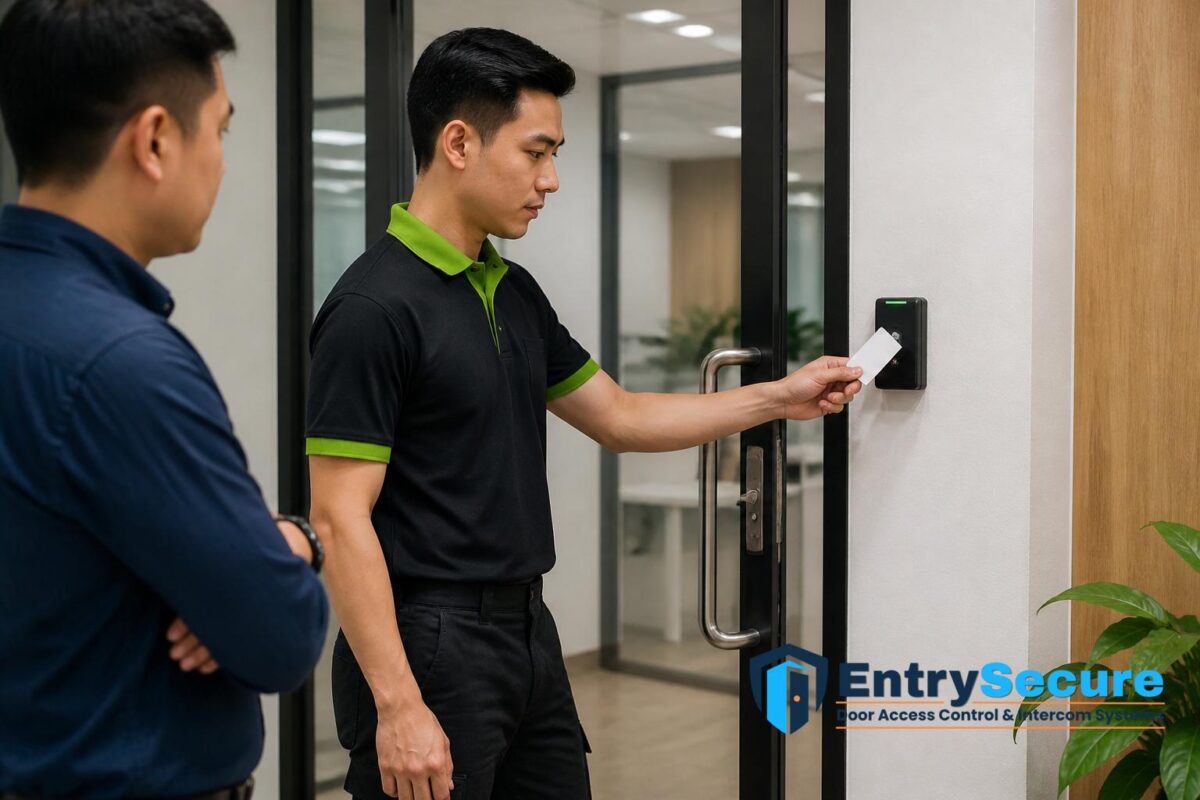
Once the components are fitted, the system should be tested at the actual door position. This includes checking that the reader is easy to reach, that the access action is clear for users and that the door opens and closes properly after each authorised entry. On a glass door, good alignment is especially important because the opening mechanism and surrounding frame can affect how smoothly the door operates.
The installer should also confirm that the cabling is secure, that the mounting points remain stable and that the system is set up in a tidy, practical way for office use. If there are multiple staff entry points, each one should be checked individually rather than assuming they will behave the same.
A proper handover should explain how the office team will use the system day to day, what to look out for if the door does not behave as expected, and how servicing access is arranged. This helps office managers and facilities teams keep the system in good working order.
Why professional installation is important in Singapore offices
Glass-door access control is best installed by a team familiar with office entry points, glazed doors and the practical demands of commercial spaces in Singapore. A professional installer can assess the door type, plan the mounting positions and ensure the system is fitted in a way that respects the glass structure and the office environment.
This is particularly useful where the entrance is a client-facing area, where appearance matters, or where the office needs a neat and dependable setup with minimal disruption. It also reduces the chance of avoidable installation issues such as awkward placement, exposed wiring or poorly considered hardware positioning.
For office managers, landlords and facilities representatives, the main advantage is having a solution that works with the glass door rather than against it. That usually leads to a better finish and a more practical everyday experience for staff and authorised visitors.
WhatsApp EntrySecure Door Access Control & Intercom Systems Singapore with your office glass-door access control requirements, property type, entry point photos, current equipment and the security scope you need so the team can recommend a suitable arrangement and quotation.
Conclusion
Door access installation on glass doors in Singapore offices is a careful process that depends on the door structure, the available mounting points, the cable route and the way people use the entrance each day. With proper assessment and professional planning, the system can be installed neatly and reliably while preserving the look and function of the glass door.
Choose EntrySecure Door Access Control & Intercom Systems Singapore
EntrySecure Door Access Control & Intercom Systems Singapore provides access and security solutions for homes, offices and commercial properties across Singapore. Our services cover access control, door access systems, intercom systems, security systems, alarm systems and security alarm systems to support safer and more convenient entry management.
Based on your property layout and security needs, our team can recommend a suitable setup for controlling access, managing visitors and improving overall premises security. We also provide CCTV services for customers who require additional monitoring alongside their access or alarm system.
Whether you need a new door access system, intercom installation, alarm setup or a more complete security solution, our team can assist with a practical arrangement for your property. WhatsApp us at +65 8241 0032 to enquire about our access and security system solutions.
Frequently Asked Questions
Can door access be installed directly on a glass office door?
It depends on the door construction and the type of glass door involved. In many office settings, the access control components are mounted on the frame, wall or nearby structural surface rather than directly on the glass itself. The safest approach is to assess the site first and choose a method that suits the door assembly.
What should be checked before installing access control on a glass door?
The installer should examine the door type, frame strength, opening direction, available fixing points and cable routes. It is also useful to understand how the office uses the entrance, such as whether it is a main entry, staff-only access point or meeting room door.
Why is professional installation recommended for office glass doors?
Glass doors require more careful planning than many other door types. Professional installation helps ensure the components are positioned correctly, the wiring is routed neatly and the final setup works well in a busy office environment without unnecessary damage or clutter.