
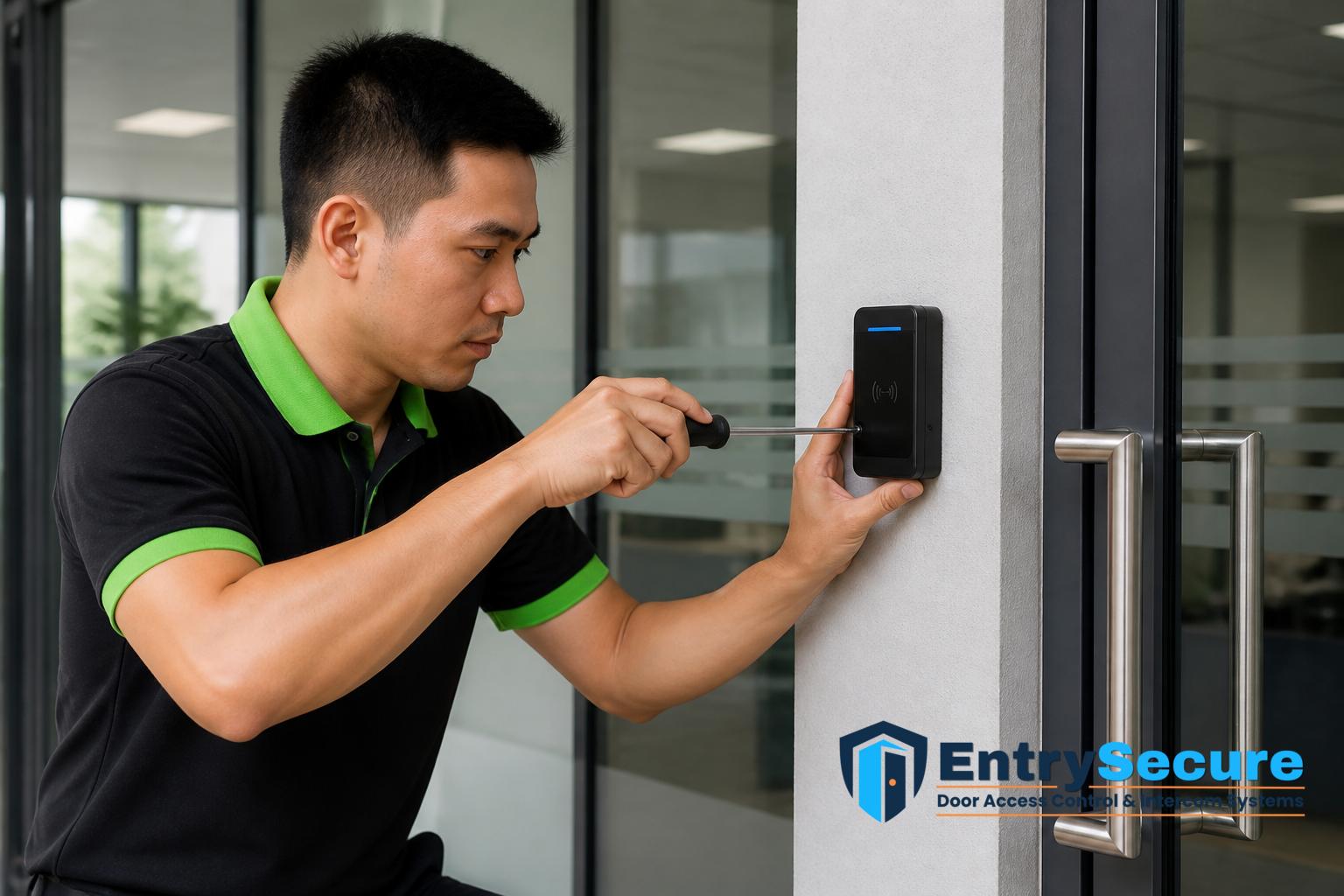
Planning access control for a Singapore office with multiple entry points is less about choosing a single device and more about mapping how people move through the premises each day. A well-planned system should support staff, visitors, cleaners, vendors and authorised maintenance personnel without creating bottlenecks at reception, side entrances or service doors. It also needs to suit the building layout, tenancy arrangements and the level of oversight the office manager wants across all access points.
Start with a clear entry-point assessment
The first step is to identify every door or gate that forms part of the office’s day-to-day access route. In many Singapore offices, this includes the main front entrance, a rear or side door, lift lobby access, pantry or service access, and any internal doors leading to restricted rooms such as server areas or records stores. Each point may have a different purpose, and that affects how it should be controlled.
It helps to note which entrances are for staff only, which are used by visitors, and which are needed for deliveries or contractor access. The more accurately these entry points are documented, the easier it is to plan a system that avoids confusion, reduces unnecessary access, and supports orderly traffic flow during busy periods.
Match access levels to how the office actually operates
Not every entry point needs the same access arrangement. A front door at reception may need broader access during business hours, while a back door may be limited to selected staff or facilities personnel. Internal restricted rooms often require tighter control than common work areas, especially where equipment, documents or operational materials are stored.
For offices with different departments or shifts, planning should also consider who needs access at what times. A system that reflects actual working patterns is easier to manage than one designed around assumptions. This is particularly useful for multi-tenant offices, shared suites and businesses that receive frequent visitors or outsource parts of their operations.
Plan the device placement around the building layout
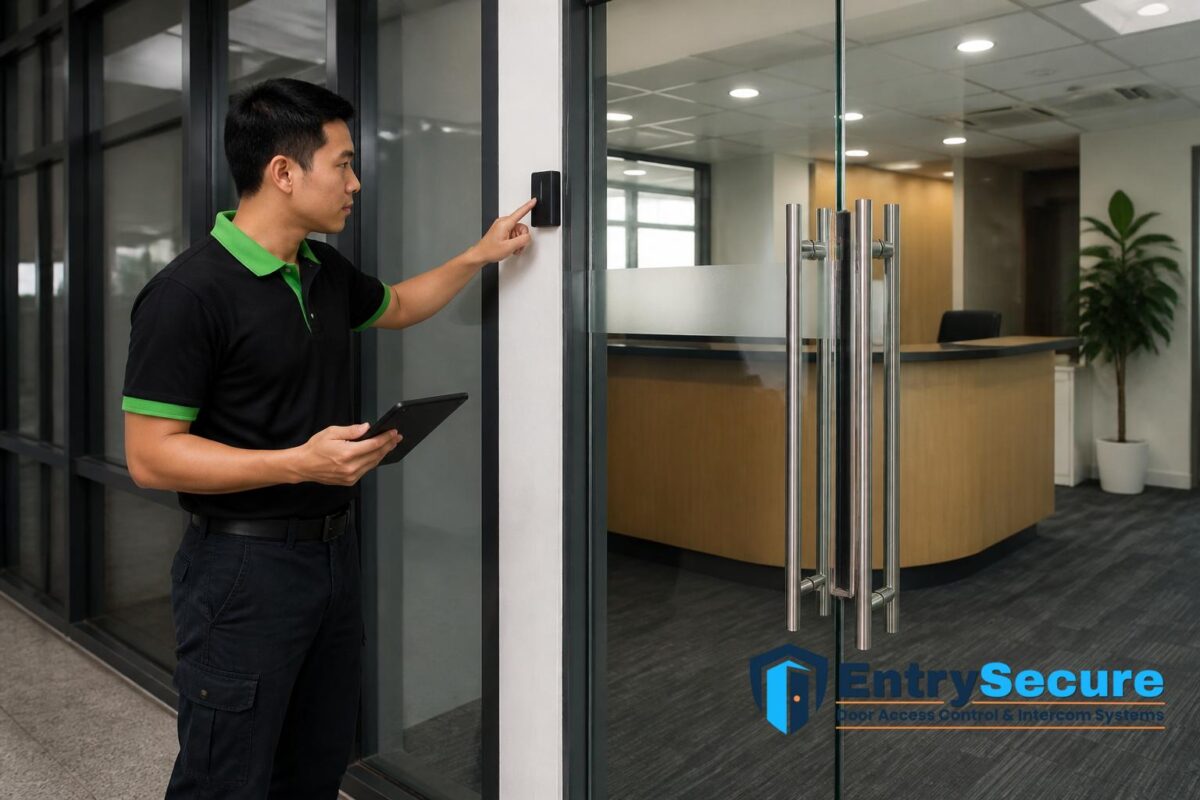
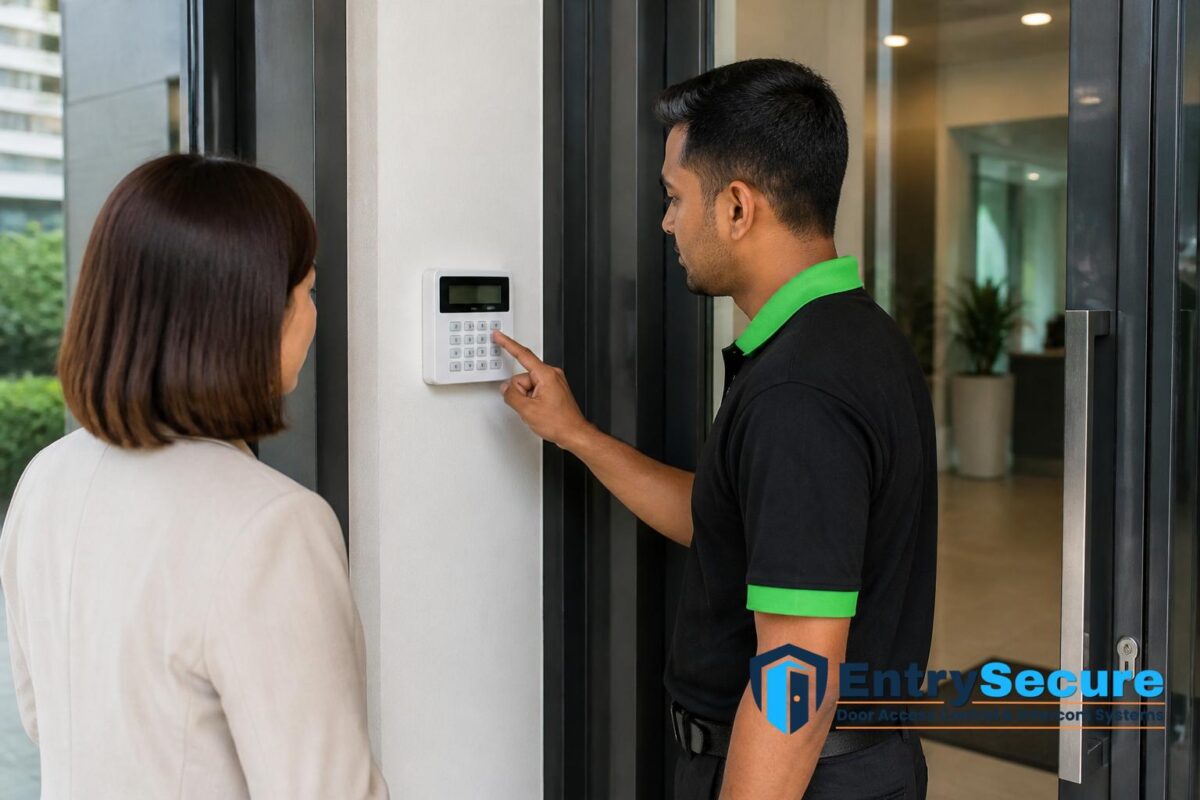
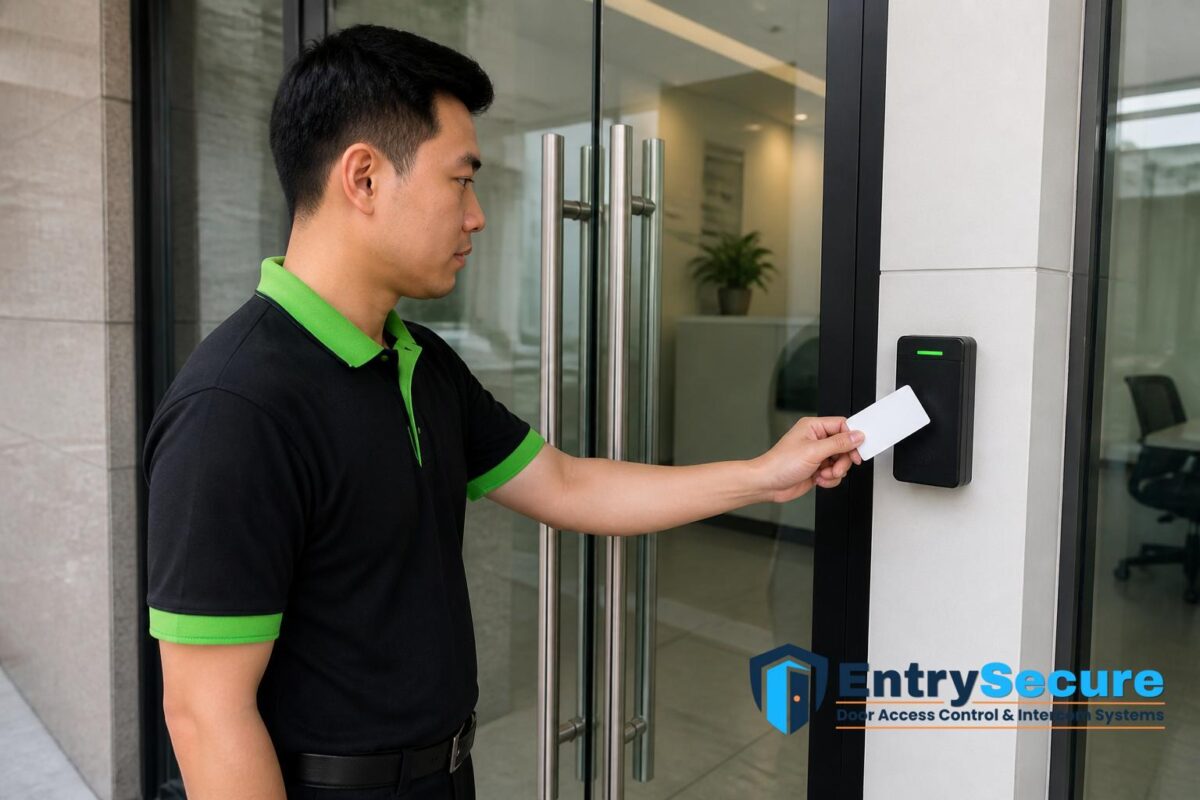
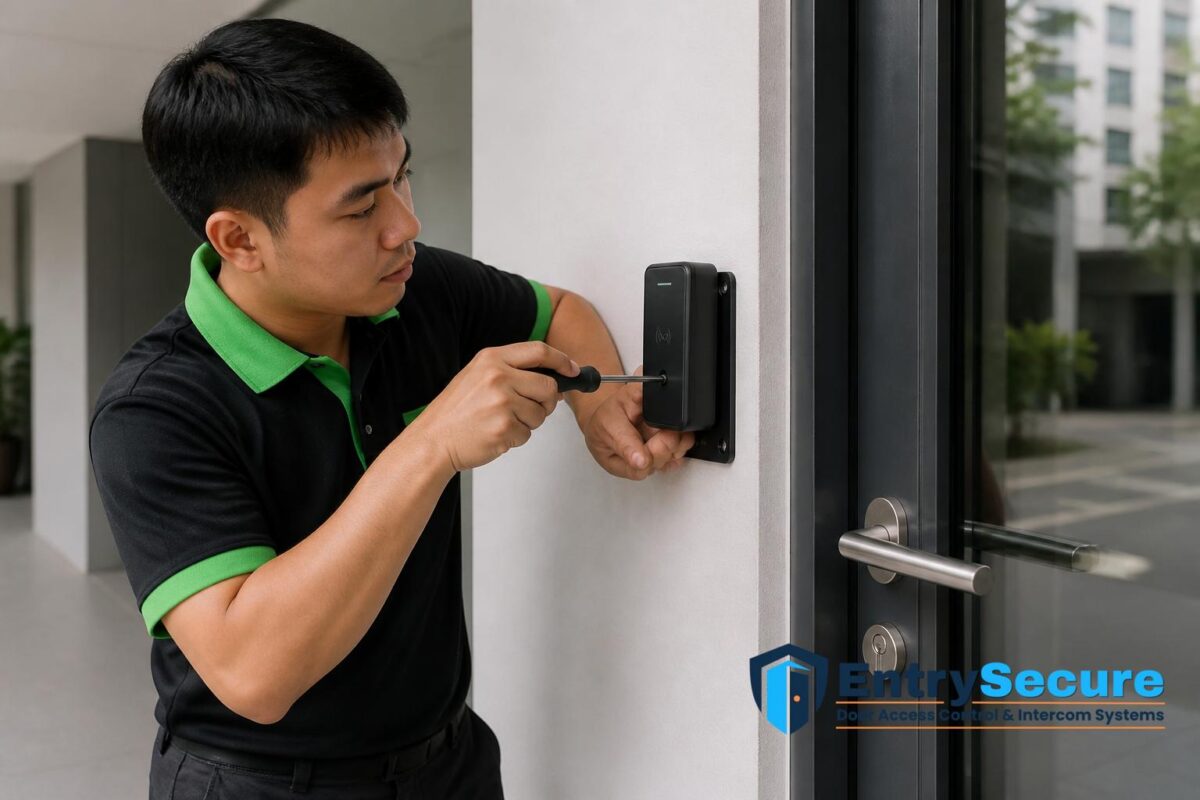
Device placement should support both convenience and control. At the main entrance, the reader or access point is usually positioned where authorised users can enter smoothly without obstructing reception traffic. At secondary entries, the placement may need to be more discreet or weather-protected, depending on the door’s location and exposure.
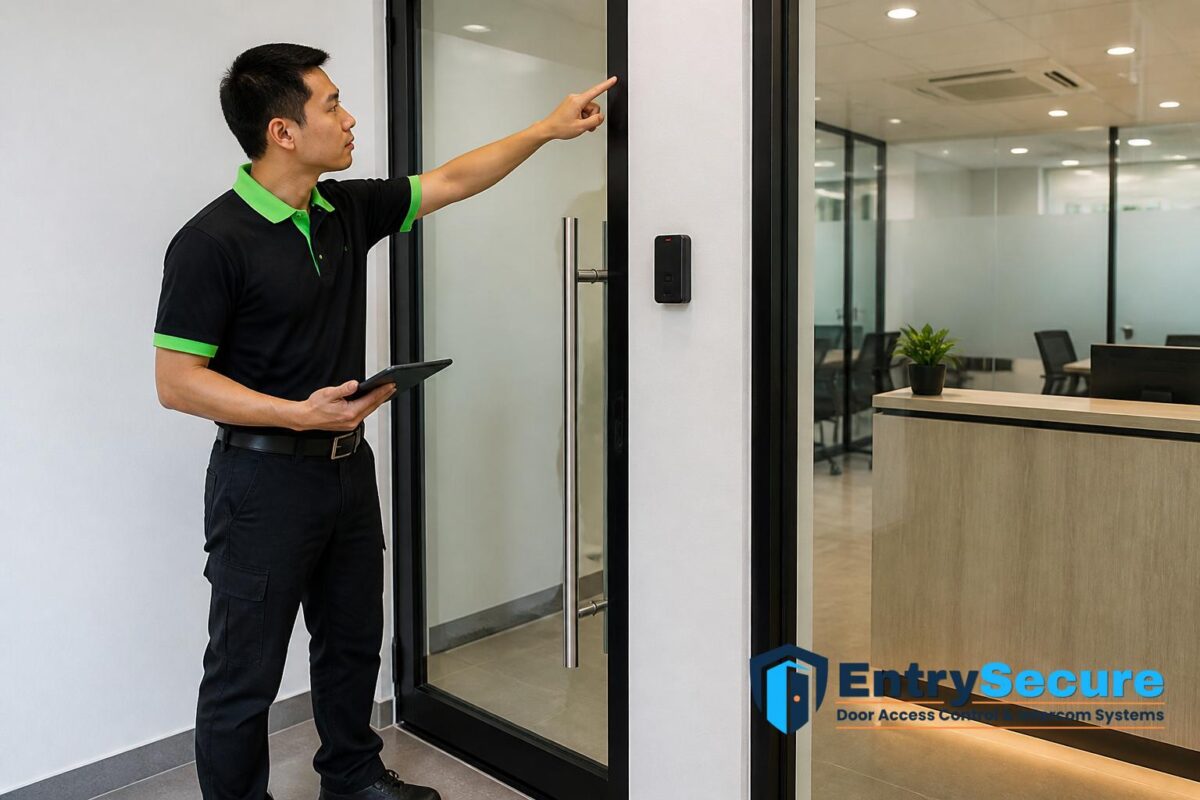
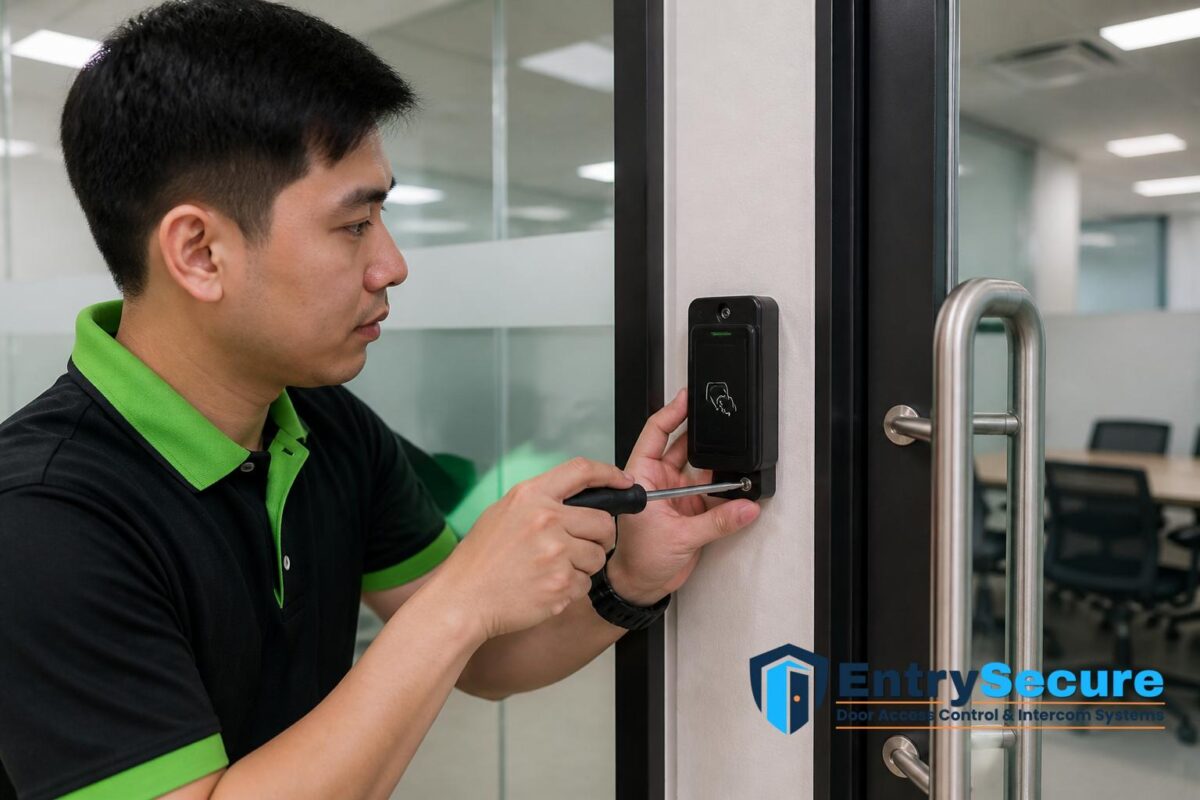
For internal restricted doors, the device should be placed so that access is straightforward for authorised personnel but not awkward for daily movement. The aim is to avoid poorly positioned equipment that causes congestion, repeated failed attempts or frustration during busy office hours. Good placement also makes the system easier to use and maintain over time.
Consider cabling, power and practical installation routes
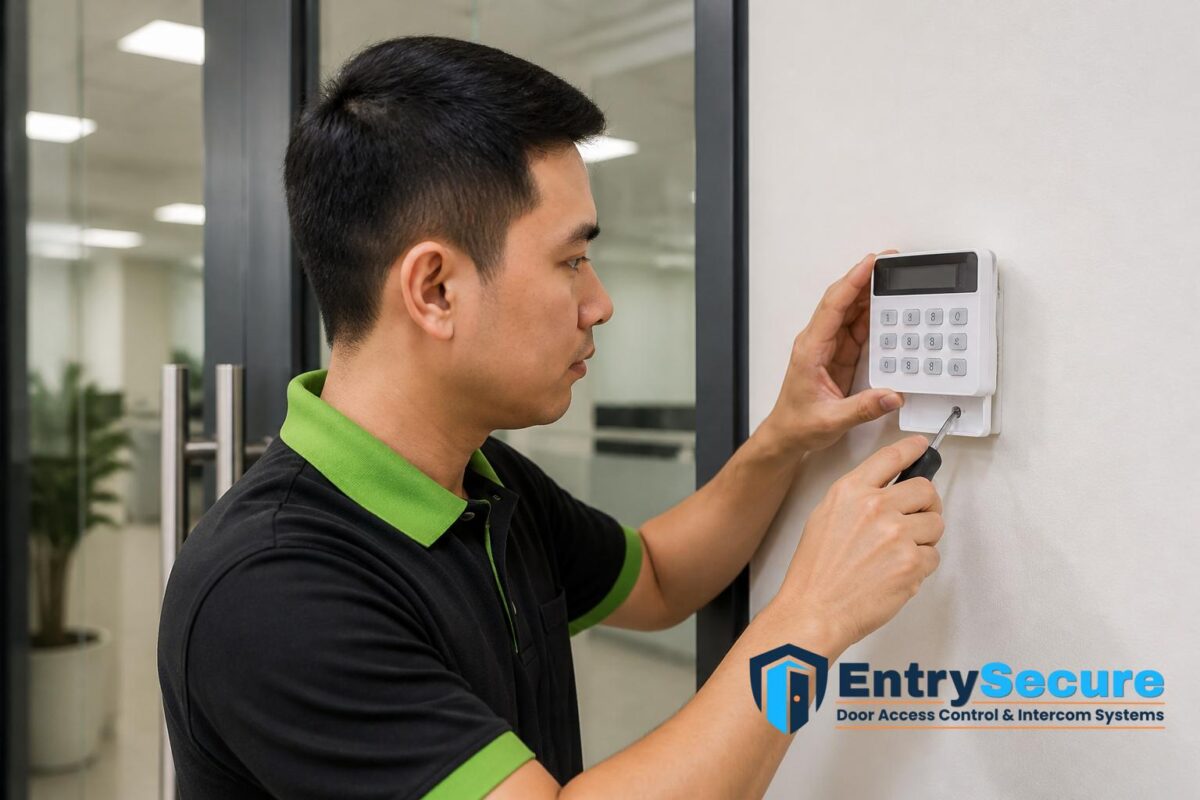
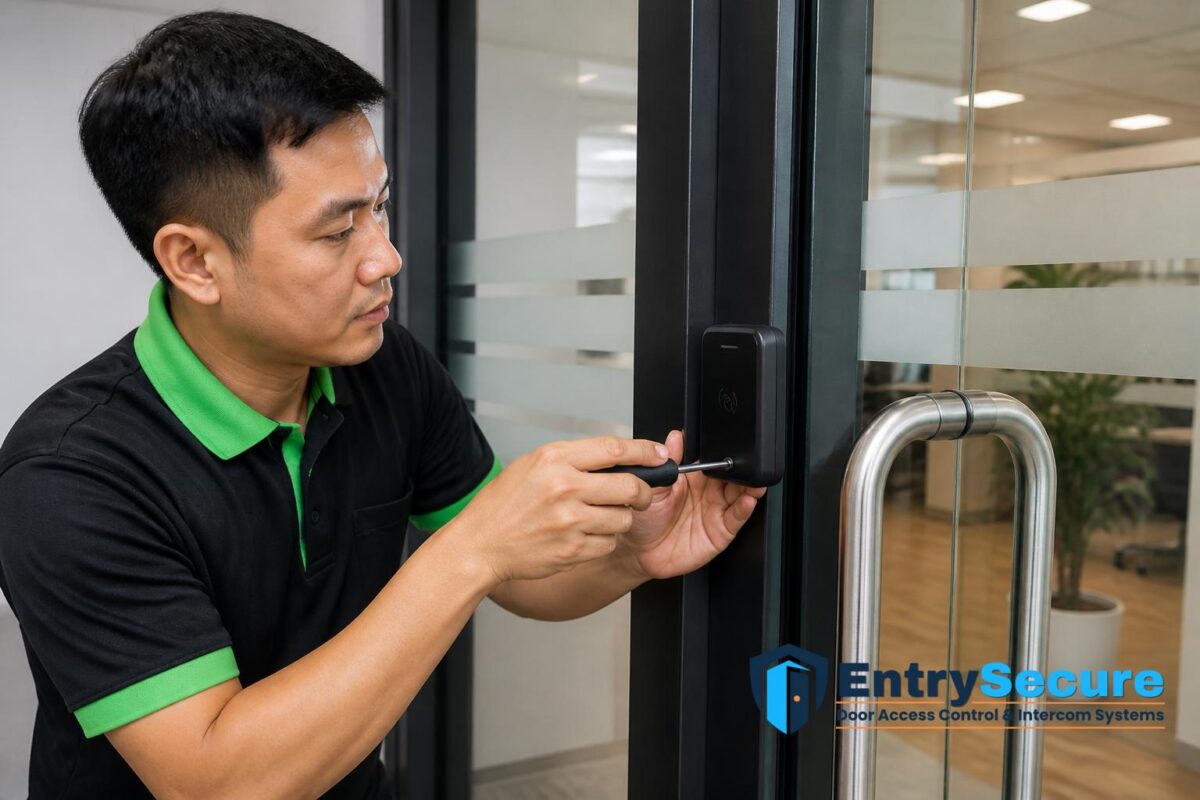
With multiple entry points, planning the cabling route is just as important as selecting the control points themselves. Office layouts often include plasterboard partitions, glass fronts, concealed ceilings and shared service routes, so installers need to think through where cables can be run neatly and safely. This reduces disruption and helps keep the finished installation tidy.
Power availability is another practical consideration. Some doors may be close to suitable supply points, while others may need longer cable runs or more careful coordination with the building’s existing infrastructure. In Singapore offices, it is sensible to assess the site properly before installation so that the setup fits the actual premises rather than relying on a generic arrangement.
Keep reception and visitor flow in mind
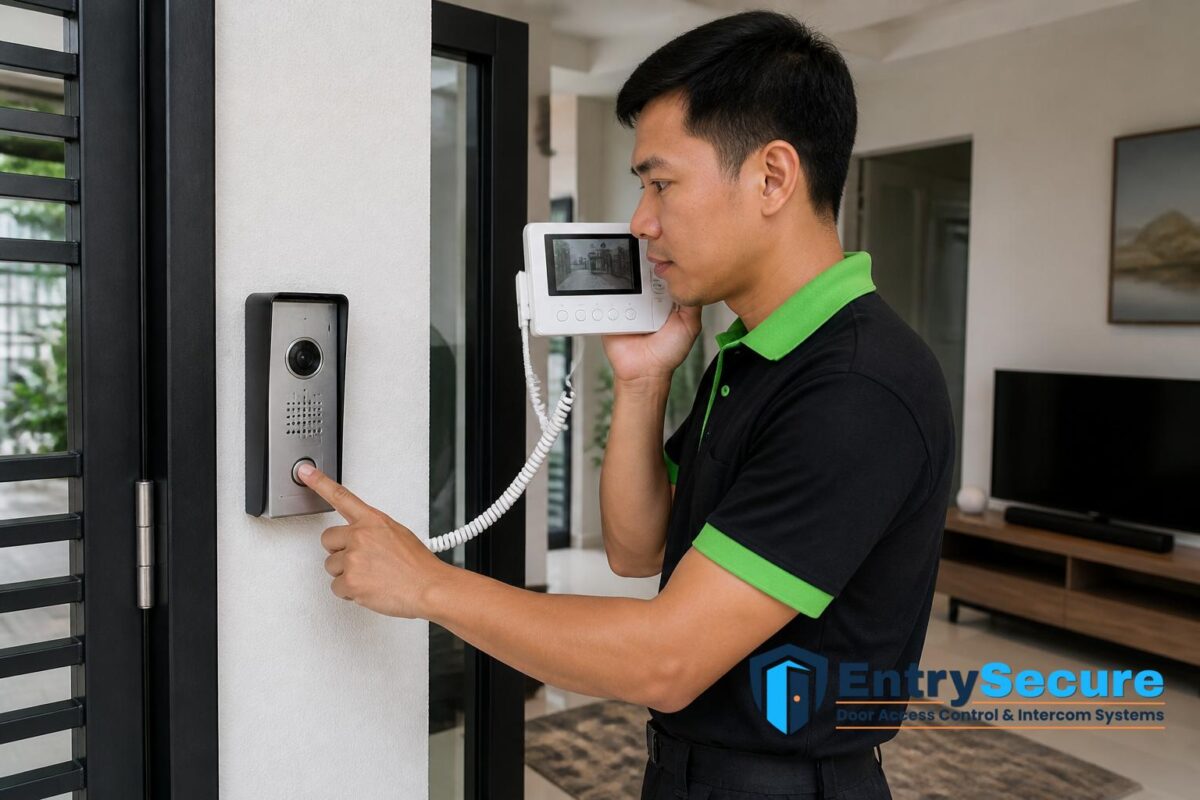
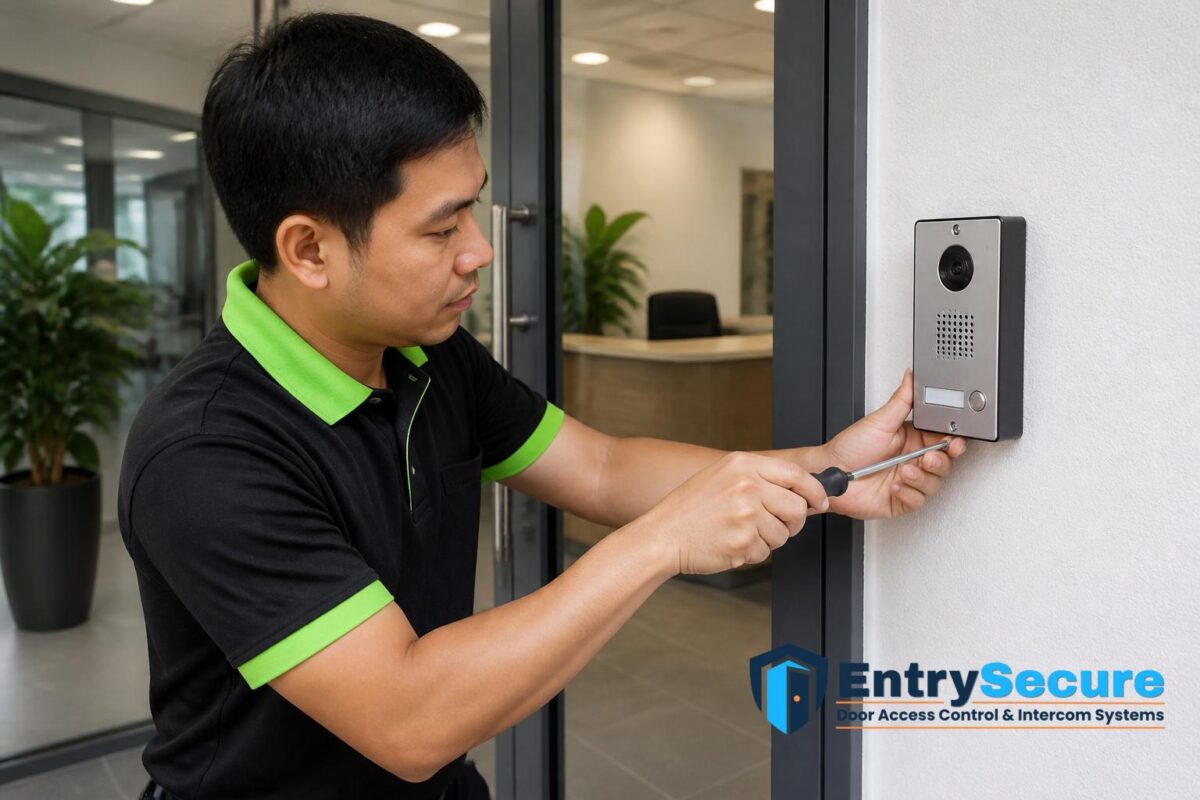
In offices, access control is not only about restricting entry; it is also about how visitors are received and managed. A front entrance should support a controlled but professional arrival experience, especially when clients, delivery personnel or interview candidates are expected throughout the day. If the office has several entry points, reception procedures should be aligned with the access arrangement.
It is useful to decide which doors visitors may use, how they will be directed, and which entrances should remain staff-only. Clear planning prevents situations where guests wander into the wrong area or where side doors become informal entry routes. That improves both order and oversight without making the office feel unnecessarily difficult to enter.
Think about shared access, back-up procedures and handover
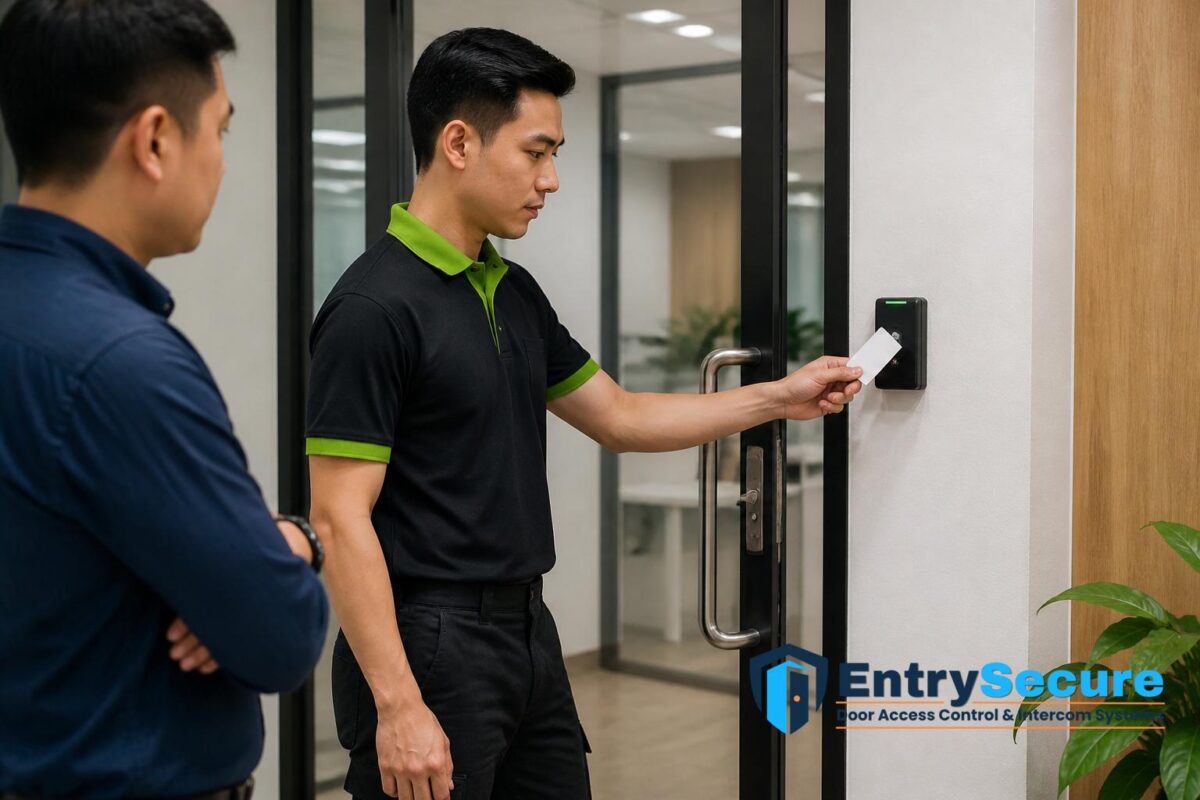
Multi-entry offices often need a sensible arrangement for authorised access beyond normal office hours. Facilities teams, cleaning crews or maintenance contractors may need entry at specific times, and this should be planned in advance rather than handled ad hoc. The objective is to create an access structure that is practical for the business while still giving the office manager a clear overview.
Handover is also an important part of the process. Once the system is installed, the team responsible for the office should understand how each access point works, which doors are controlled centrally, and how to manage day-to-day use. A proper handover helps ensure the system is used consistently and that office staff know what to expect at each entry point.
Test each entry point individually and as a whole
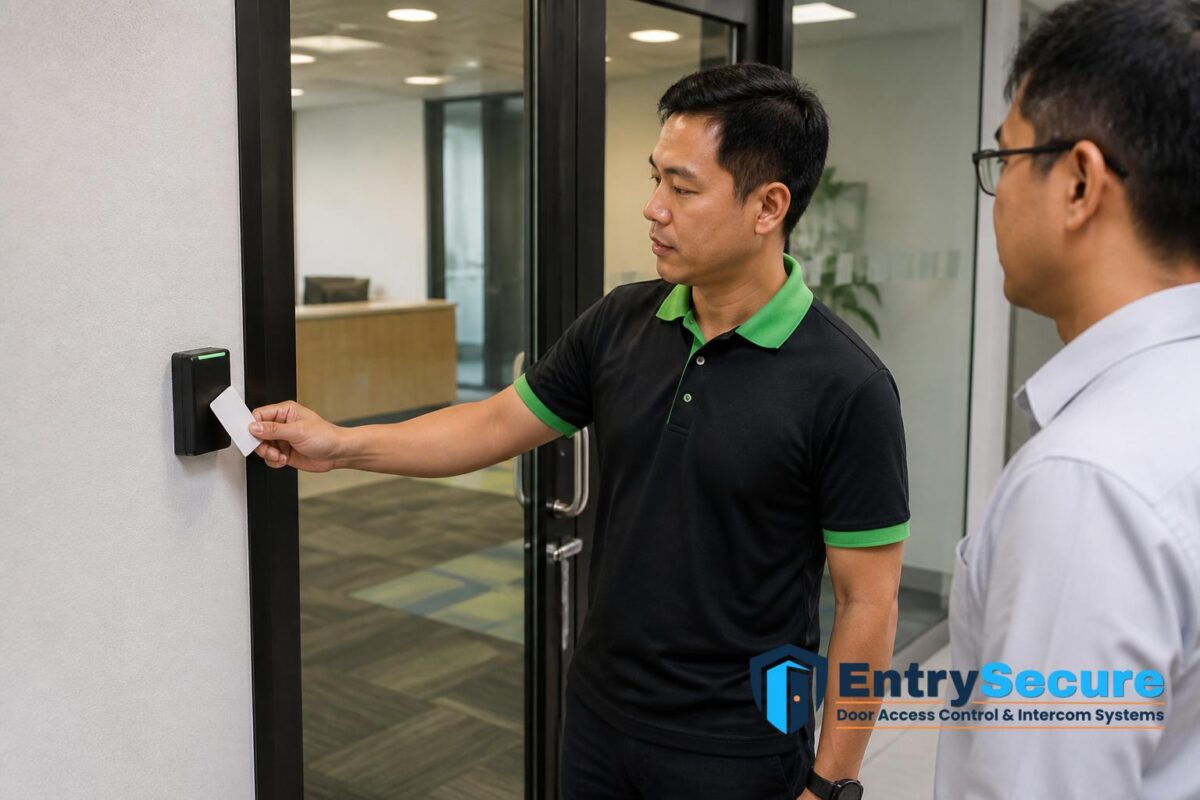
Testing should cover every controlled door on its own and within the wider office flow. A door may appear to work correctly in isolation but still cause problems when people move between entrances, or when several users try to access different points at the same time. That is why office access control should be tested as part of the full site layout.
The testing stage should confirm that entry points respond as intended, that the placement is convenient for users, and that the overall arrangement matches the office’s daily routine. Any issues with location, access sequence or usability are easier to correct during this stage than after the office has fully resumed normal operation.
If you are planning access control for a Singapore office with multiple entry points, WhatsApp EntrySecure Door Access Control & Intercom Systems Singapore with your office type, entry-point details, photos, current equipment and the access-control scope you need so the team can recommend a suitable arrangement and quotation.
Conclusion
Planning access control for a Singapore office with multiple entry points requires a practical review of how people use the premises, which doors need control, and how the installation will fit the building layout. When the entry points, cabling routes, access levels and testing process are considered together, the result is a more orderly and manageable office environment. A careful plan makes the system easier to use, easier to maintain and better suited to the way the office operates.
Choose EntrySecure Door Access Control & Intercom Systems Singapore
EntrySecure Door Access Control & Intercom Systems Singapore offers practical security solutions for residential and commercial premises in Singapore. We provide access control, door access systems, intercom systems, security systems, alarm systems and security alarm systems for customers looking to improve access management and property protection.
Our team can recommend solutions based on your premises, entry points and security requirements, whether you need controlled access for an office, an intercom for visitor communication or an alarm system for added protection. CCTV services are also available for customers who want to include surveillance as part of their overall security setup.
From standalone installations to combined access and security solutions, we aim to provide straightforward recommendations and dependable installation. WhatsApp us at +65 8241 0032 for your door access, intercom, alarm and security system needs.
Frequently Asked Questions
How do I decide which office doors should be included in access control?
Start by listing every entry point and grouping them by purpose. Main entrances, side doors, service access and restricted internal rooms may all need different arrangements depending on who uses them and how often. The decision should be based on the actual movement patterns of the office, not just the most visible door.
Can one office access control setup cover several entrances?
Yes, a single access control system can be planned to cover multiple entry points if the layout and installation route are assessed properly. Each entrance still needs to be considered individually so that the placement, cabling and access arrangement suit the door’s role within the office.
Why is testing important after access control installation?
Testing confirms that each entry point works as intended and that the whole office layout functions smoothly in practice. It helps identify issues with placement, usability or coordination between different doors before the system is put into regular use.