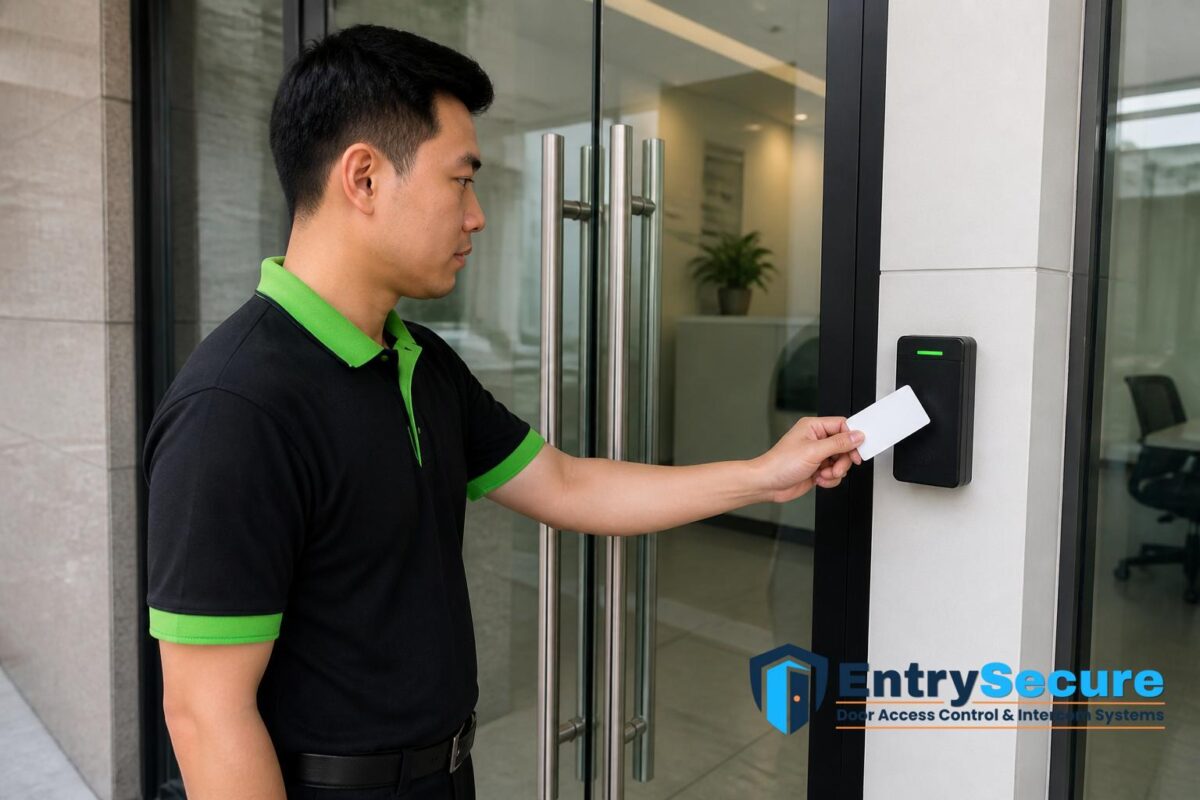

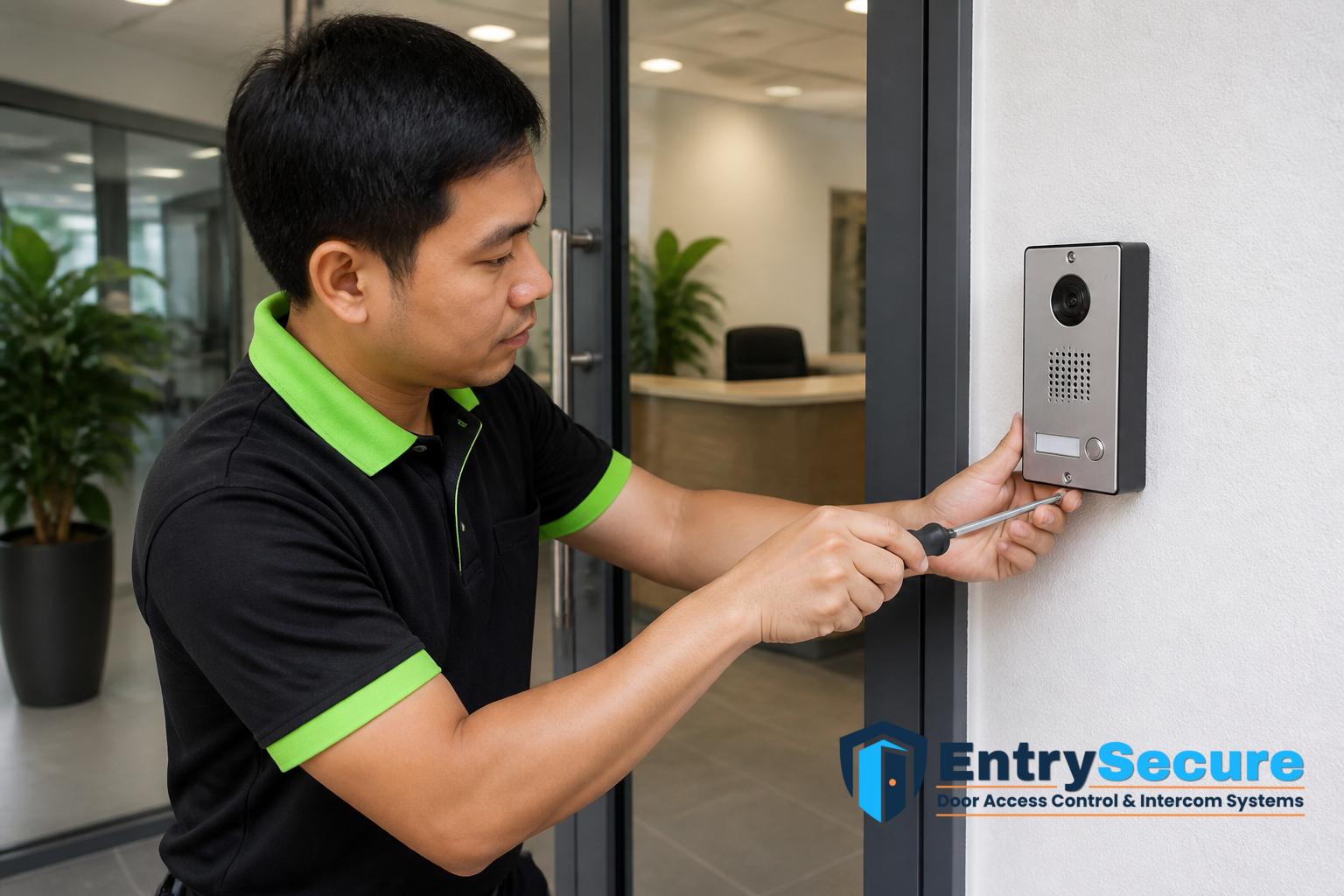
An intercom system controls door entry for Singapore offices by letting a visitor communicate with an internal contact before the door is opened. It acts as a controlled point of contact at the office entrance, allowing reception staff, facilities teams or authorised employees to assess who is at the door and decide whether to grant access. In a busy office environment, this creates a more orderly entry process without turning the foyer into a fully open reception area.
What an office intercom does at the entry point
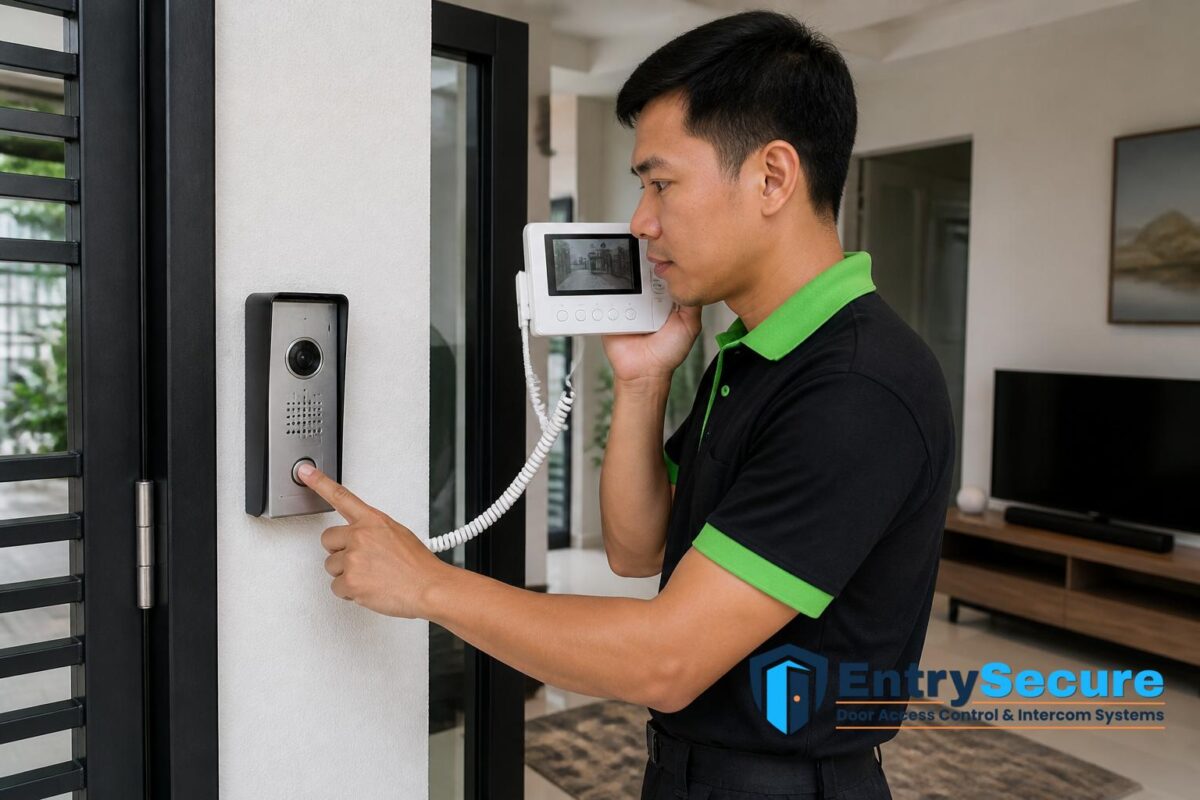
An office intercom is usually installed at a main entrance, side gate, lift lobby access point or reception door. When a visitor presses the call button, the system connects them to an indoor handset, desk unit or control point so that the office can speak with them directly. Some systems include audio only, while others may have a video monitor depending on the setup chosen for the premises.
The purpose is simple: the office can identify the reason for the visit, check whether the expected person is available and then decide whether the door should be released. This is particularly useful in Singapore offices that receive deliveries, contractors, clients or walk-in guests throughout the day.
How the communication process supports controlled entry
When a visitor arrives, the intercom creates a two-way communication link. The office side can ask who they are, which company they represent and which department they need. This interaction helps reception or front desk staff manage the flow of people without needing to leave the desk each time someone arrives.
If the office is equipped with a door release function, the authorised user can unlock the entrance from inside after confirming the visitor. The entry point remains closed until someone inside decides to open it, which gives the office greater control over day-to-day access.
For multi-tenant office buildings, this process can also be used for shared entrances, service doors or internal access points where only selected occupants should be able to admit visitors.
Key components commonly involved
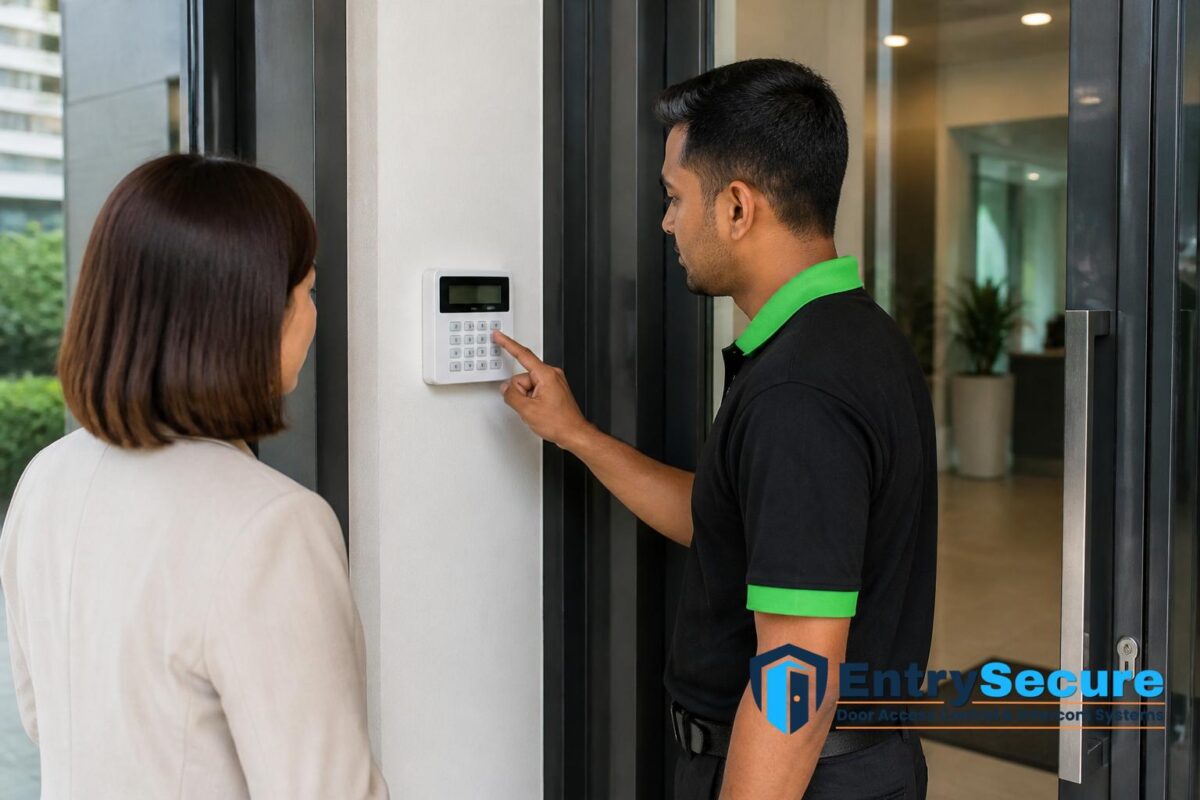
An office intercom setup typically includes an external calling unit at the doorway and an internal answering point inside the office. Depending on the model and building layout, there may be wall-mounted stations, desk units or a central reception panel. The system may also include wiring between the entry device and the indoor station, along with a door release mechanism where needed.
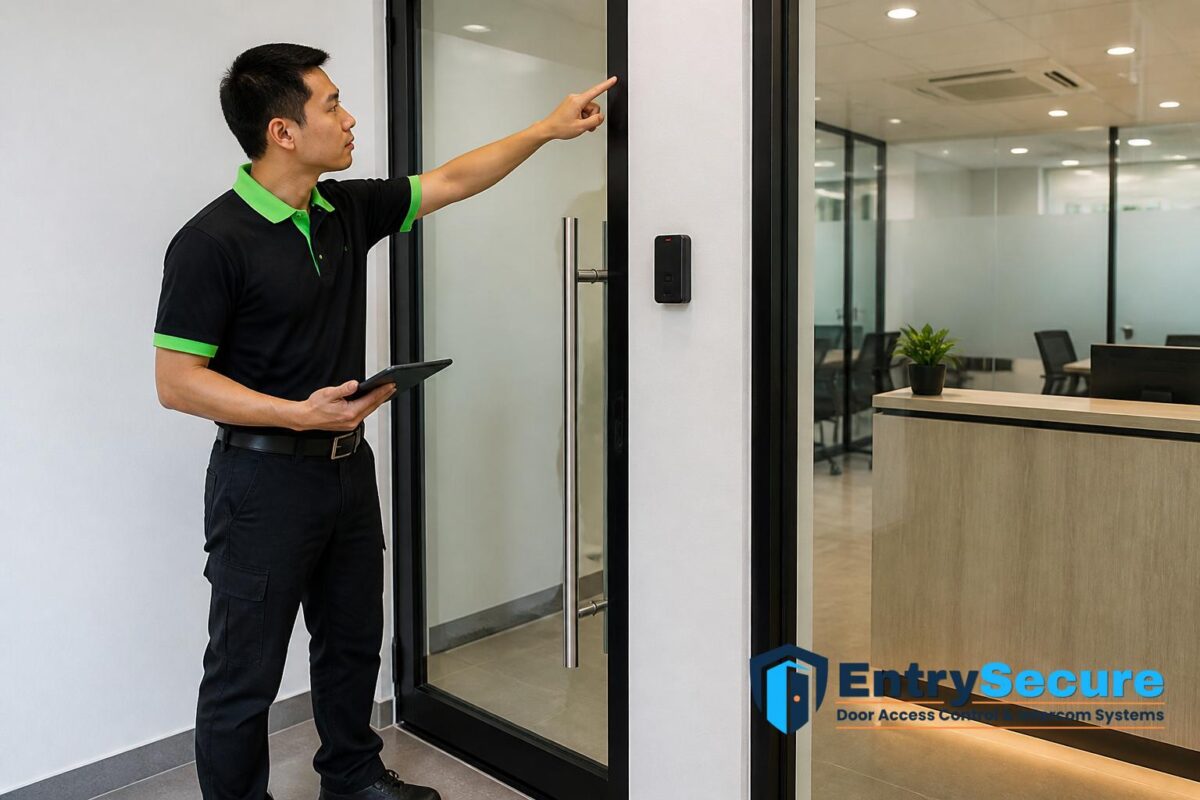
Placement matters. The outdoor unit should be positioned where visitors can easily reach it, while the indoor unit should be in a location that is convenient for staff who handle front-door calls. In offices with multiple teams, the answering point is often placed at reception or a security desk so calls are not missed during busy periods.
Planning an office intercom around daily traffic
Before installation, it is important to assess how people arrive at the office each day. A small firm with limited visitors may only need a straightforward single-entry intercom arrangement. A larger office that handles regular deliveries, scheduled guests and service contractors may benefit from a more structured setup that supports several entry points or internal answering locations.
The front-of-house workflow should also be considered. If reception staff handle visitor registration, the intercom should support quick communication at the point of arrival. If the office has after-hours entry procedures, the system should suit the way the premises are managed outside normal operating hours as well. The goal is not just to answer the call, but to integrate the door entry process into the office’s actual routine.
Installation and cabling considerations in Singapore offices
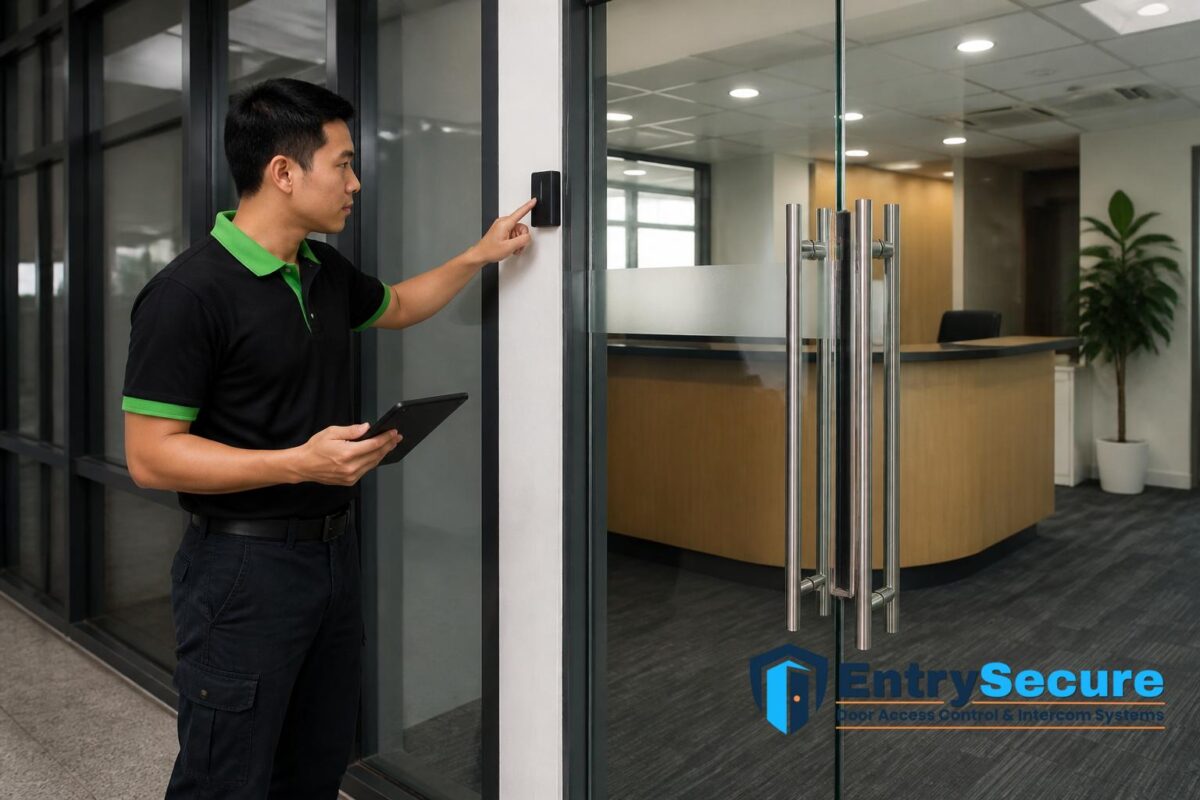
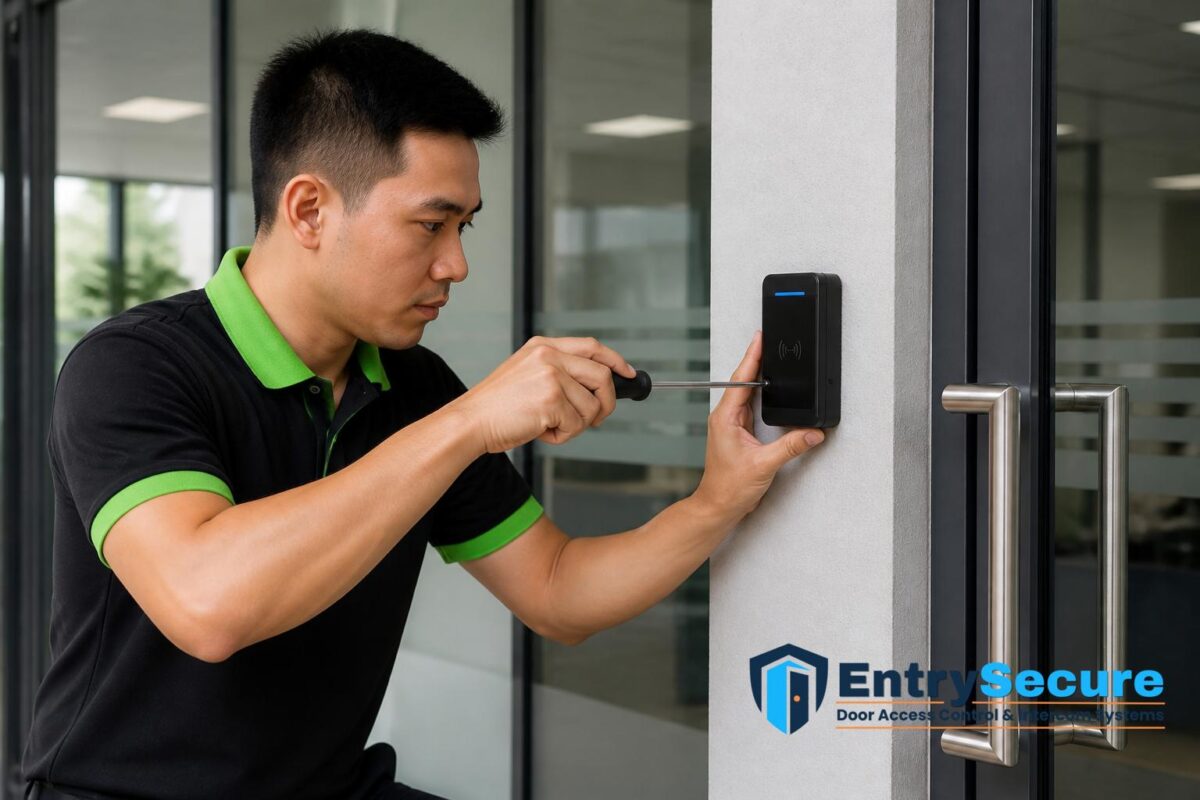
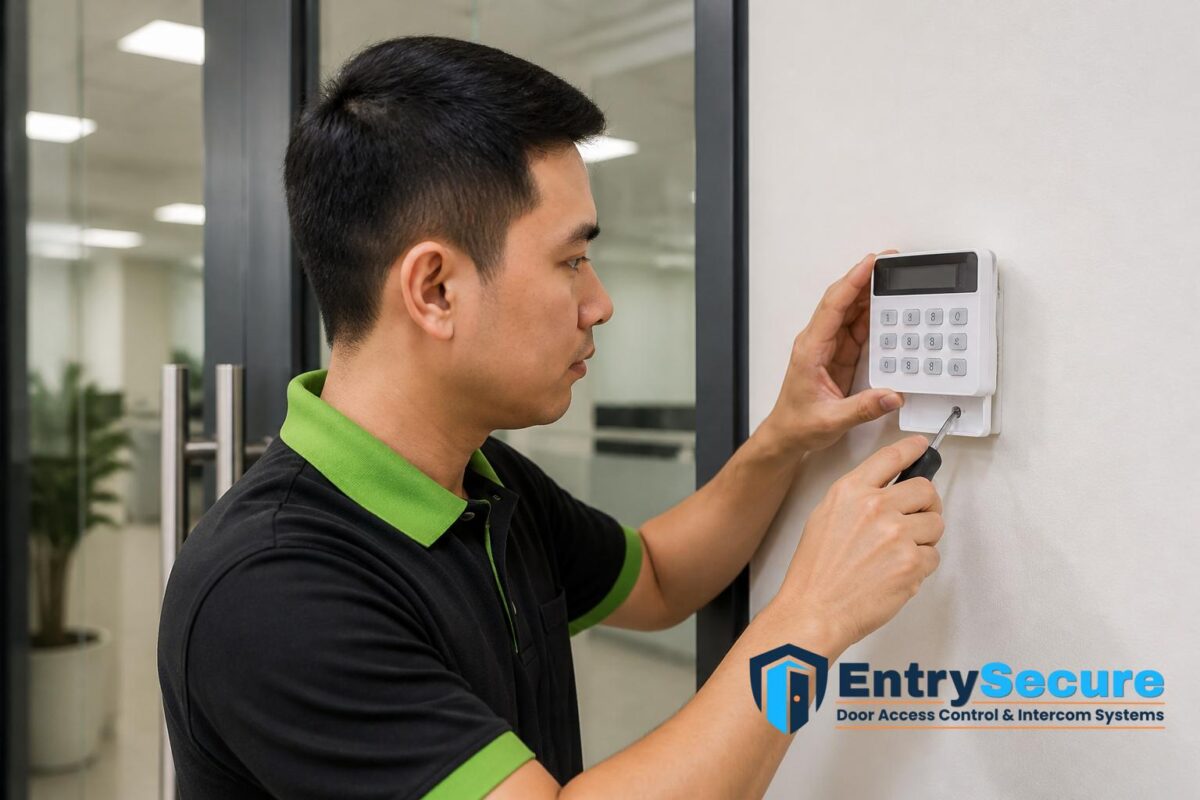
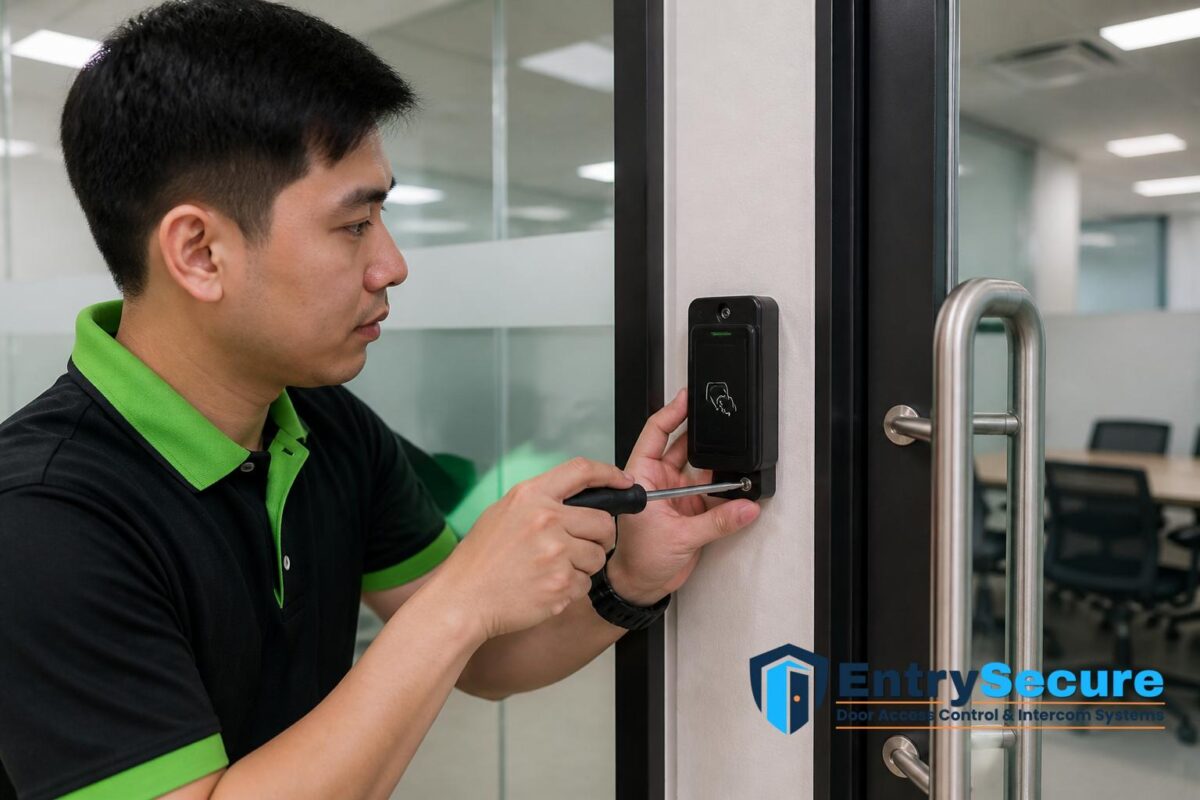
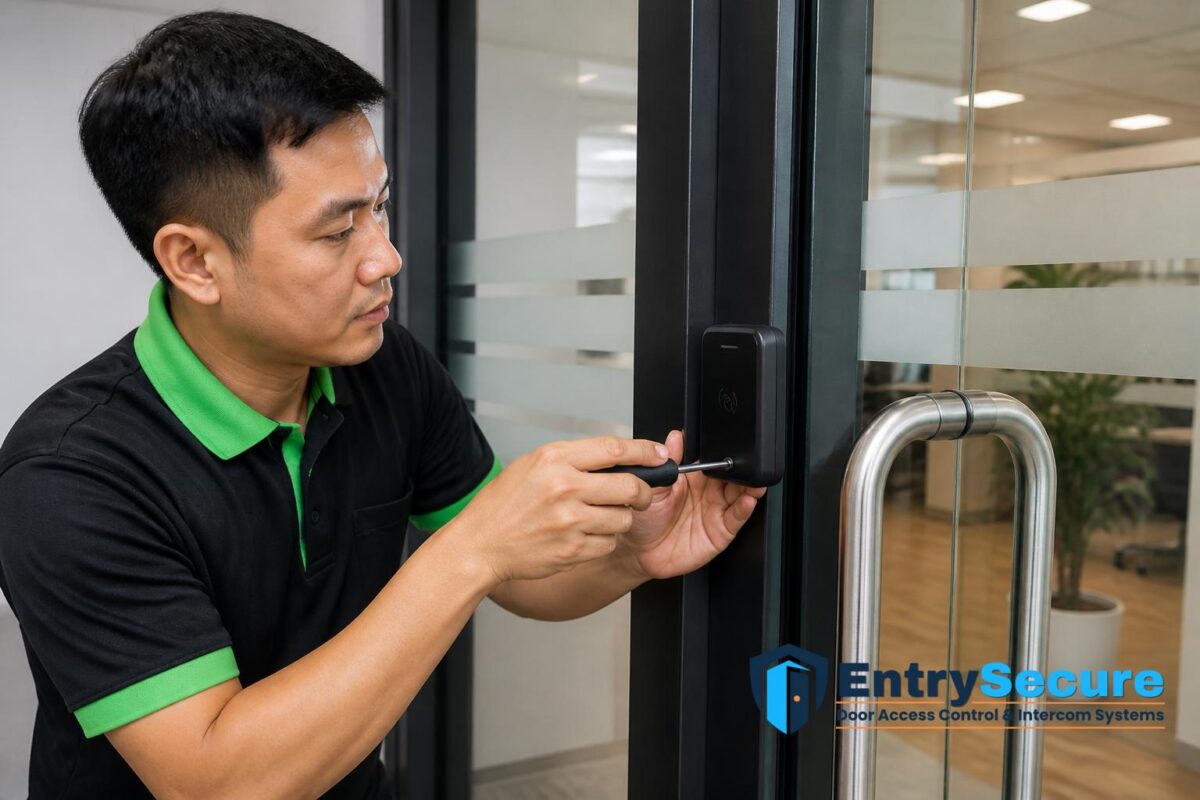
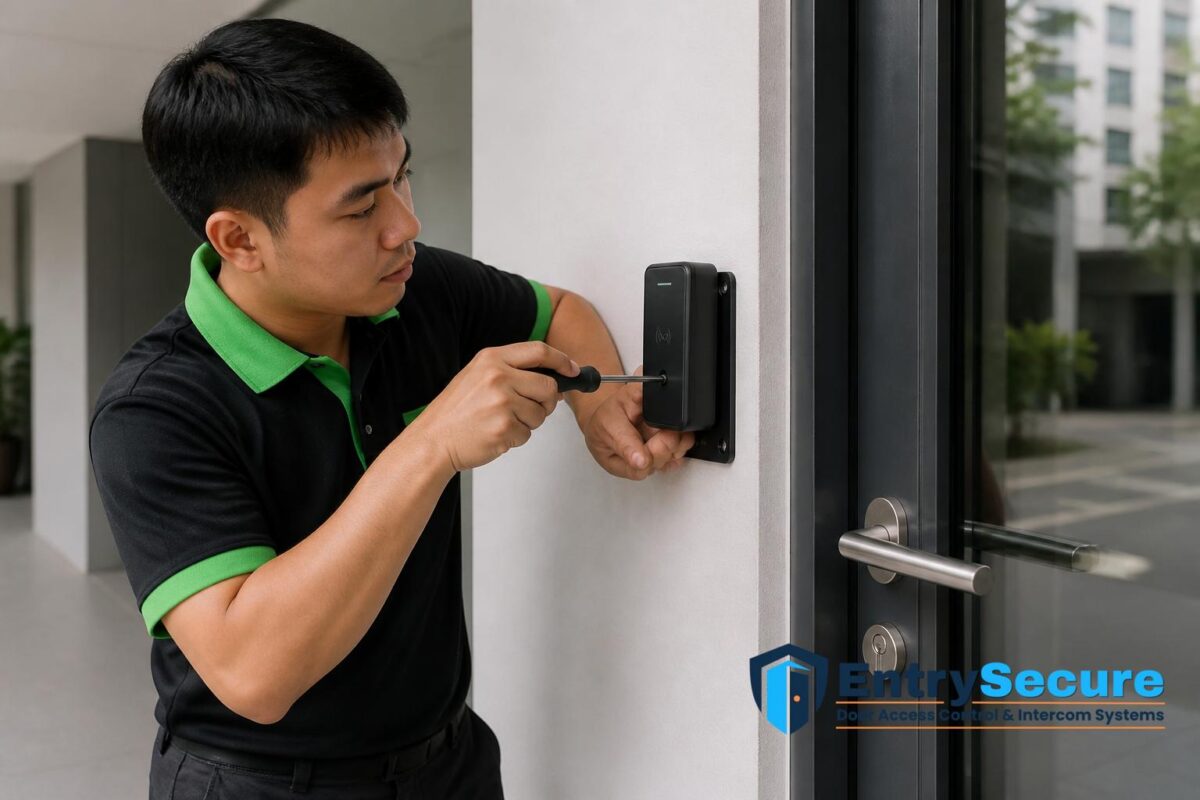
Professional installation is important because office intercoms depend on reliable wiring, neat mounting and proper placement at the entry point. In commercial premises, cabling may need to be routed carefully to avoid disruption to reception areas, common corridors or finished interiors. The installer should assess where the outdoor unit can be mounted securely and where the indoor answering point will be most practical for staff.
Some office layouts may require coordination with building management, especially if the entrance is part of a shared commercial property. In such cases, the installation plan should take into account existing infrastructure, entry restrictions and the need to minimise disturbance to occupants. A tidy installation also makes routine use easier for the people who answer the intercom every day.
Testing the intercom before regular use
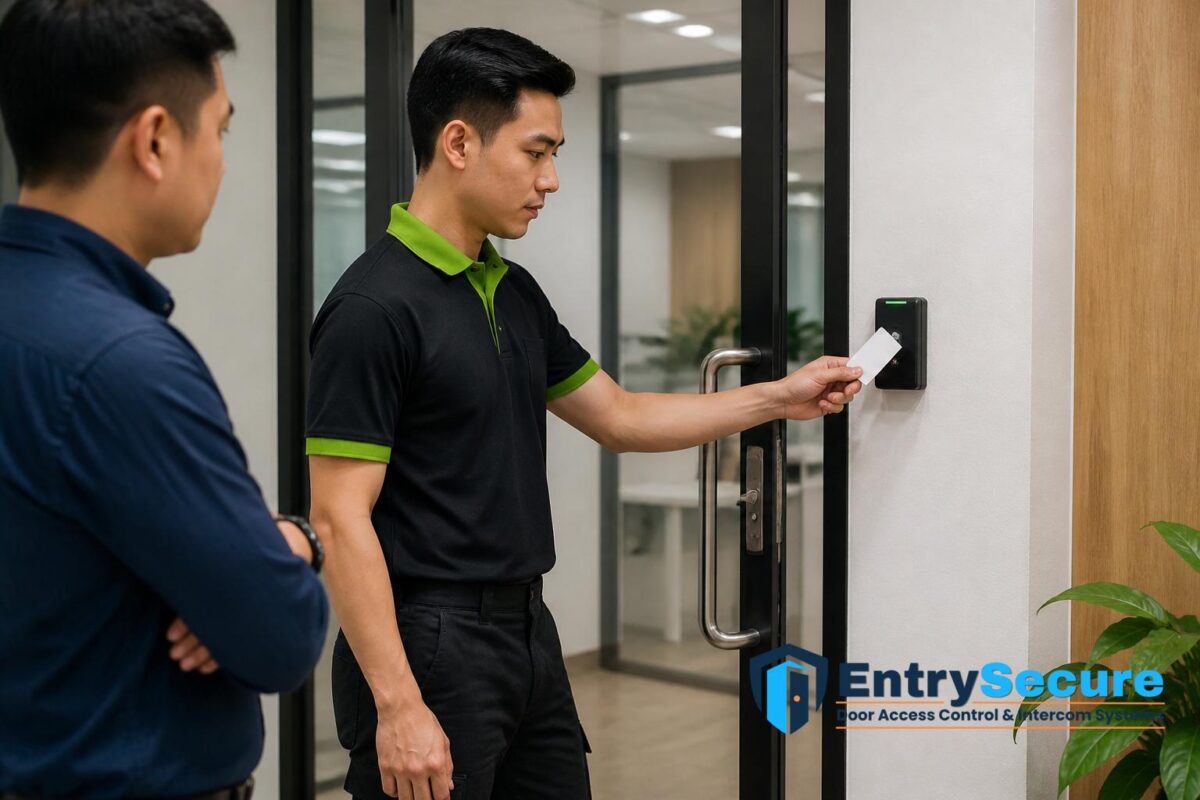
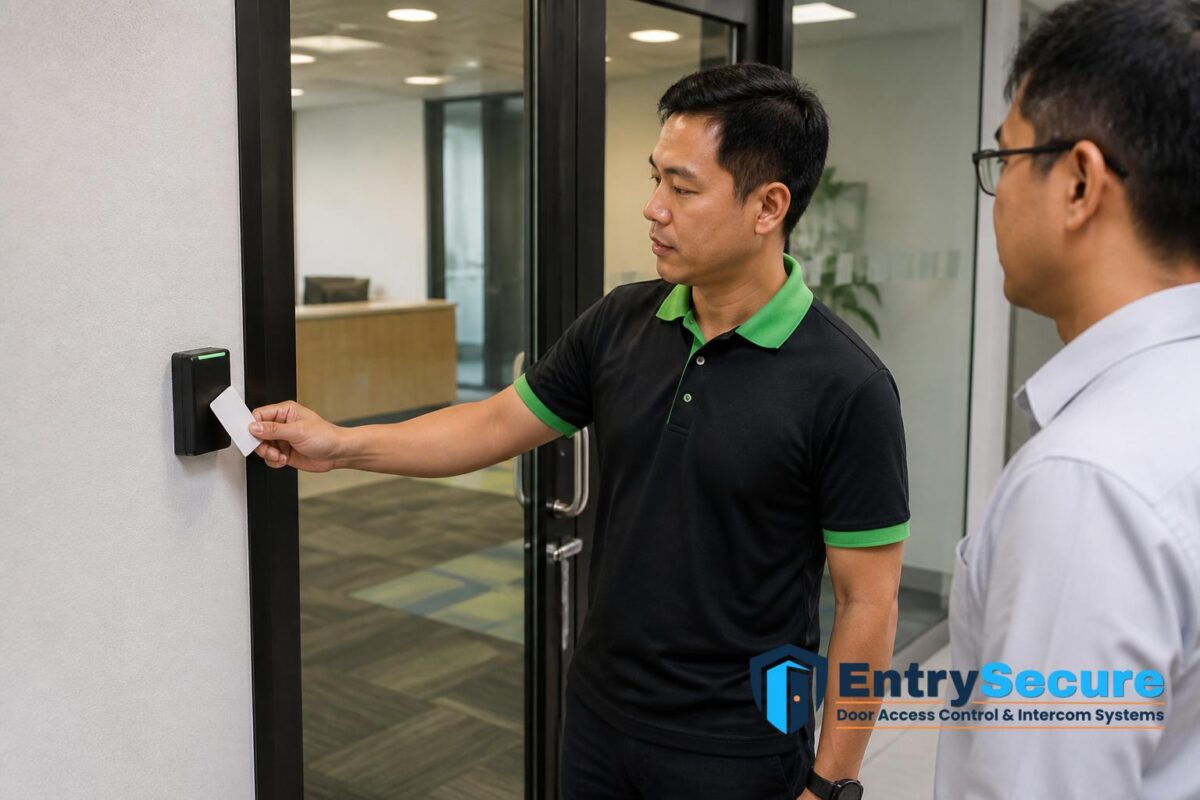
Once installed, the system should be tested from both sides of the door. This includes checking that the call button works, the audio or video connection is clear, and the indoor station can communicate with the entrance without delay or distortion. If the setup includes a door release function, that should also be tested carefully so staff understand how it operates.
Testing is not just a technical step; it confirms whether the intercom fits the way the office receives visitors. If staff find the volume too low, the station too far away or the call flow inconvenient, those issues are easier to address before the office relies on the system every day.
Why offices use intercoms instead of open entry
Many Singapore offices prefer an intercom at the door because it gives them a simple way to screen arrivals without making the space feel inaccessible. Visitors can still reach the office, but they are first directed through a communication step that helps staff manage access in a calm and organised manner.
This is especially practical for workplaces with sensitive documents, private consultations, controlled reception areas or frequent external traffic. The intercom does not replace office procedures; it supports them by giving the team a clear way to speak to visitors before opening the door.
It also helps with day-to-day operations. Reception staff can remain at their desk, staff members can answer calls from a designated point and front-door handling becomes more consistent across the office.
To discuss an office intercom system for your Singapore premises, WhatsApp EntrySecure Door Access Control & Intercom Systems Singapore with your property type, entry point, photos, current equipment and required door-entry scope so the team can recommend a suitable arrangement and quotation.
Conclusion
An intercom system controls door entry for Singapore offices by creating a managed communication link between the visitor at the entrance and the people inside. With the right placement, cabling, setup and testing, it becomes a practical way to handle visitor access at a commercial office while keeping the entry process organised and easy to manage.
Choose EntrySecure Door Access Control & Intercom Systems Singapore
EntrySecure Door Access Control & Intercom Systems Singapore provides access and security solutions for homes, offices and commercial properties across Singapore. Our services cover access control, door access systems, intercom systems, security systems, alarm systems and security alarm systems to support safer and more convenient entry management.
Based on your property layout and security needs, our team can recommend a suitable setup for controlling access, managing visitors and improving overall premises security. We also provide CCTV services for customers who require additional monitoring alongside their access or alarm system.
Whether you need a new door access system, intercom installation, alarm setup or a more complete security solution, our team can assist with a practical arrangement for your property. WhatsApp us at +65 8241 0032 to enquire about our access and security system solutions.
Frequently Asked Questions
Can an office intercom be used at more than one entrance?
Yes, depending on the office layout and the system chosen, an intercom arrangement may be designed for a main doorway, side entrance or other controlled access point. The installation plan should match the actual points where visitors arrive.
Does every office intercom need a door release function?
Not every setup requires it, but many office entry systems include a release feature so authorised staff can open the door after speaking to the visitor. Whether it is needed depends on how the office manages entry and reception.
What should an office prepare before installation?
It helps to identify the entrance to be controlled, the location for the indoor answering point, any current equipment already in place and how visitors are normally received. Photos of the entry area can also make assessment easier.