
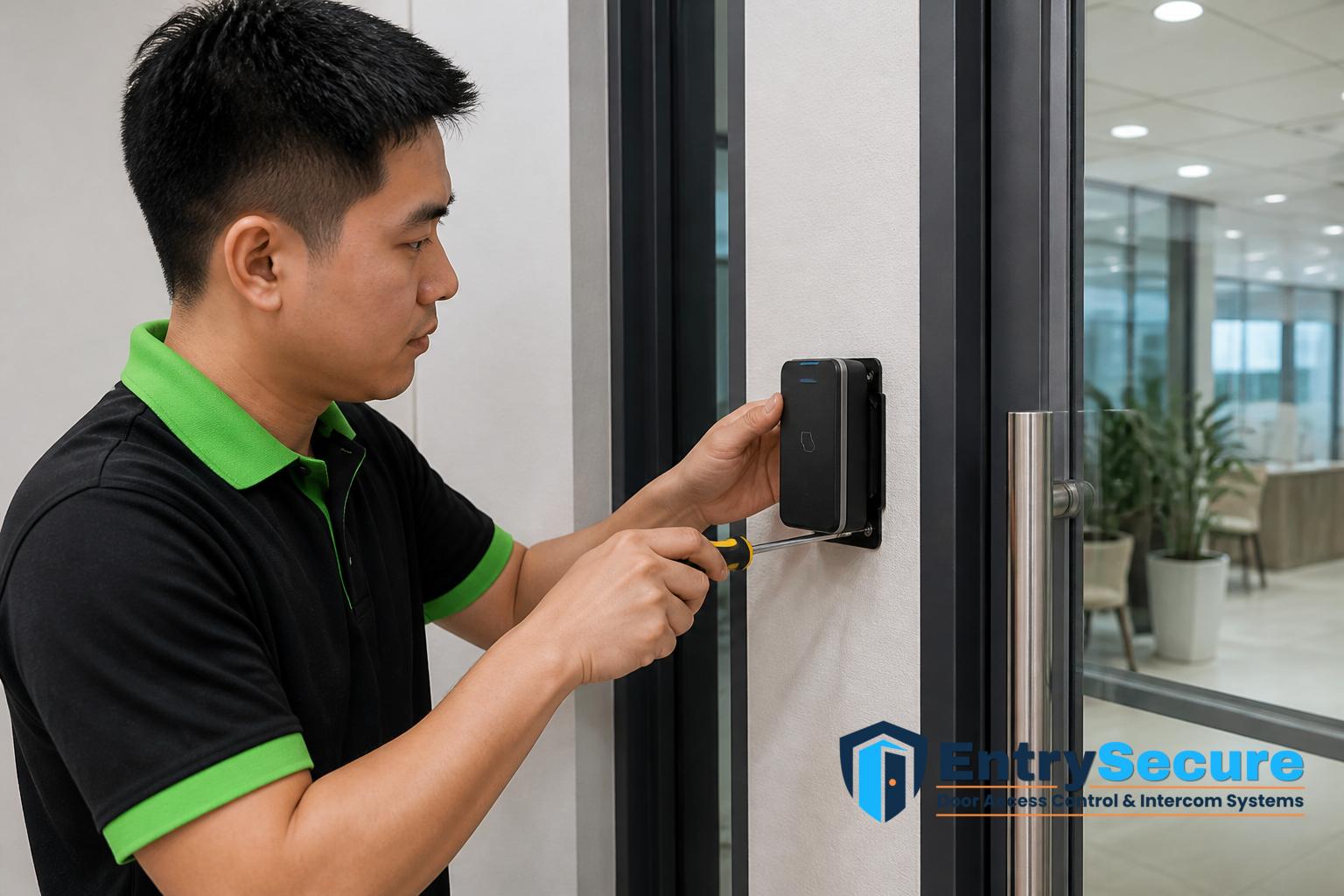
Installing an access control system for a Singapore office is a structured process that begins with understanding how people move through the premises and ends with a properly tested entry solution that suits the building, staff workflow and daily operating needs. For offices, the goal is usually to control who can enter specific doors, reduce reliance on keys, and make access easier to manage for employees, contractors and visitors.
The installation itself is not just a matter of fixing a device beside a door. A professional approach considers the door type, existing wiring, power availability, the number of entry points, whether the office is in a business park or commercial building, and how the system will be used after handover. In Singapore offices, careful planning matters because the installation must work neatly within the premises, without disrupting normal operations more than necessary.
Assessing the office entry points first
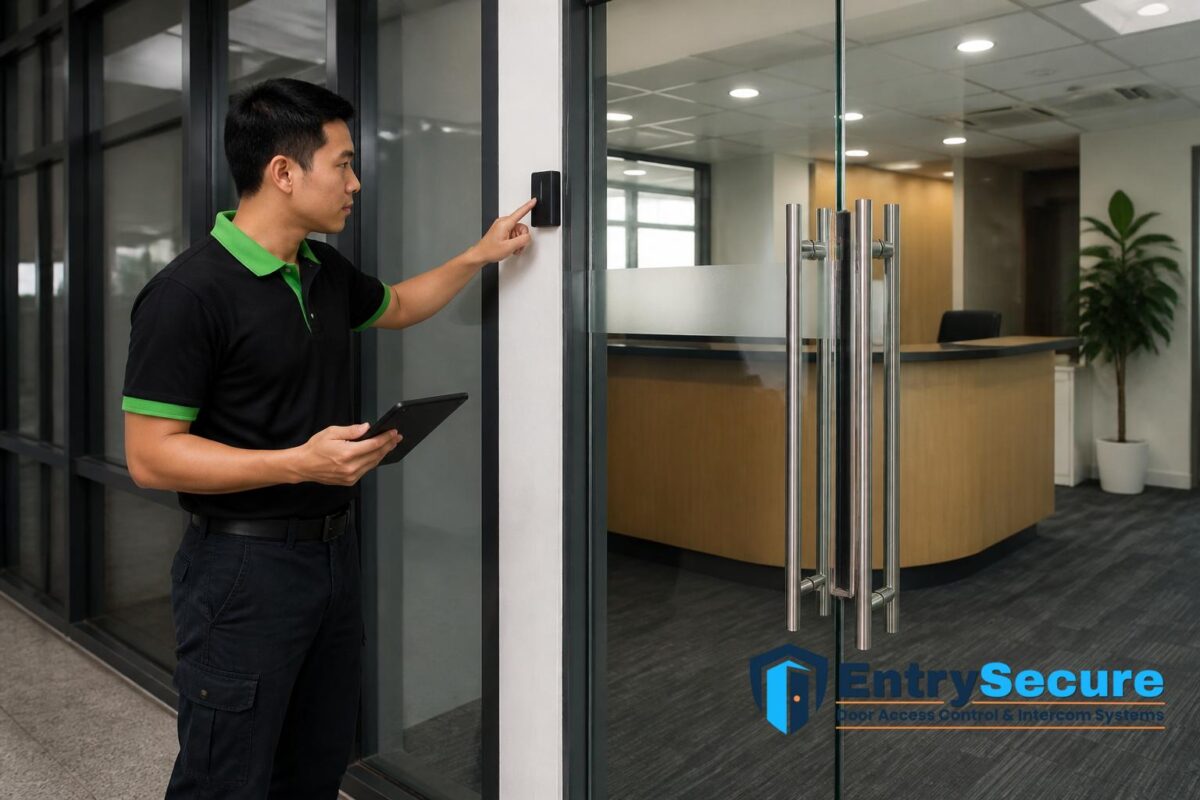
The first step in installing an access control system is an on-site assessment of the office entrances and internal doors that need controlled access. This usually includes the main entrance, side doors, server room doors, pantry access points, management offices or any other area that should not be open to every staff member or visitor.
During this assessment, the installer looks at whether the door is timber, metal, glass or another type of office door, because that affects how the reader, control unit and door hardware are mounted. The team also checks if the door swings in a suitable direction, whether there is enough surface space for the device, and whether any existing wiring or access equipment can be used or needs to be replaced.
Planning the system layout for daily office use
Once the entry points are identified, the next stage is planning where each part of the system should be placed. For a typical office access control installation, this includes the reader at the entry side, the controller in a suitable secure location, cabling routes, and the door hardware needed to support the access function.
The layout should reflect how the office operates. For example, if different teams use separate areas, the system can be planned around those doors rather than treating the whole office as one space. This helps keep the installation practical and easier to maintain, especially in offices where multiple people need routine access but certain rooms must remain restricted.
In Singapore offices, installers also pay attention to clean cable routing and a discreet finish. This is particularly important in client-facing workplaces, where the system should not create unnecessary clutter at the entrance or reception area.
Preparing wiring and power for the installation
A reliable access control system depends on proper cabling and power preparation. Before installation, the installer checks where power can be drawn safely and whether existing cable paths are available. If the office has older wiring or an unusual layout, new cable routes may need to be planned to reach the required doors.
Good wiring practice matters because access control systems need stable connections between the reader, controller and door release components. The installer also considers where to place the control equipment so it remains protected and accessible for servicing, without being exposed in public areas.
In offices with a suspended ceiling, trunking or concealed cable routes may be used to keep the installation neat. The exact method depends on the premises and the condition of the existing building finishes.
Installing the access control components at the door
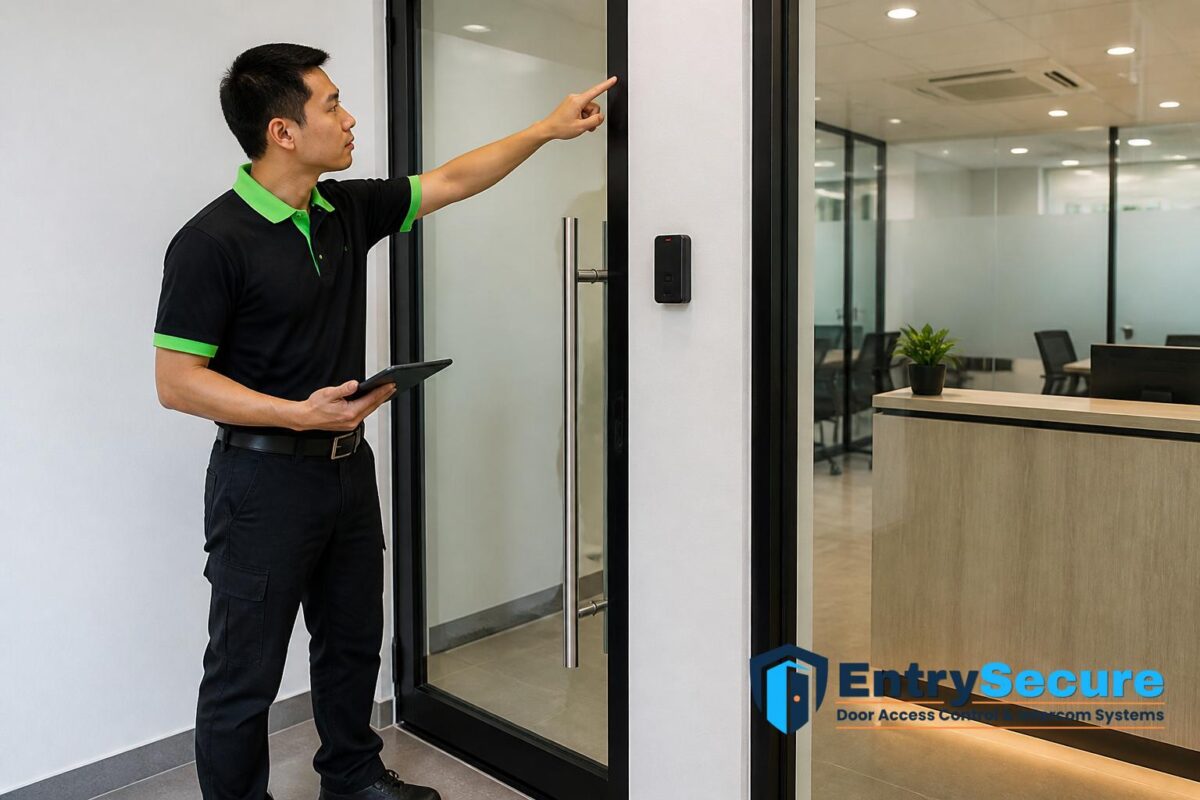
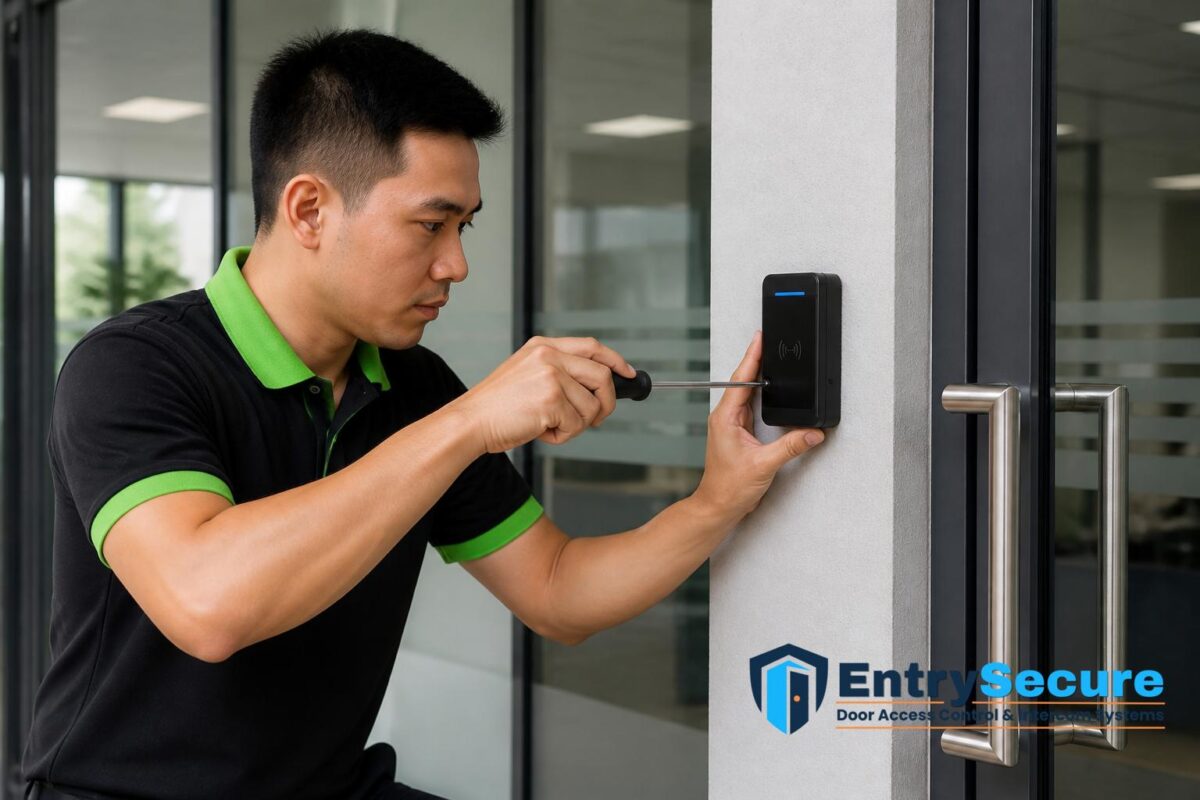
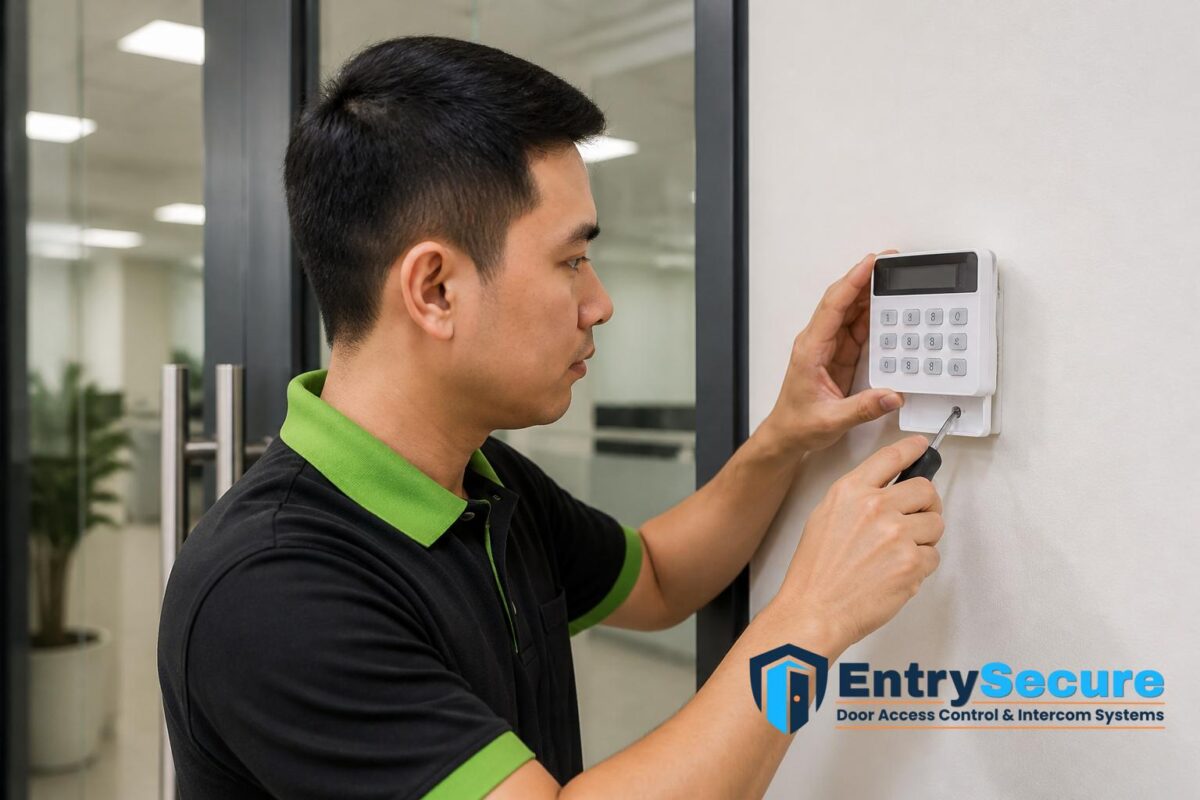
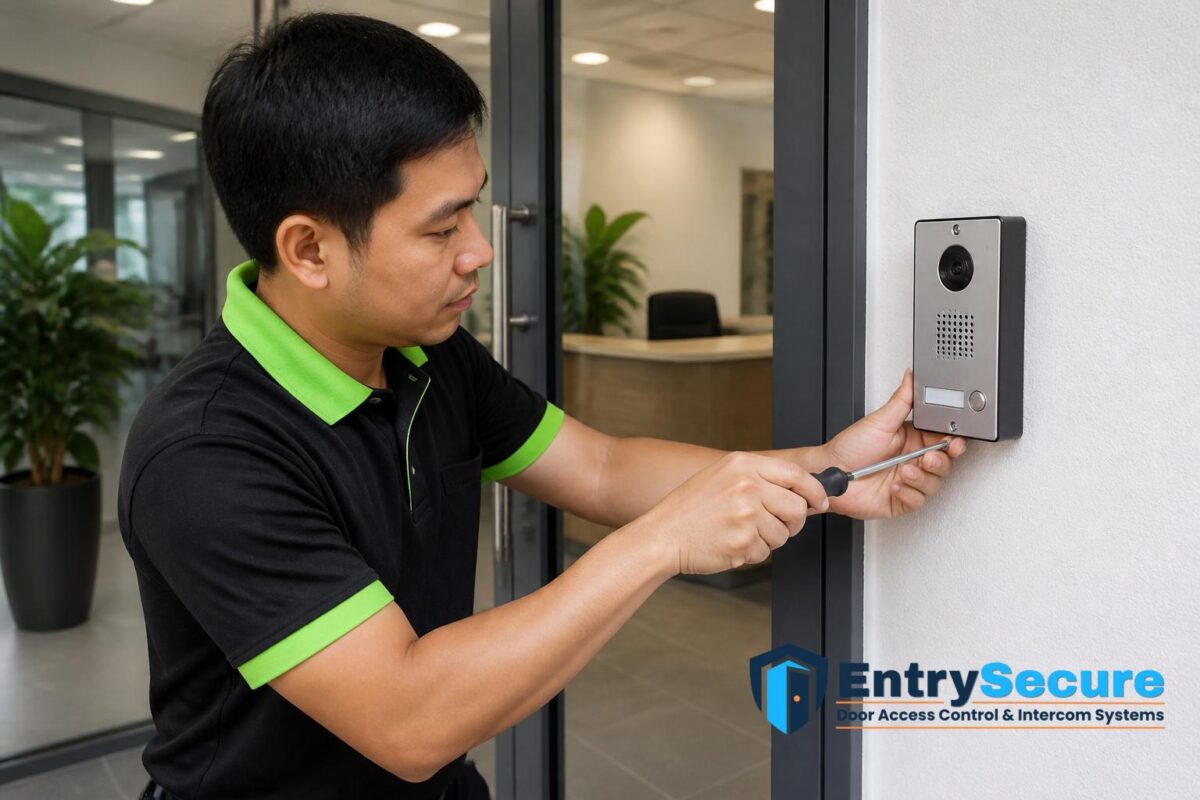
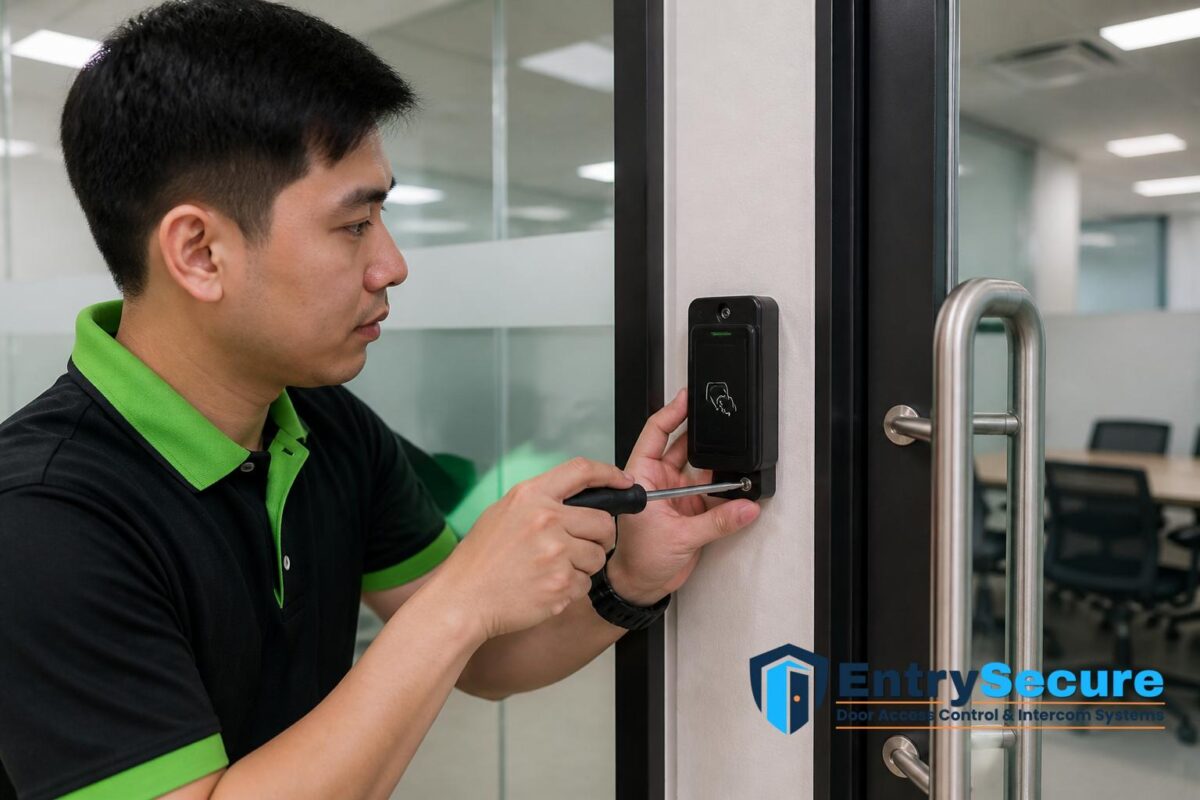
When the office layout and wiring plan are ready, the installer mounts the relevant components at the door. This normally includes the access reader on the user side of the entry point and the matching control equipment in a secure internal position. The installer also connects the door release elements so the door can respond correctly when authorised access is granted.
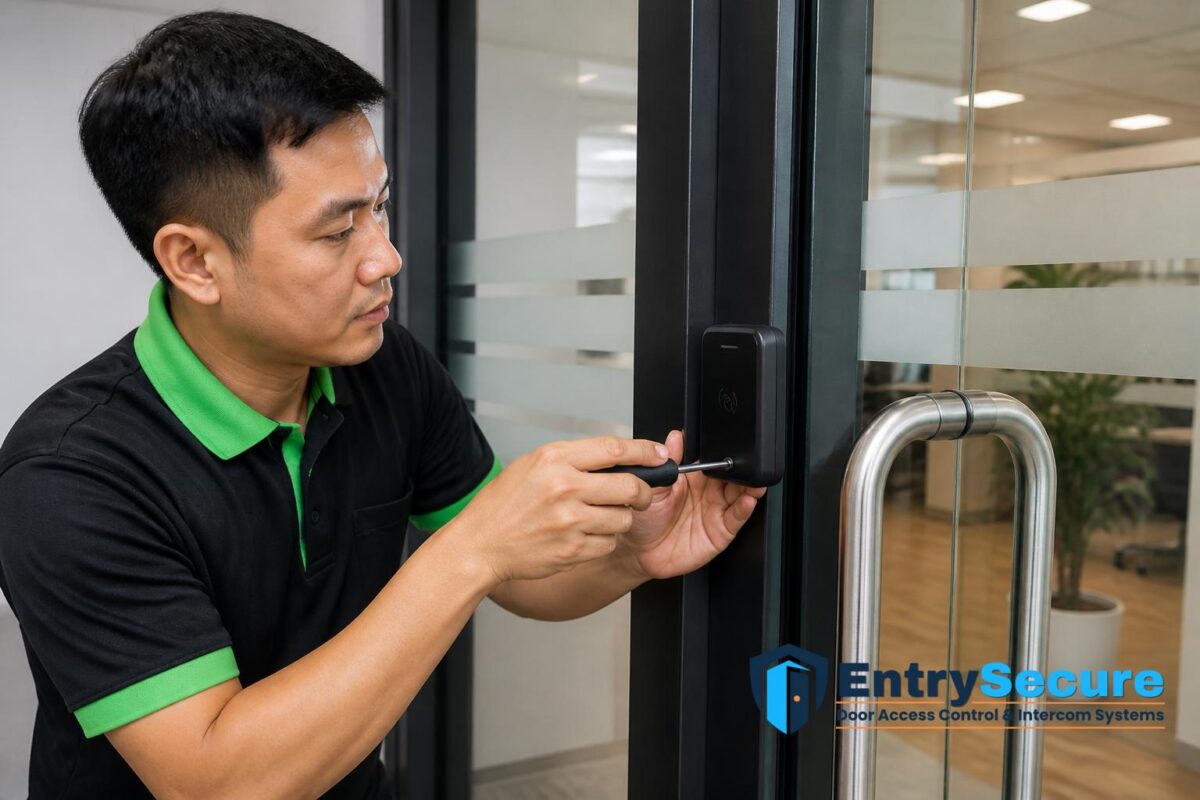
Care is taken to align the device properly with the door and surrounding frame so it is easy to use and visually tidy. The installer checks that the device placement does not interfere with the normal opening and closing of the door, panic bar, handle or other existing door fittings.
For Singapore offices, installation should be done in a way that suits the working environment. That often means minimising disruption, keeping entry points functional where possible, and coordinating the work so staff can continue operating safely during the installation process.
Configuring access settings for office staff
After the hardware is installed, the system must be configured so it works for the office’s actual access needs. This can include setting up entry permissions for different users, deciding which doors are restricted, and defining how access will be managed on a day-to-day basis.
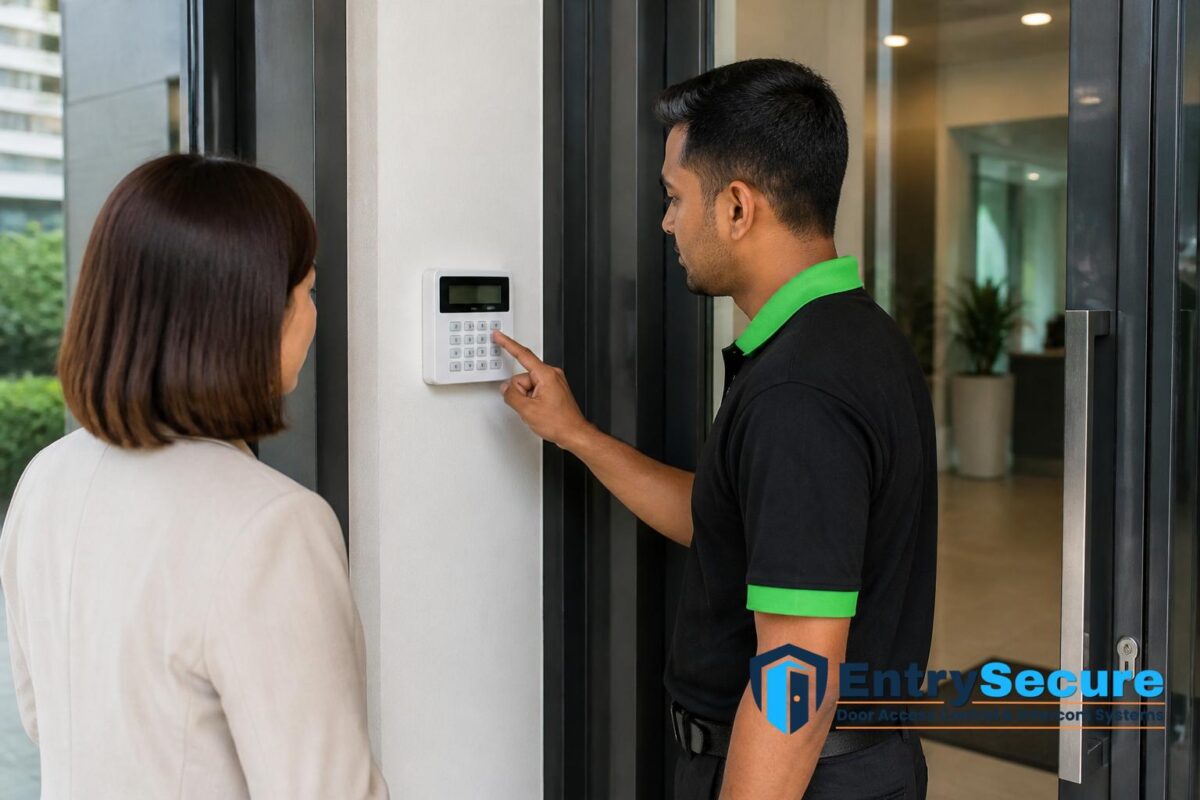
For office use, the setup should be simple enough for administrators to maintain without difficulty. The person responsible for the office can usually be shown how to add or remove access for staff, manage door schedules if required, and review how the system should operate during working hours and after hours.
A good installation also takes future changes into account. Offices change staff, layouts and operating routines over time, so the system should be arranged in a way that can be maintained without repeated major rewiring or door changes.
Testing the system before handover
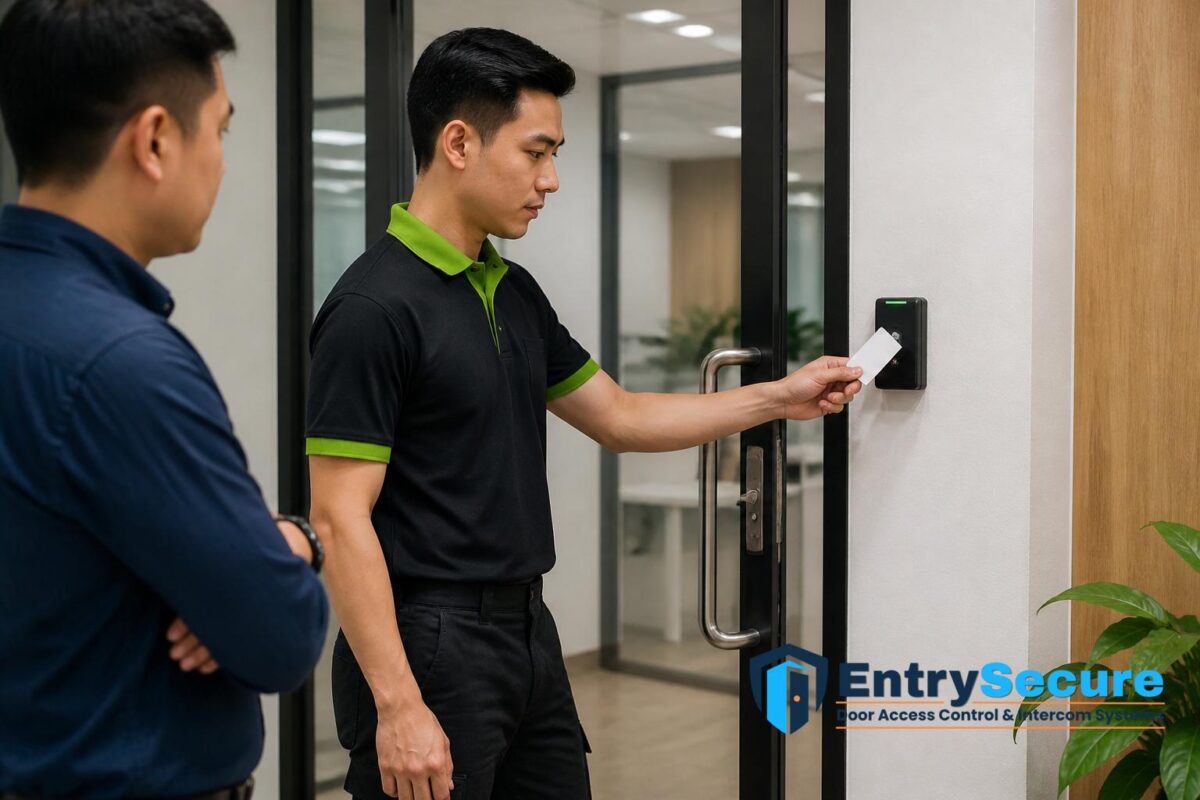
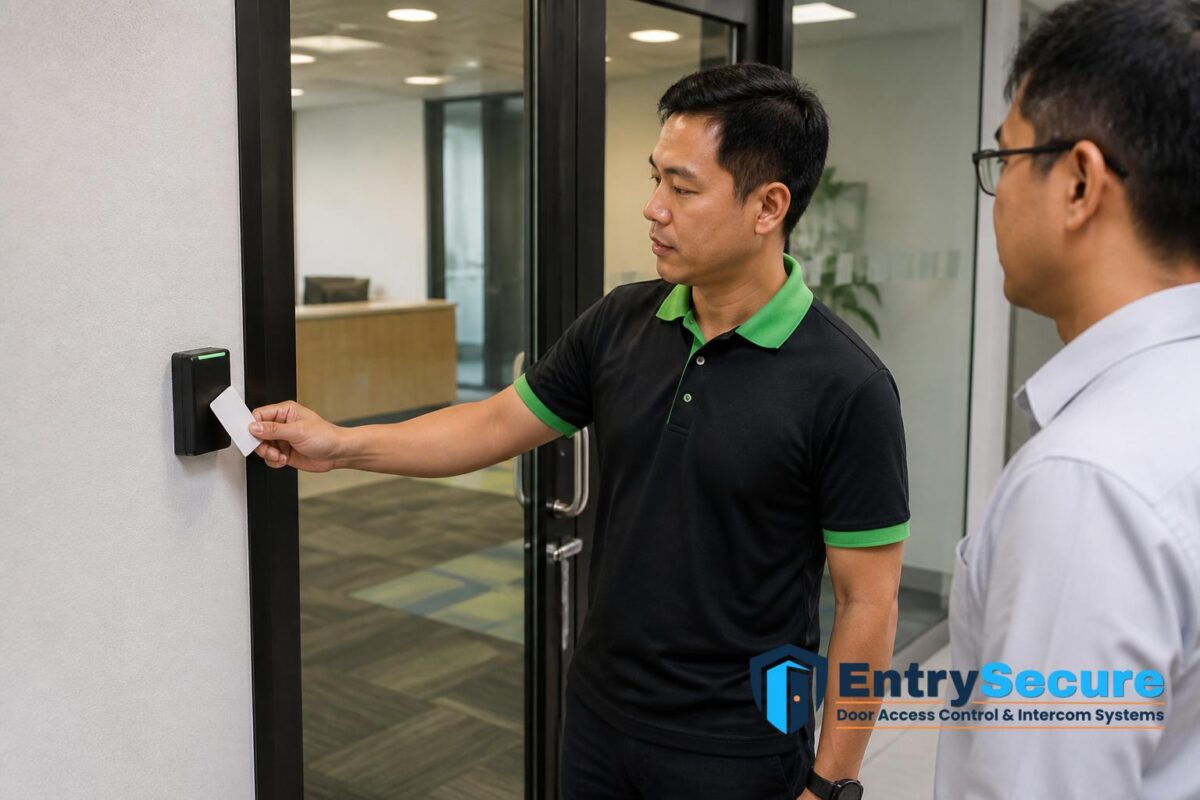
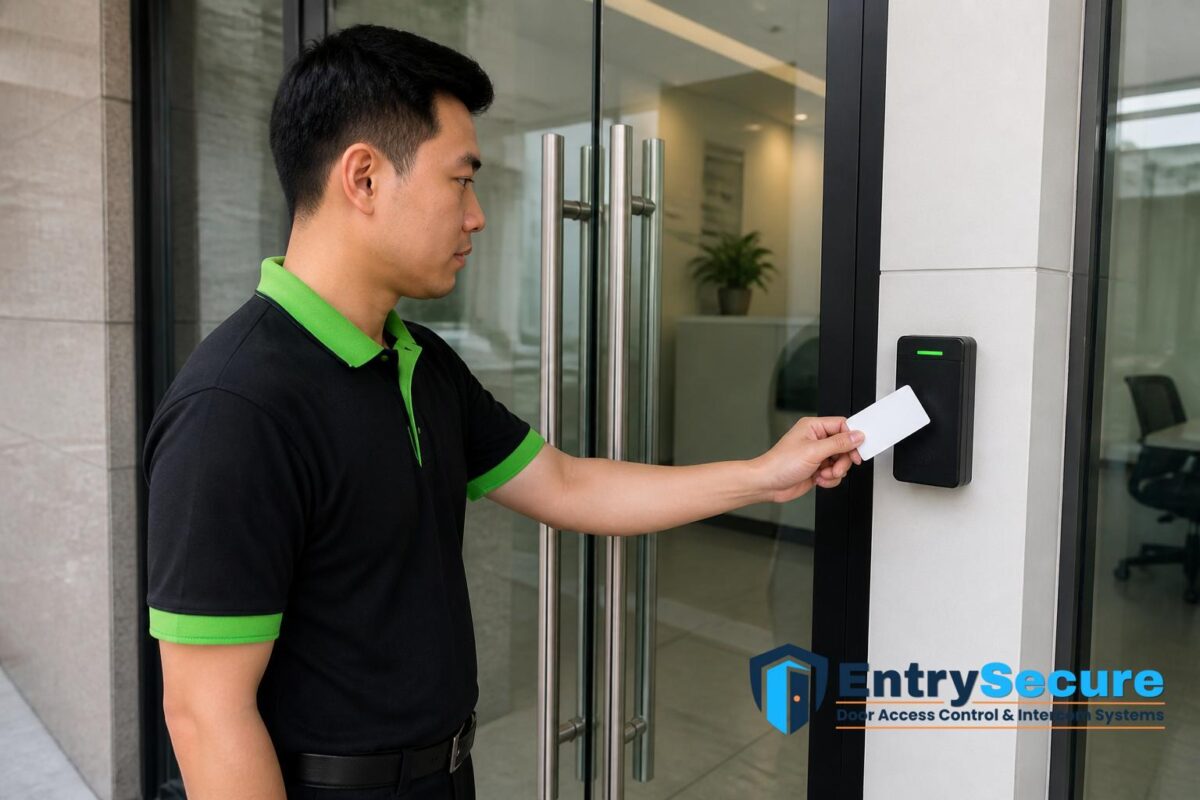
Before the installation is completed, the access control system should be tested thoroughly at each door. This includes checking that the reader responds correctly, the door releases as intended, and the door closes securely after each access attempt. The installer also confirms that the control equipment is functioning properly and that the setup matches the office’s chosen access arrangement.
Testing is important because it helps identify issues such as loose connections, incorrect mounting, awkward user positioning at the door or cabling problems that may not be obvious during installation. A proper handover should include a demonstration of how the system works so the office team understands how to use it confidently.
For offices in Singapore, this stage is especially useful because it ensures the system is ready for daily use before the installer leaves the site. It also gives the office manager a chance to ask questions and clarify routine operation.
Choosing the right installation approach for the premises
Not every office installation is the same. A small office suite in a commercial building may only need control for one entrance and one or two internal doors, while a larger office may require several controlled entry points across different departments. The installation approach should suit the property type, the number of users and how often the doors are used.
In some cases, the main consideration is convenience; in others, it is controlling access to specific areas without affecting everyday movement across the office. A professional installer will consider the existing door condition, the available space around the entry point and whether the system can be integrated cleanly into the premises.
This is why it is useful to share photos of the doors, the office layout and any current access equipment before installation begins. It helps the installer recommend a suitable arrangement for the site rather than relying on a generic setup.
If you are planning an office access control installation in Singapore, WhatsApp EntrySecure Door Access Control & Intercom Systems Singapore with your office details, entry point photos and any current equipment so the team can advise on a suitable arrangement and quotation.
Conclusion
Installing an access control system for a Singapore office is a practical process that starts with an assessment of the entry points and ends with proper testing and handover. When the door layout, wiring, placement and access setup are planned carefully, the result is a system that supports daily office operations and makes access management more organised.
Choose EntrySecure Door Access Control & Intercom Systems Singapore
EntrySecure Door Access Control & Intercom Systems Singapore offers practical security solutions for residential and commercial premises in Singapore. We provide access control, door access systems, intercom systems, security systems, alarm systems and security alarm systems for customers looking to improve access management and property protection.
Our team can recommend solutions based on your premises, entry points and security requirements, whether you need controlled access for an office, an intercom for visitor communication or an alarm system for added protection. CCTV services are also available for customers who want to include surveillance as part of their overall security setup.
From standalone installations to combined access and security solutions, we aim to provide straightforward recommendations and dependable installation. WhatsApp us at +65 8241 0032 for your door access, intercom, alarm and security system needs.
Frequently Asked Questions
What should be prepared before installing an access control system in a Singapore office?
It helps to prepare the office layout, the doors that need controlled access, photos of the entry points, and any existing access equipment already in place. This gives the installer a clearer picture of the premises and the likely cabling and placement requirements.
Can access control be installed on more than one office door?
Yes, office access control can be planned for one door or multiple doors depending on how the premises are used. The installation should be designed around the specific entry points that need controlled access, rather than treating every door in the office the same way.
Why is testing important after installation?
Testing confirms that the reader, control unit and door release function correctly together. It also helps ensure that the system is suitable for daily office use and that any setup issues are identified before handover.