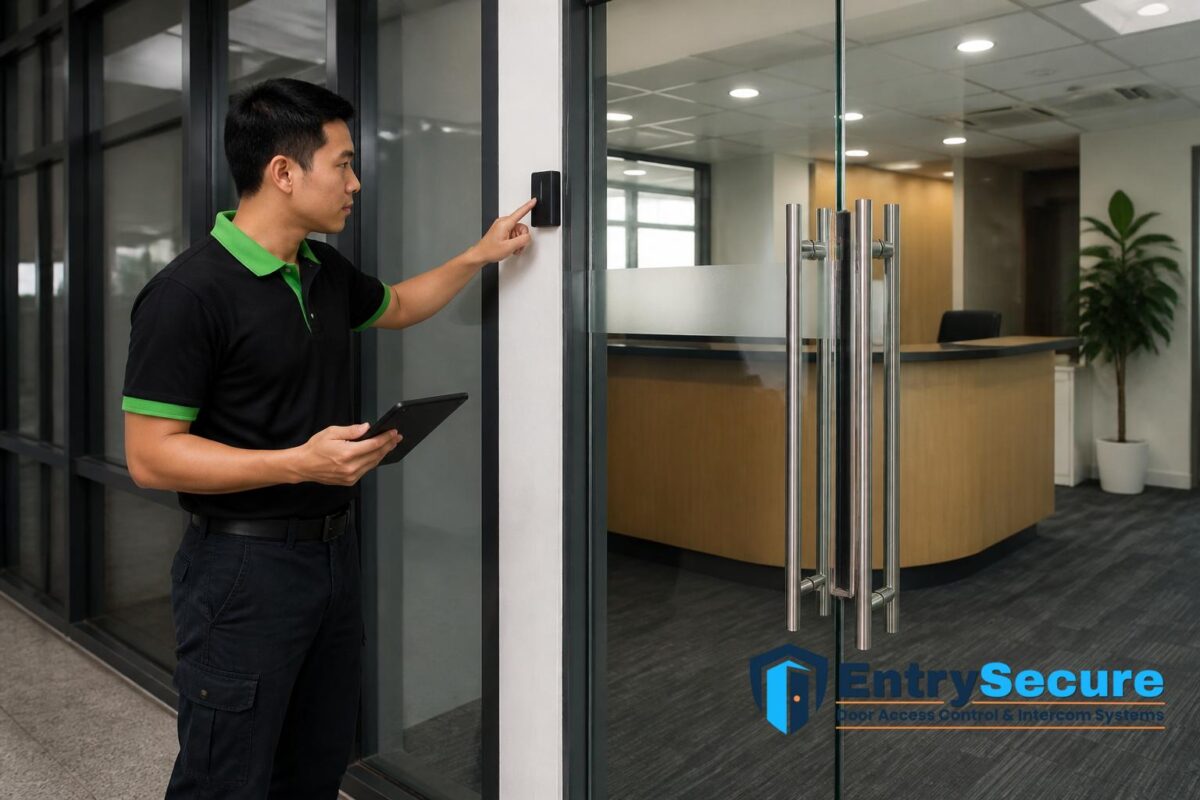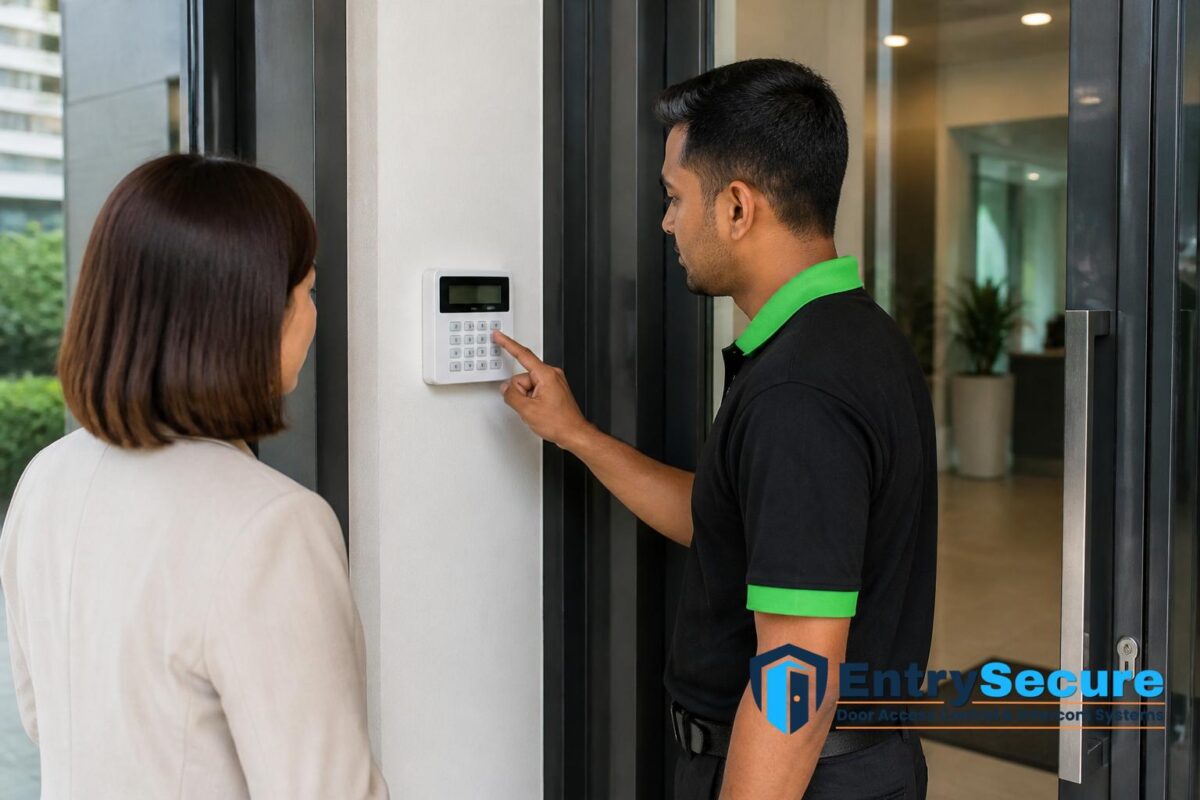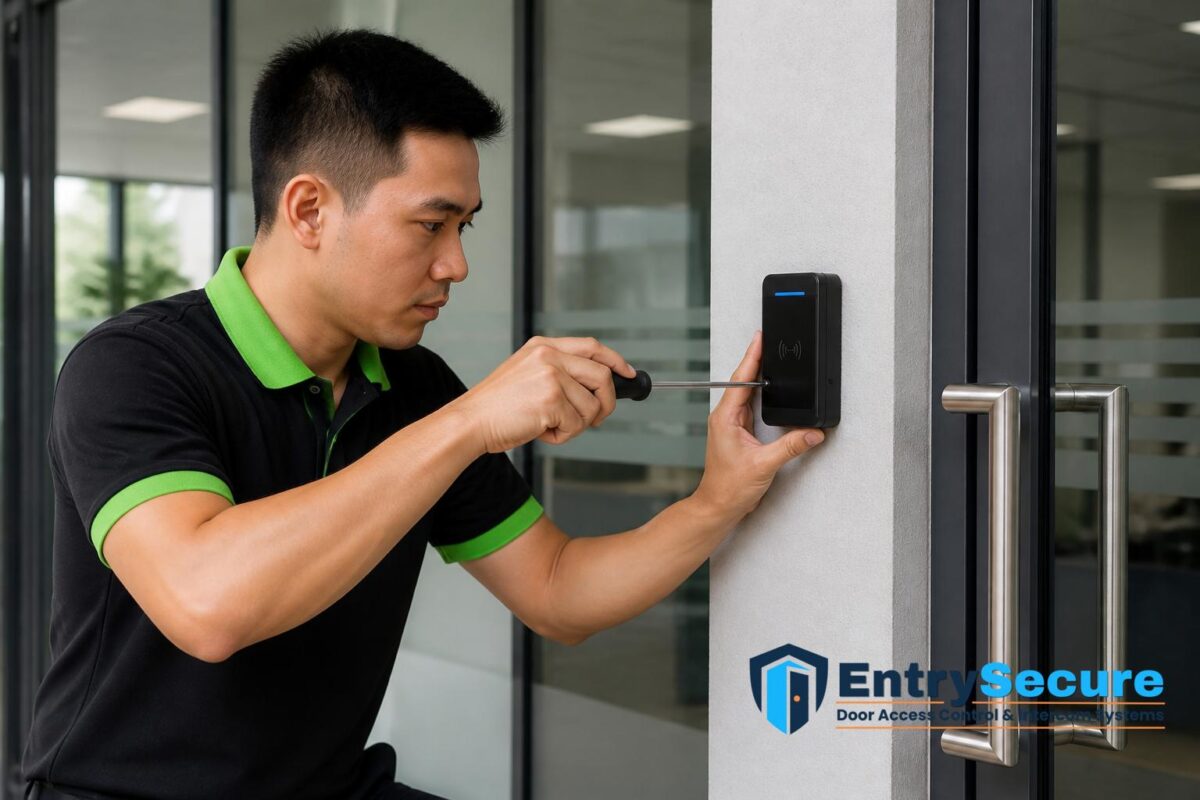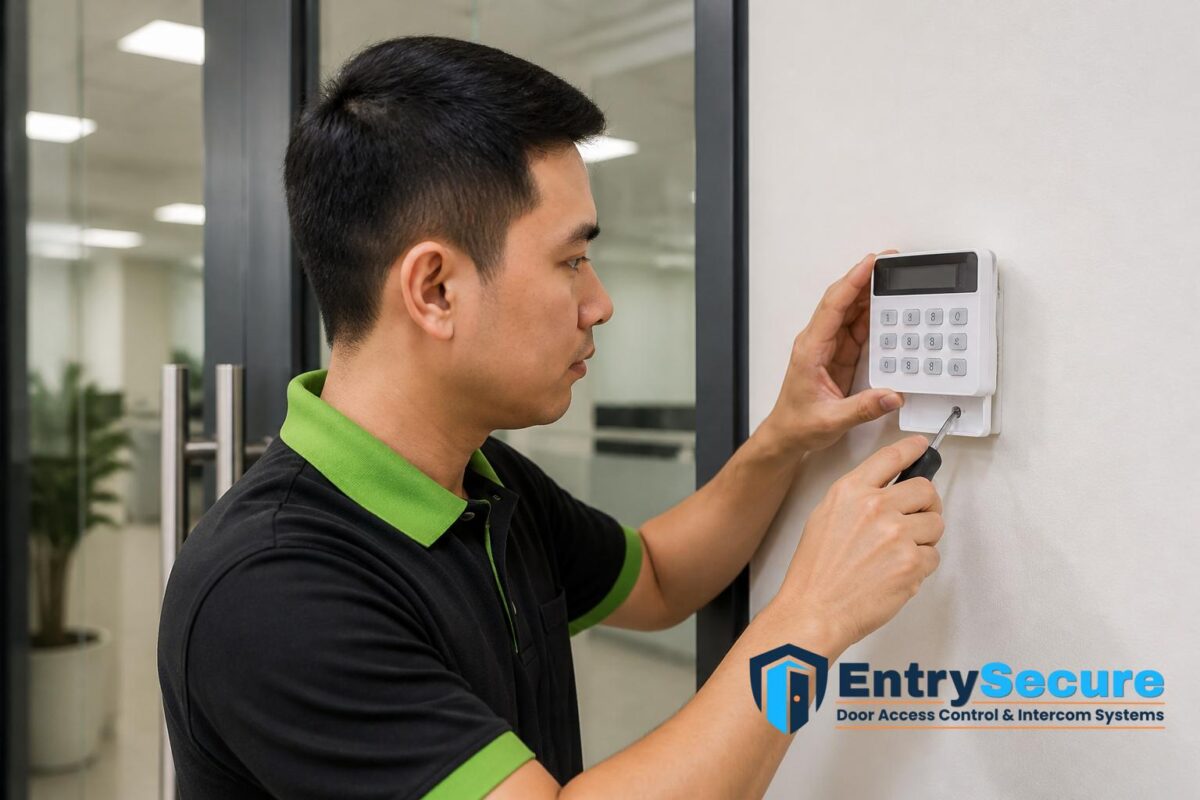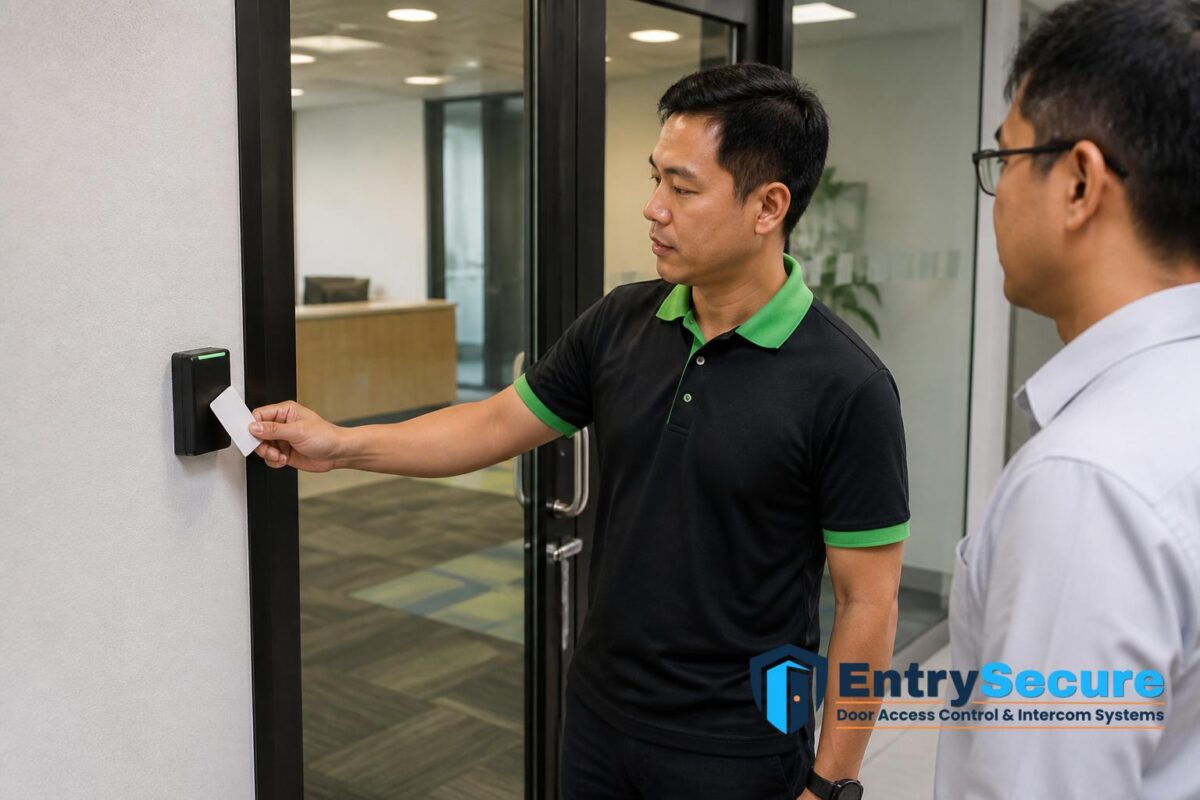

Access control systems help Singapore businesses manage who can enter a building, office suite, back-of-house area or other restricted space, and when they can do so. Rather than relying only on physical keys, these systems use an electronic method to verify access at a controlled entry point, then allow or deny entry according to the settings configured by the installer or system administrator.
For commercial premises in Singapore, this approach is useful where different teams, tenants, contractors or visitors need different levels of entry. A well-planned access control system can support day-to-day operations by making entry more organised, reducing key sharing and giving business owners a clearer way to manage access at specific doors.
What an access control system does at the entry point
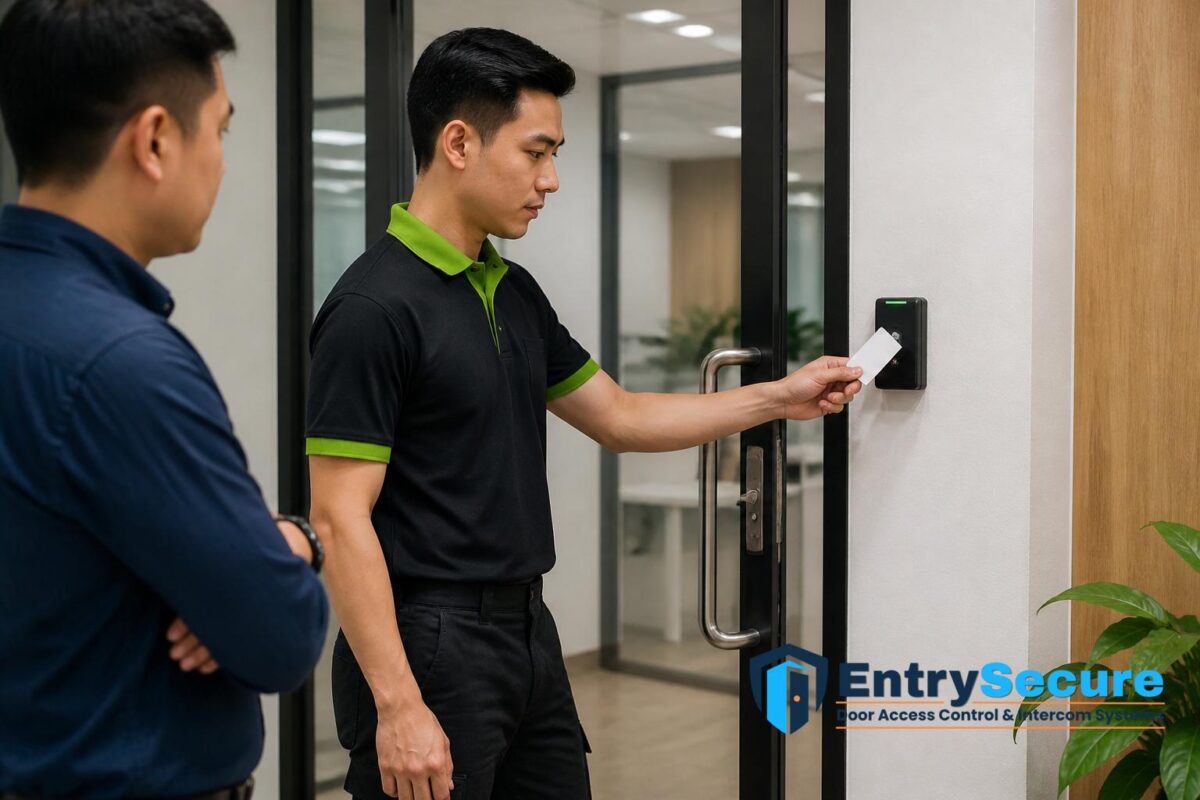
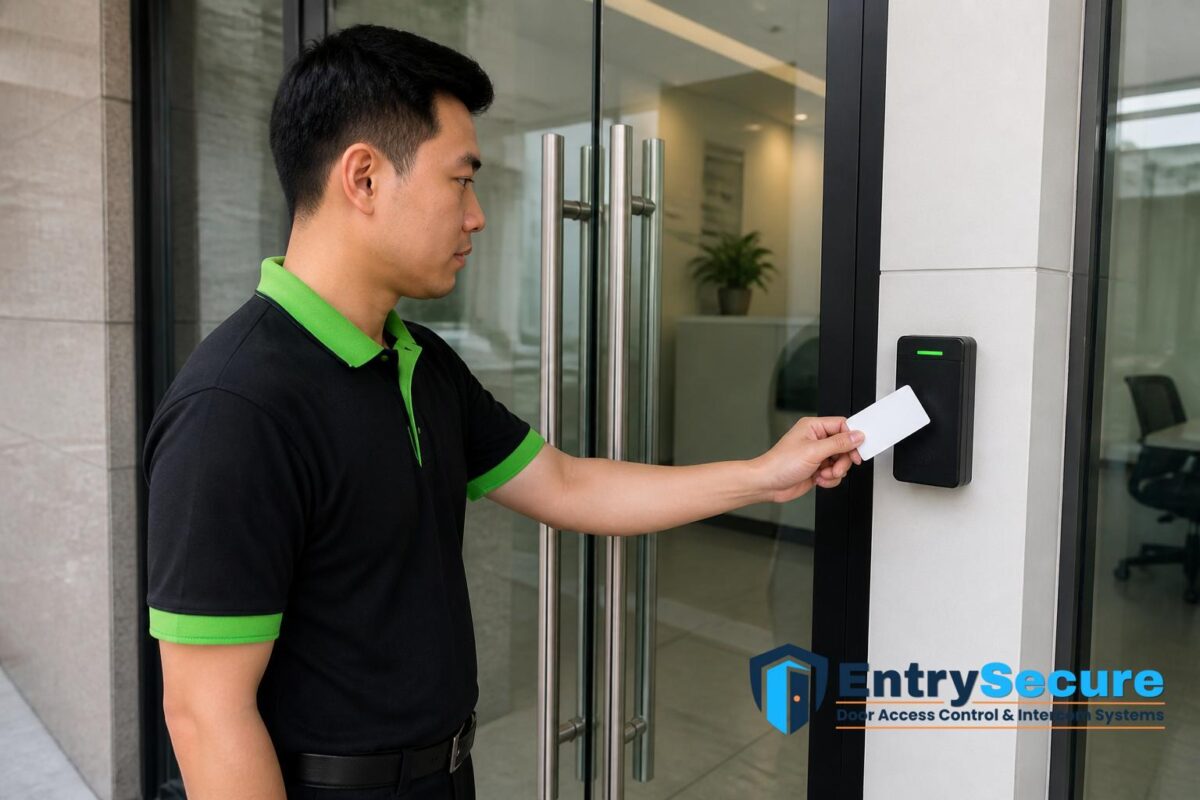
An access control system is designed around a simple workflow: a person presents a credential, the reader checks it against the system’s rules, and the door is either released or kept locked. The exact credential type depends on the solution chosen, but the principle is the same. The system acts as a gatekeeper at the entry point rather than a passive lock alone.
In a business setting, this may be used at main office doors, server rooms, staff-only entrances, storage areas or other restricted access points. The system can be set up so that only approved users gain entry, while others are held at the door until access is granted by authorised staff.
Typical components in a business access control setup
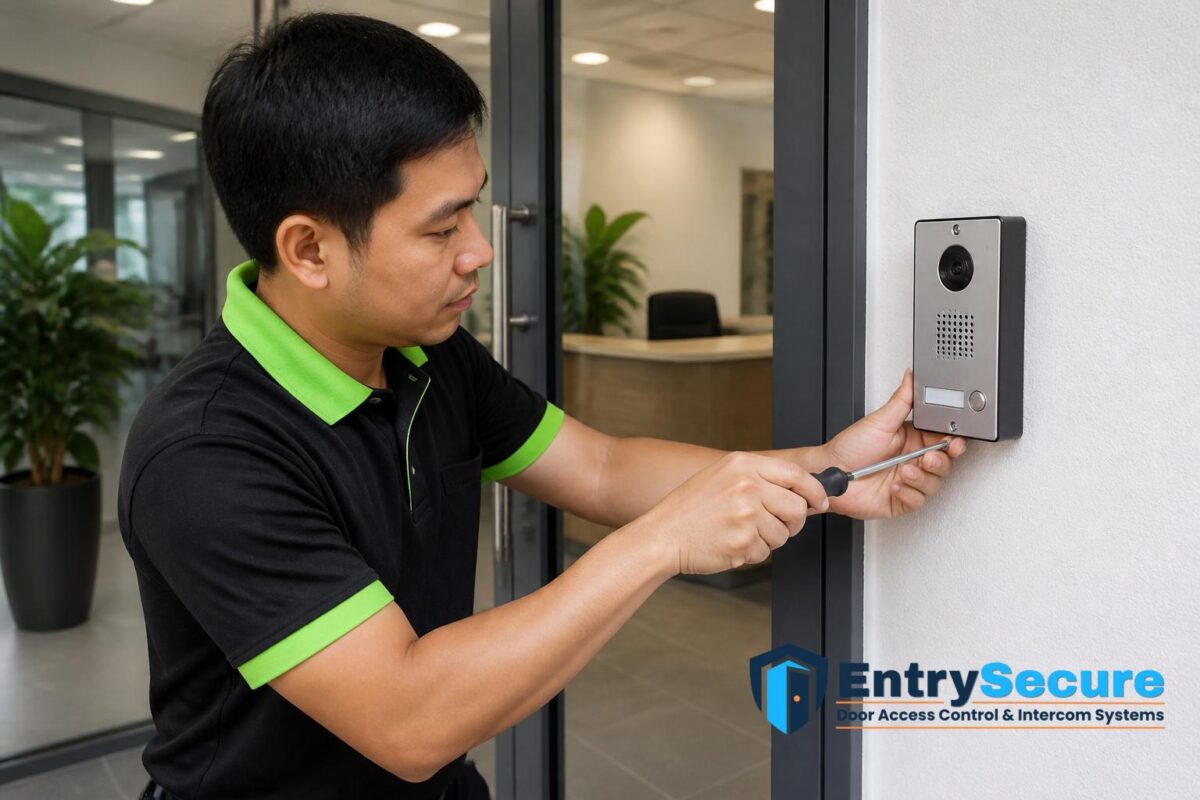
A commercial access control system usually includes a reader at the door, a control unit or panel that processes the access request, and a lock release mechanism that responds when entry is approved. It also needs cabling and power supply components arranged properly so the system can operate reliably throughout the working day.
Depending on the business layout, there may also be exit devices, door contacts and software or management tools used to review access settings. The exact configuration should match the building’s entry points, the amount of daily traffic and the level of control required for each area.
How the system checks and grants access
When a user presents their credential to the reader, the reader sends that information to the control unit. The system then checks whether the credential is valid for that door and whether it is allowed at that time. If the setting matches, the system releases the door mechanism briefly so the user can enter.
If the credential is not recognised, has not been authorised for that door, or is outside the permitted schedule, access remains locked. This process helps business operators manage entry without needing to manually supervise every door at all times.
Why planning matters for Singapore businesses
Before installation, the entry points should be assessed carefully. A small office with one main door will have different needs from a multi-tenant commercial floor, warehouse or clinic. The installer should look at how many people use the door, whether the door swings in or out, how the wiring can be run neatly, and whether there is existing infrastructure that can be reused.
In Singapore, businesses also need to think about practical site conditions such as shared corridors, narrow door frames, daily foot traffic and access by cleaners, delivery staff or external contractors. Good planning helps ensure the system suits the premises and does not interfere with normal operations.
Device placement, cabling and installation considerations
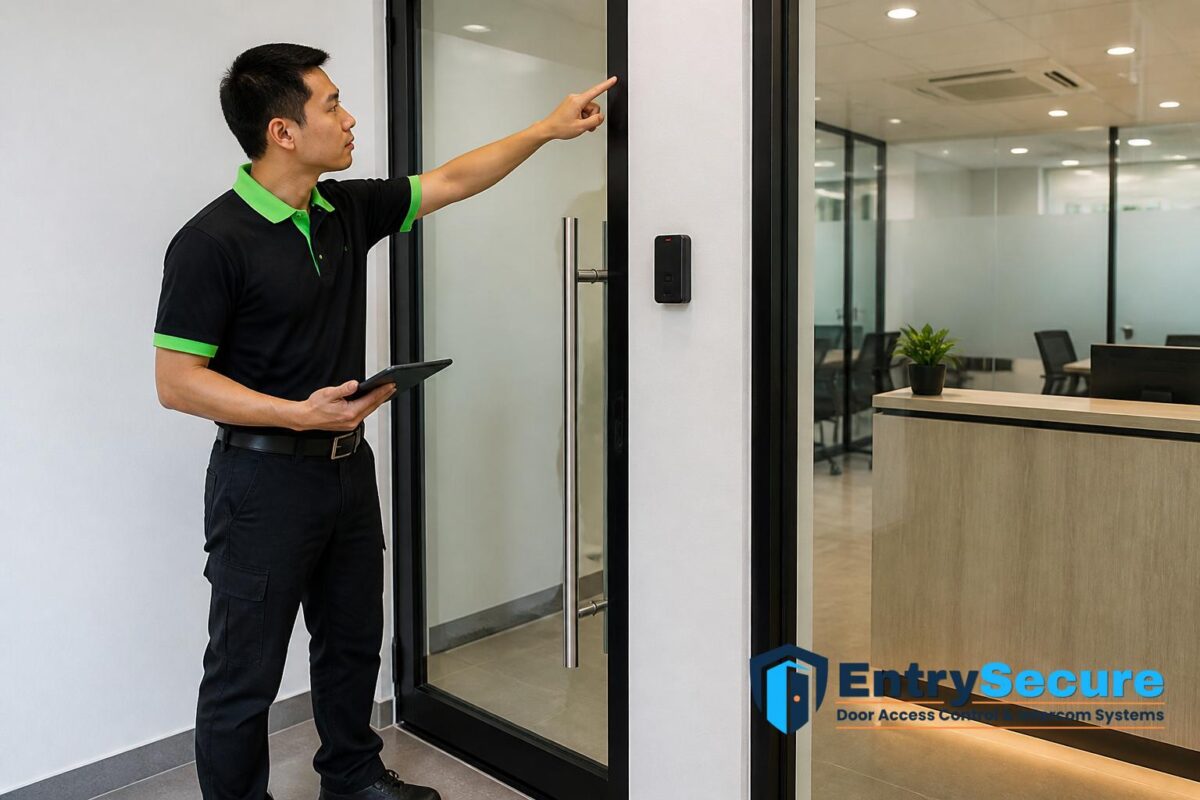
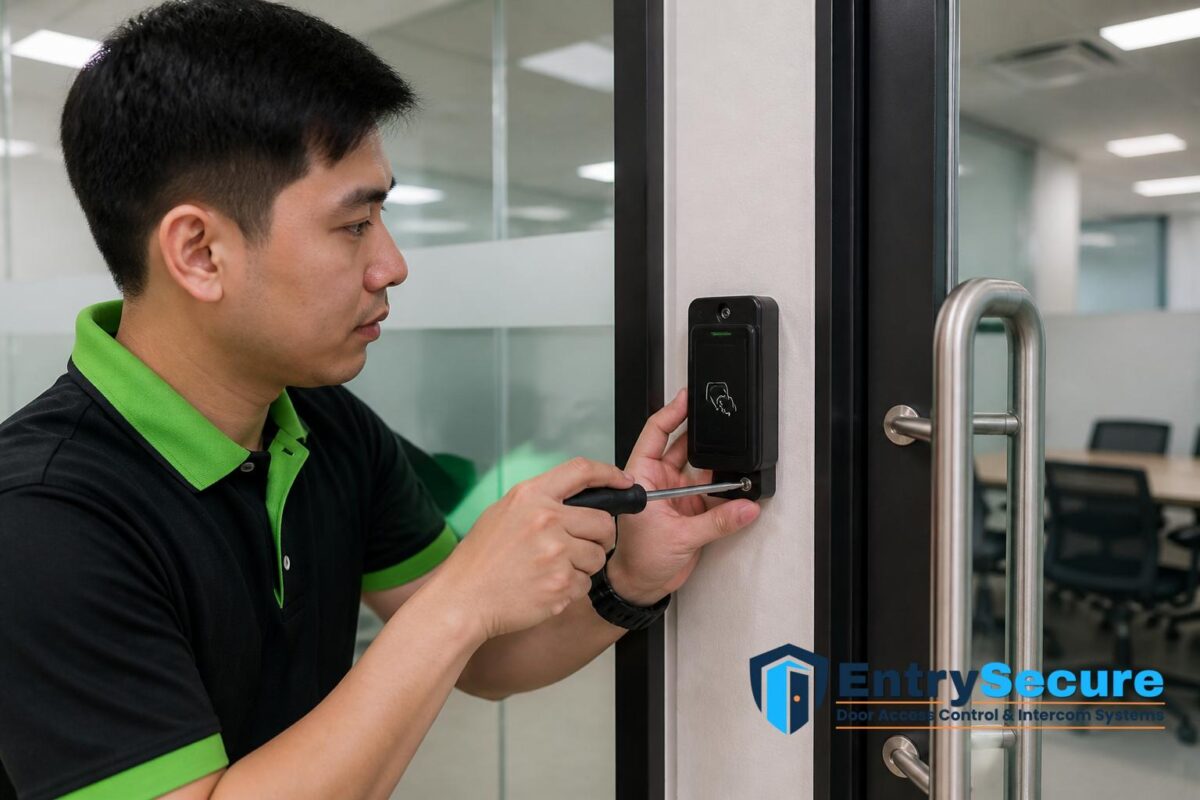
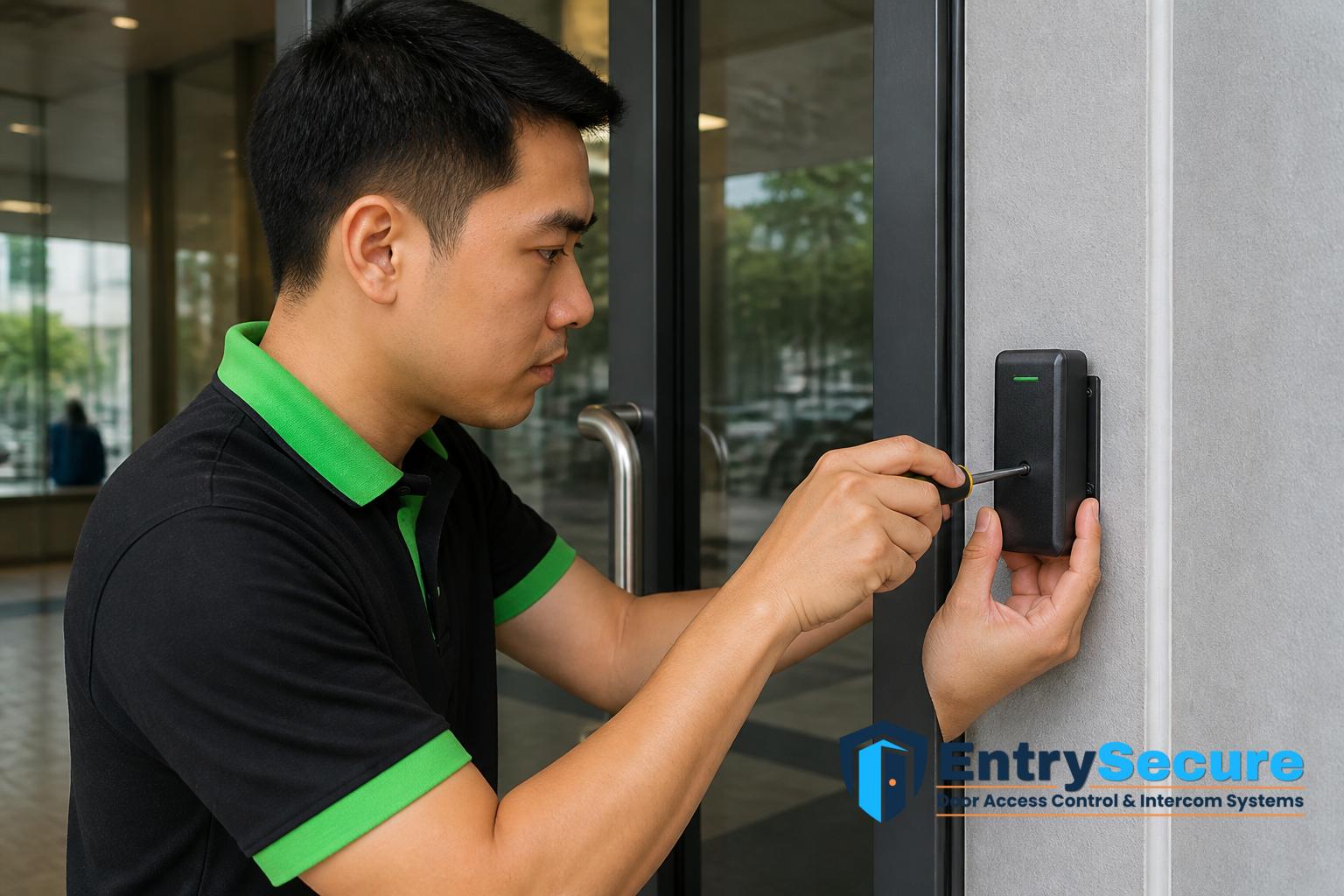
Reader placement should be convenient for users while still supporting secure access. The control unit is typically positioned in a suitable protected location, while cabling is routed to keep the installation tidy and manageable. For commercial premises, it is important that the layout supports both function and maintenance access.
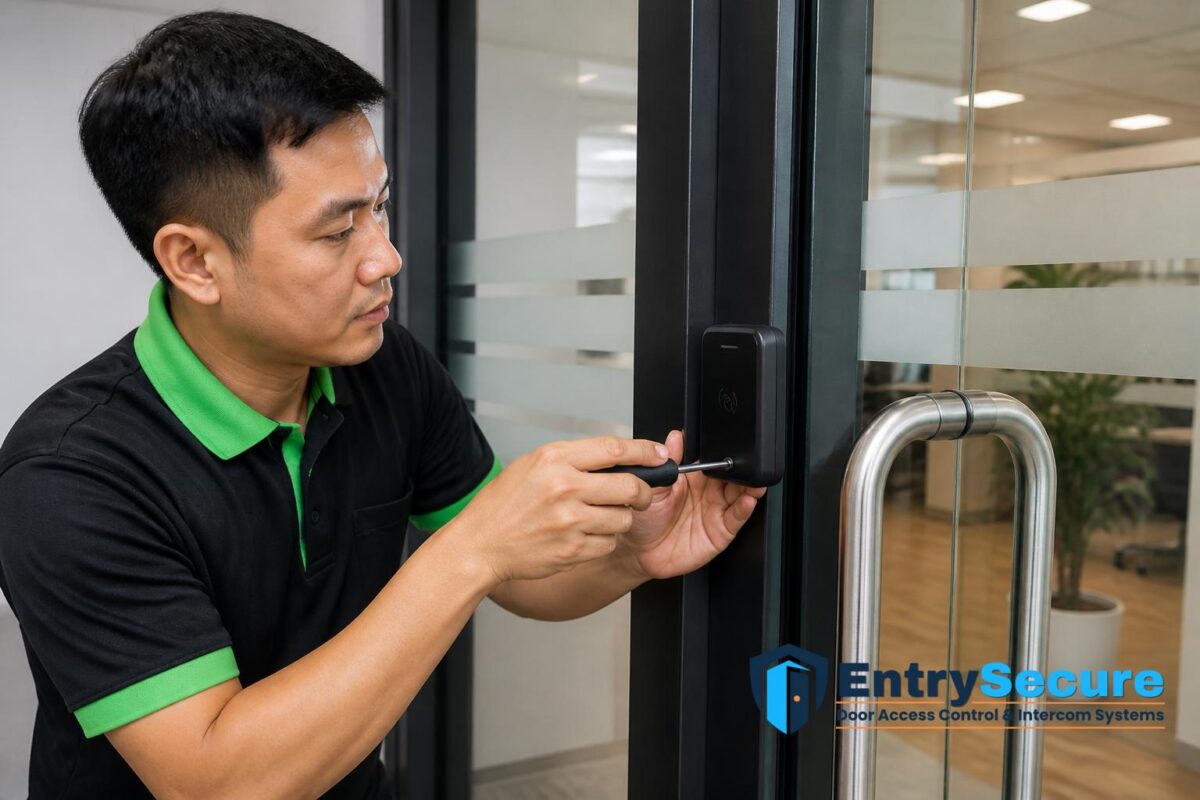
Professional installation also includes checking how the door hardware will interact with the access control components, making sure the wiring is properly terminated and confirming that the system is physically secure. A careful install reduces the risk of poor user experience, intermittent faults or unnecessary disruption later on.
Setup, user access and system management
Once installed, the system needs to be configured for the business’s entry requirements. This may include assigning access rights for different staff groups, setting schedules for restricted areas and deciding which doors require tighter control. For a business with multiple departments, these settings help keep access practical while still organised.
Good system management also includes keeping records up to date when employees join, change roles or leave the company. If access permissions are not reviewed regularly, a system can become harder to manage than necessary. Clear administration helps keep the setup aligned with actual workplace use.
Testing and handover before the system goes live
After installation and configuration, the system should be tested at each relevant entry point. This includes checking that the reader responds properly, the door releases when it should and the lock remains secure when access is not authorised. Testing should also confirm that the installation works correctly with the everyday movement expected at the premises.
A proper handover is important for business owners and facilities teams. It should cover how the system is used, how access settings are changed and what to do if a door or reader needs attention. This gives the business a clearer understanding of the system after installation and helps support smoother day-to-day use.
Choosing the right access control arrangement for your business
Different Singapore businesses require different levels of access control. A small office may only need one controlled entrance, while a larger commercial site may need multiple doors managed separately. The best arrangement depends on the number of users, the type of premises and how much control is needed across the property.
It is also worth considering how the system fits with existing operations. If staff move between several zones during the day, access settings should be practical enough to support work without creating unnecessary delays. A suitable system should be planned around the actual flow of people through the premises, not just around the door itself.
If your business is planning an access control system, WhatsApp EntrySecure Door Access Control & Intercom Systems Singapore with your property type, entry point, photos, current equipment and required access-control scope so the team can recommend a suitable arrangement and quotation.
Conclusion
Access control systems work by verifying authorised entry at a controlled door, then releasing access only when the correct settings are met. For Singapore businesses, the most effective setup is one that is planned around the premises, installed neatly, configured sensibly and tested thoroughly before regular use begins.
By understanding how the system works from the entry point to the final handover, business owners and facilities teams can make more informed decisions about managing access in a practical and orderly way.
Choose EntrySecure Door Access Control & Intercom Systems Singapore
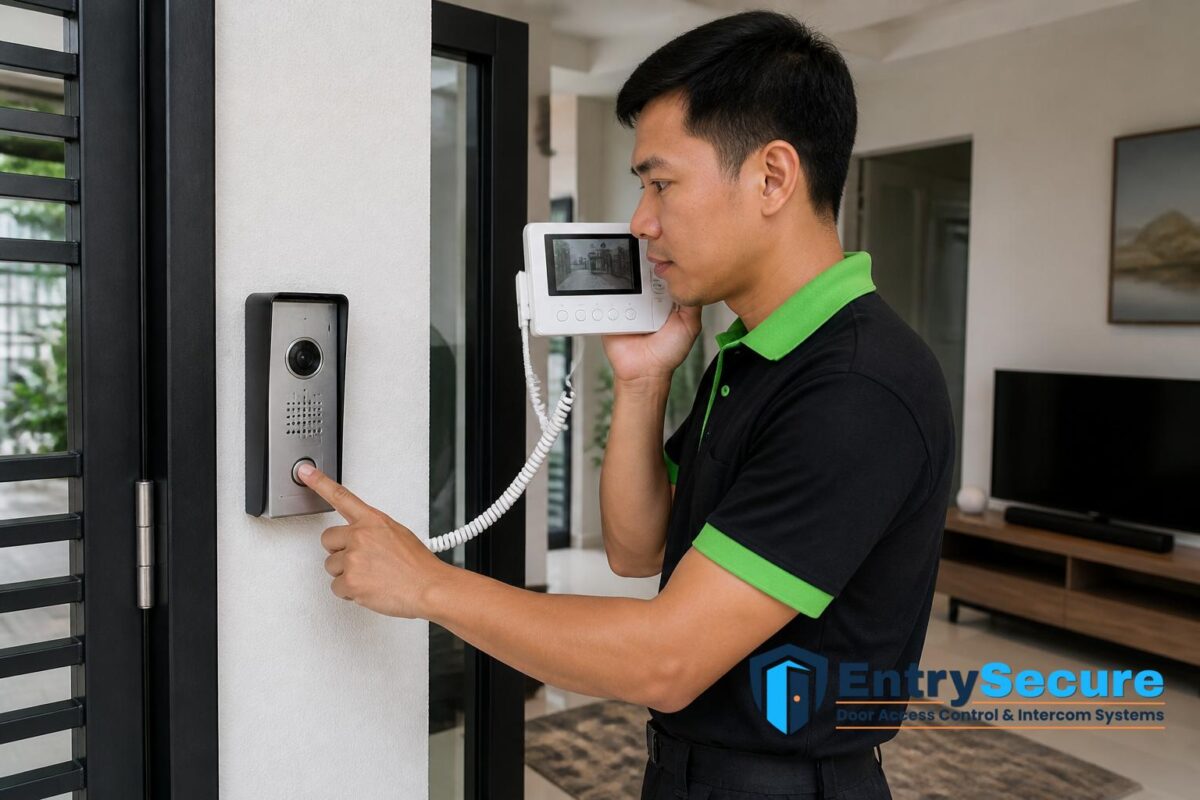
EntrySecure Door Access Control & Intercom Systems Singapore offers practical security solutions for residential and commercial premises in Singapore. We provide access control, door access systems, intercom systems, security systems, alarm systems and security alarm systems for customers looking to improve access management and property protection.
Our team can recommend solutions based on your premises, entry points and security requirements, whether you need controlled access for an office, an intercom for visitor communication or an alarm system for added protection. CCTV services are also available for customers who want to include surveillance as part of their overall security setup.
From standalone installations to combined access and security solutions, we aim to provide straightforward recommendations and dependable installation. WhatsApp us at +65 8241 0032 for your door access, intercom, alarm and security system needs.
Frequently Asked Questions
What does an access control system do for a business door?
It checks whether a person is authorised to enter through that door. If the credential and access settings are valid, the system releases the door mechanism; if not, the door remains secured.
Can access control systems be used at more than one entry point?
Yes. Many business premises use access control at multiple doors, such as the main entrance, staff-only access points or restricted rooms. The exact setup depends on how the premises are used and how much control is needed.
Why is professional installation important for business access control?
Professional installation helps ensure the reader, control unit, wiring and door hardware are arranged properly and work as intended. It also supports neater cabling, better system reliability and a clearer handover for the business team.