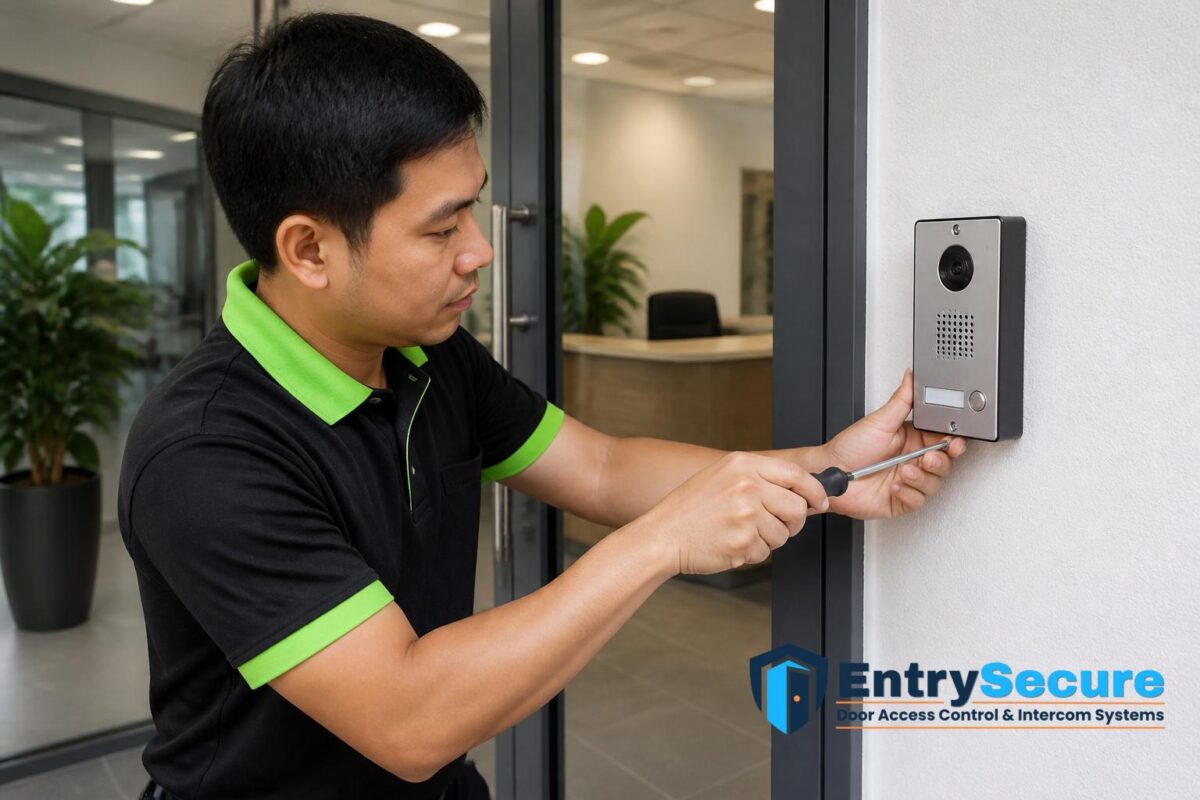

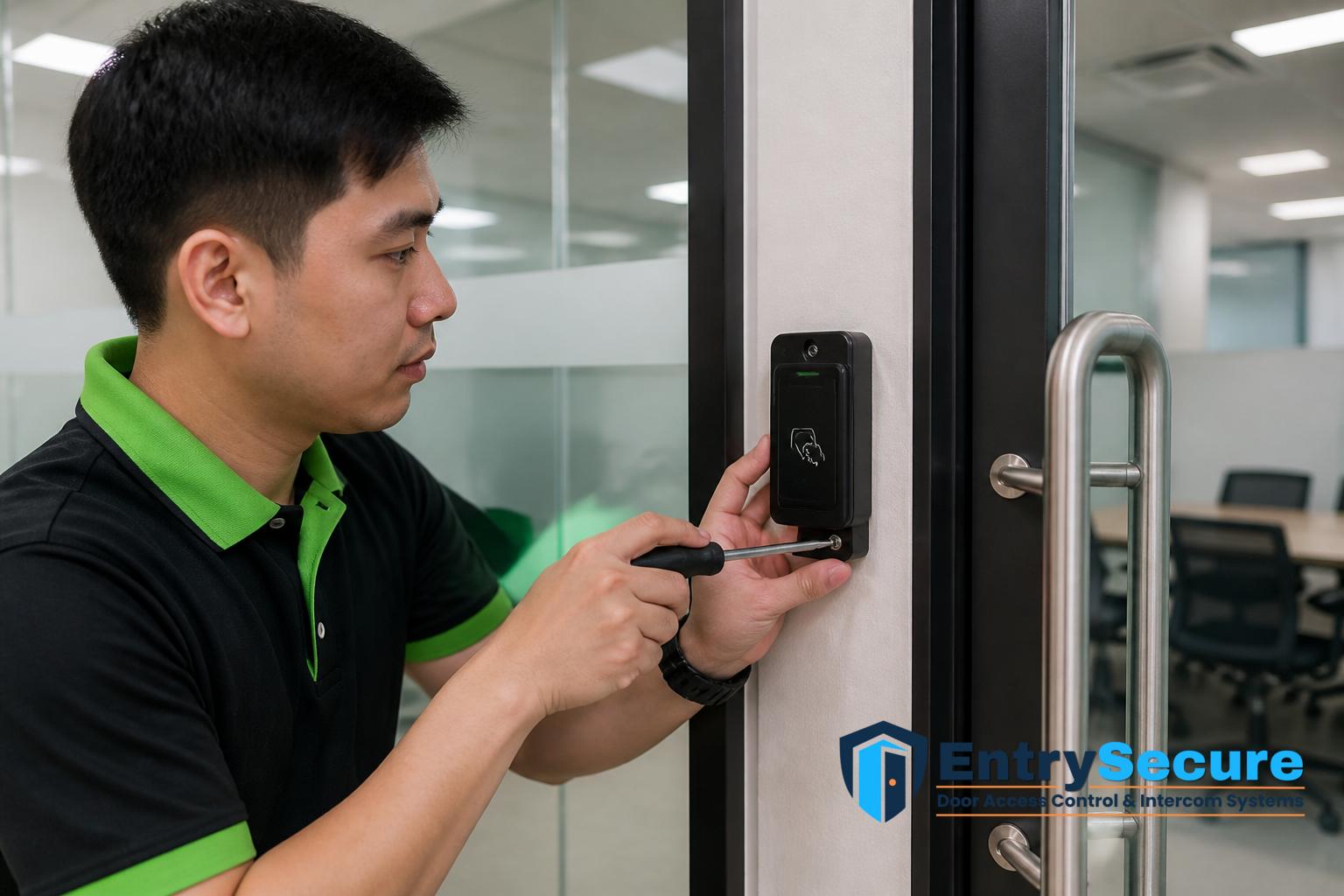
When a Singapore office plans a door access control system, the first question is usually not about the software, but about the equipment needed to make the entry point work reliably day to day. The right setup depends on the office layout, the number of doors, the type of access allowed, and how staff, visitors and service contractors should enter the premises.
For commercial premises, door access control is about managing entry points in a practical way. That usually means choosing the correct control unit, readers or credentials, locking hardware, cabling, power supply, and any related accessories needed at the door. A well-planned system should suit the office environment, support smooth movement during business hours, and remain easy for authorised users to operate.
Start with the office entry points
The equipment needed for a door access control system depends on how many doors require control and how each one is used. A main entrance used by staff and visitors will usually need a different arrangement from a meeting room, server room, storeroom, or back-of-house access point. Before selecting any device, it helps to map every door that needs controlled entry.
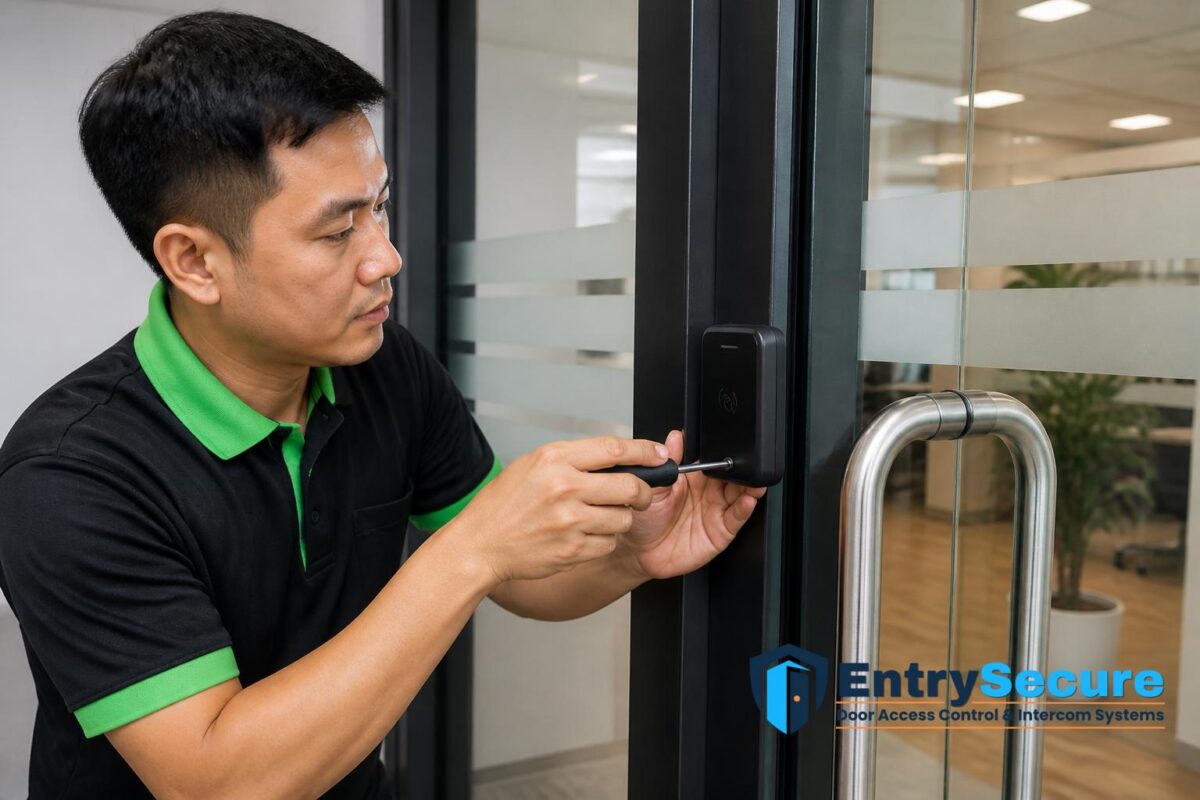
In a Singapore office, this assessment should also consider whether the entrance is a glass door, metal door, timber door, or an existing fire-rated door. The door type affects the choice of mounting hardware, the way cabling is routed, and whether any replacement parts are required. A proper site review helps identify what can be retained and what needs to be added for the system to function properly.
Main equipment typically required
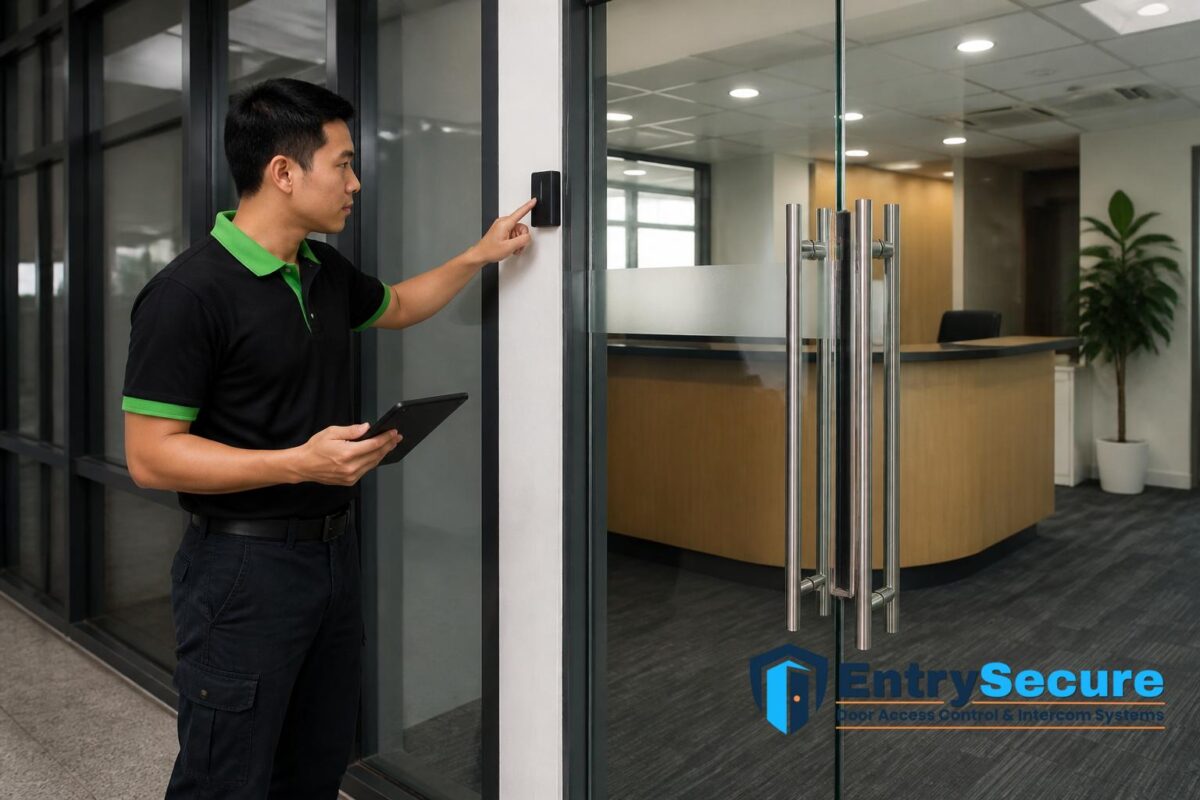
A basic office door access control system normally includes a controller, a reader at the entry point, credentials for authorised users, and an electric locking arrangement matched to the door. These are the core components that allow access to be managed rather than left open to everyone.
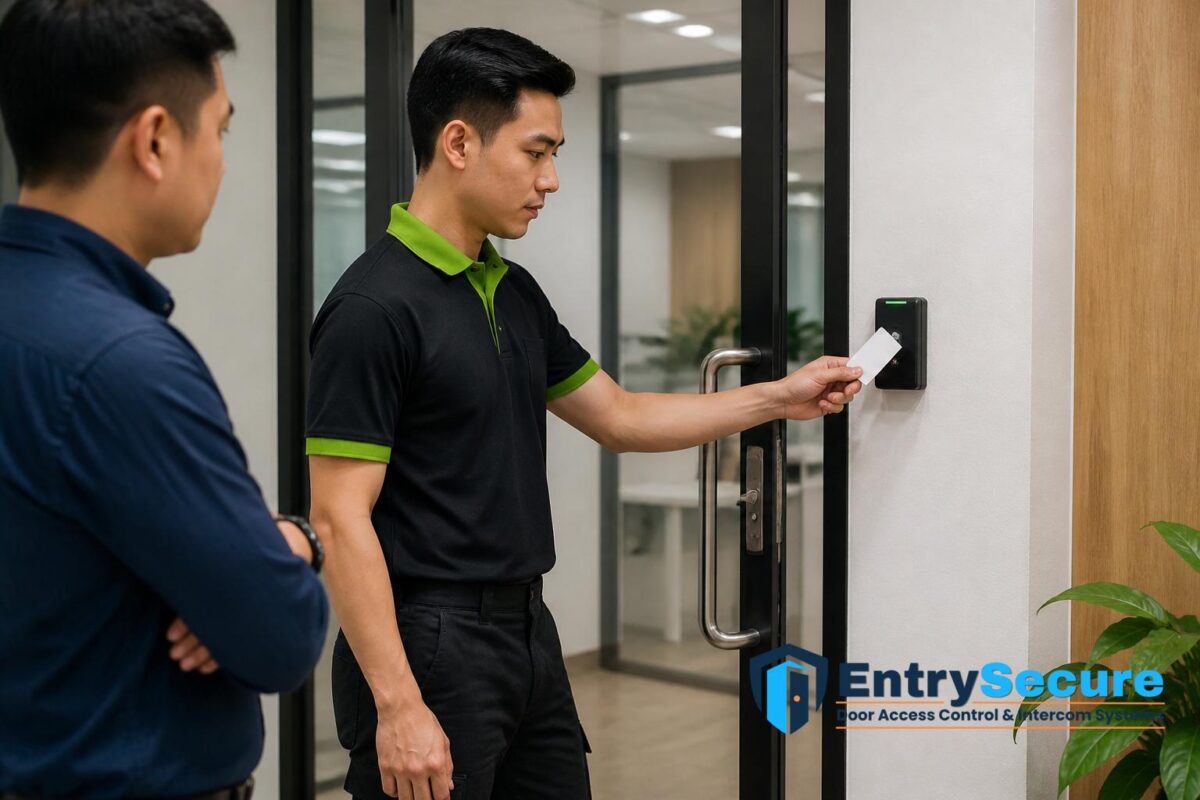
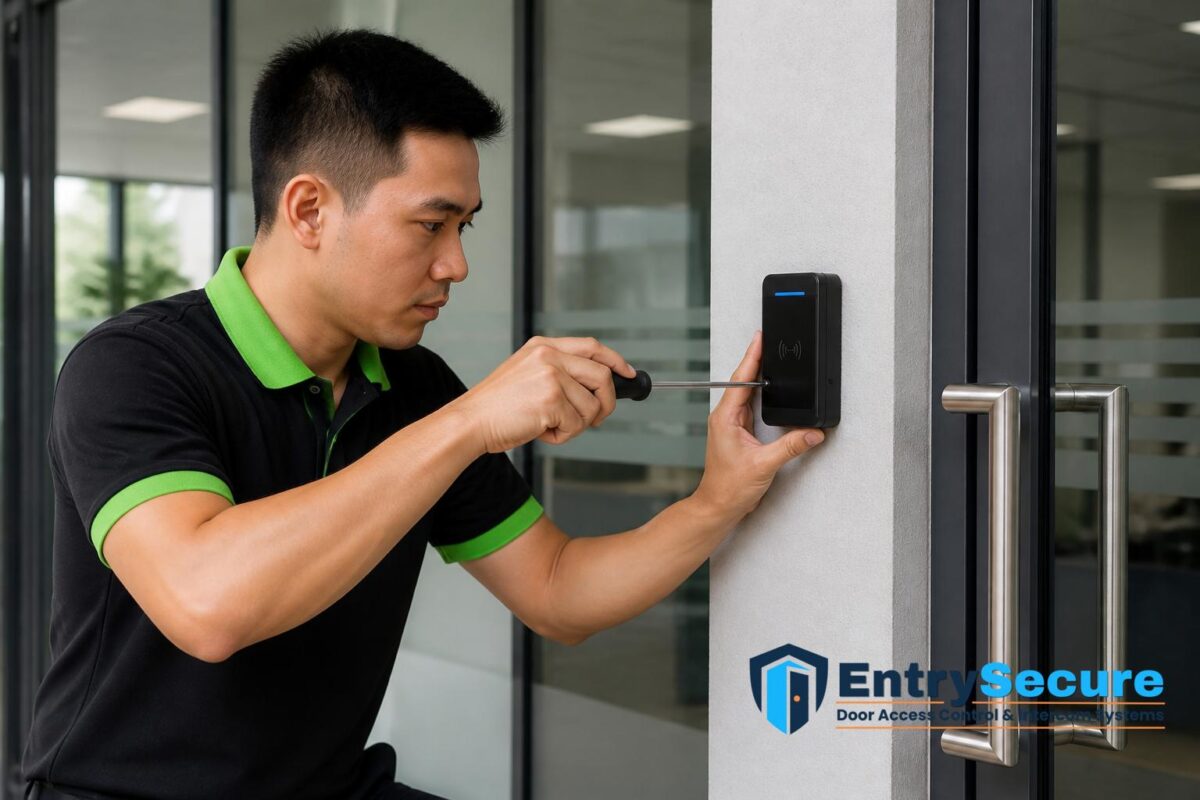
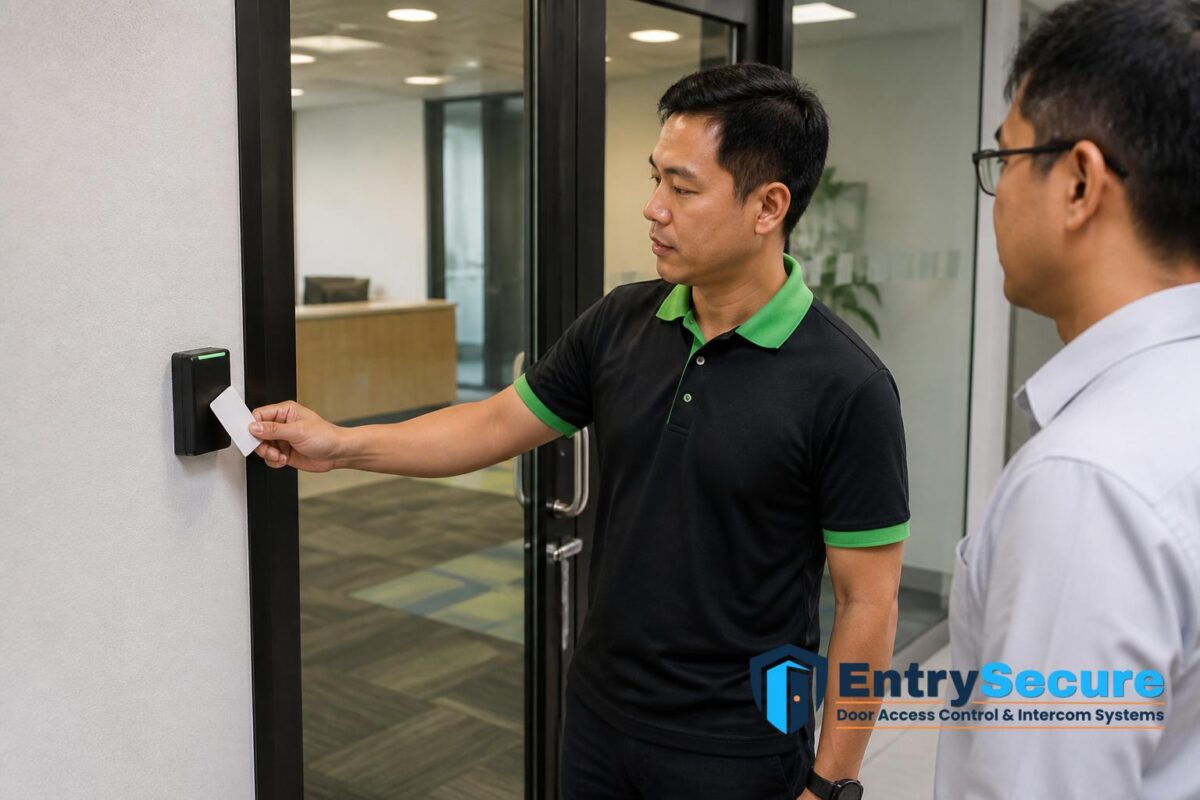
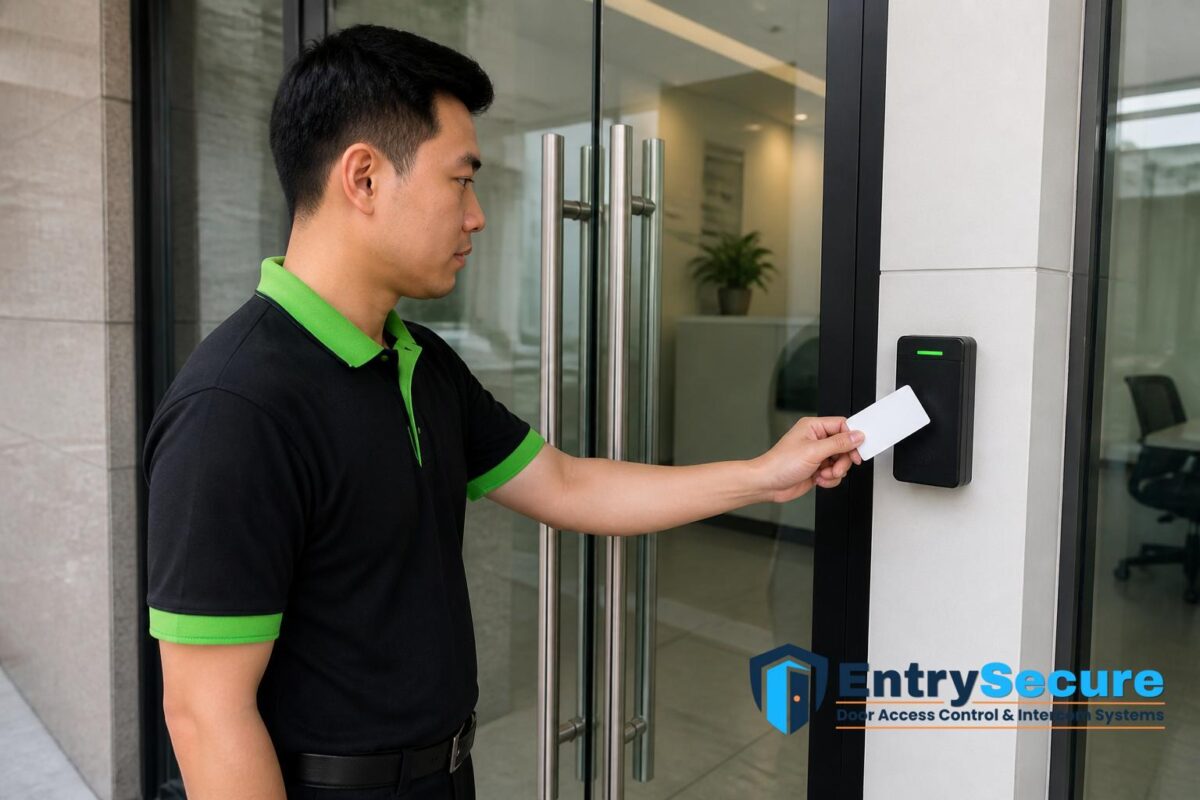
The controller is the part that processes access decisions. The reader is installed near the door and is used by staff to present their access credential. The credential may be a card, fob or other approved access token, depending on the selected system. The lock hardware must work with the door structure and the controller, so the entire arrangement should be specified as a complete set rather than as separate parts chosen at random.
Some offices also need door release accessories, exit buttons, door sensors, and backup power support. These items help the system operate more smoothly and provide better visibility of whether a door is closed or left open. In a commercial setting, these extras can make daily use easier for front-of-house staff and facilities teams.
Readers, credentials and user access
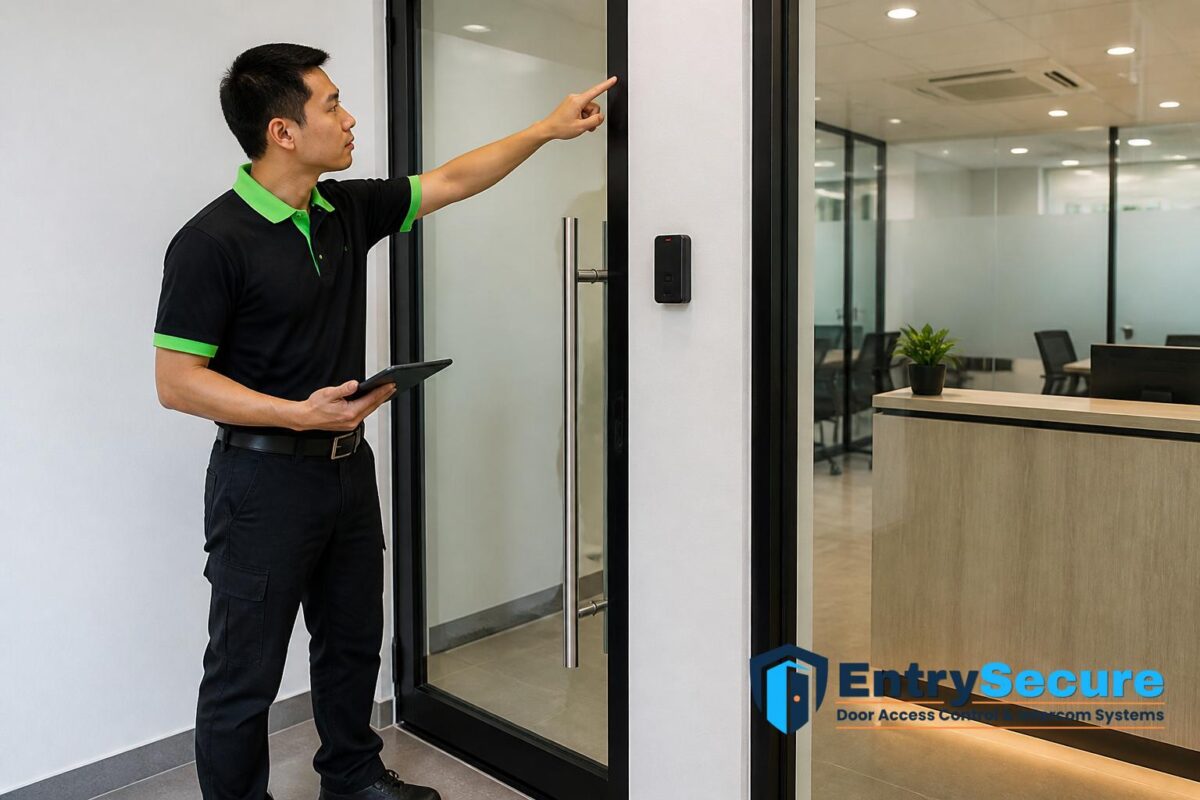
The reader is one of the most visible parts of the system, so it should be positioned where users can access it naturally without crowding the doorway. The location should allow an orderly flow for staff entering the office, while still keeping the entry point controlled. Reader placement is important because poor positioning can lead to inconvenience, delays, or repeated failed attempts to access the door.
Credentials are equally important because they are what authorised users will carry every day. An office may use access cards or fobs for staff access, and each option should be planned with daily operations in mind. If there are contractors, temporary staff, or shared workspace users, the system should be set up so access can be managed in a sensible way without complicating the workflow.
For Singapore offices, it is also useful to think about how credentials will be issued, replaced, and managed over time. A practical access control arrangement should make it easy for administrators to add or remove users when staff join, leave, or change departments.
Locking hardware and door compatibility
The locking component must suit the door and the way the office uses it. Some doors may need hardware that keeps the door secure while still allowing controlled exit from inside. Other doors may have special constraints because of their construction, frame condition, or existing fittings. The access control equipment should be matched carefully so the door continues to close properly and operate smoothly.
Compatibility is particularly important when working with an existing office door. If the current door condition is weak or the frame is uneven, the installer may need to recommend suitable preparation before fitting the access control hardware. This avoids unnecessary strain on the device and helps the system remain dependable during everyday use.
For offices with multiple access points, the lock and reader arrangement may need to vary from door to door. A meeting room, store room and main entrance do not always require the same equipment, so it is common for a commercial site to have a tailored combination rather than a single universal setup.
Cabling, power supply and system layout
Door access control equipment depends on proper cabling and a stable power arrangement. The wiring links the reader, controller, lock and related devices, so the installation should be planned to keep cables neat, protected and practical for the office environment. In commercial premises, good cable routing also supports easier maintenance later on.
The power supply must be selected to support the system’s working load and any backup needs specified for the site. This is especially important where an office wants a controlled entry point to remain functioning during a power interruption. A professional installer will assess where the power source should be placed and how the equipment should be connected.
Layout matters as much as the parts themselves. The controller is often installed in a practical internal location rather than directly at the exposed entry point, while the reader and related door devices are placed where users and installers can access them appropriately. This arrangement supports both daily operation and future servicing.
Installation and setup considerations
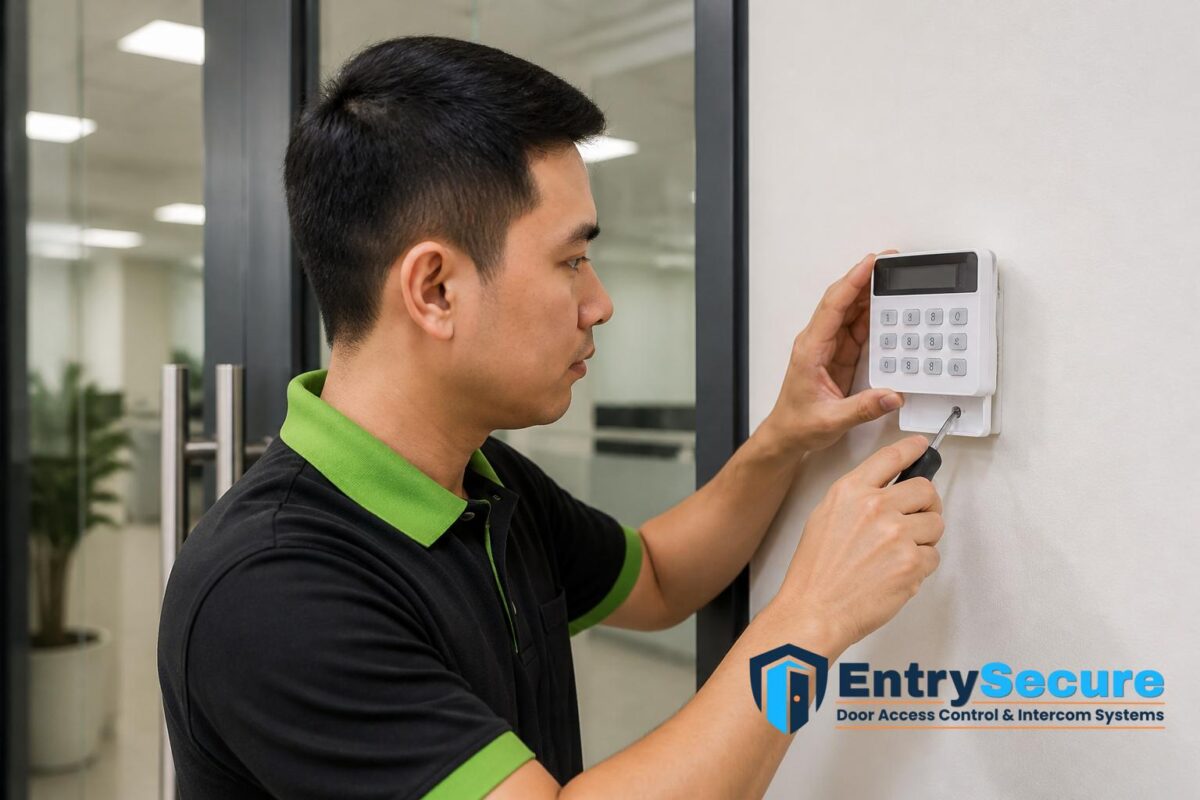
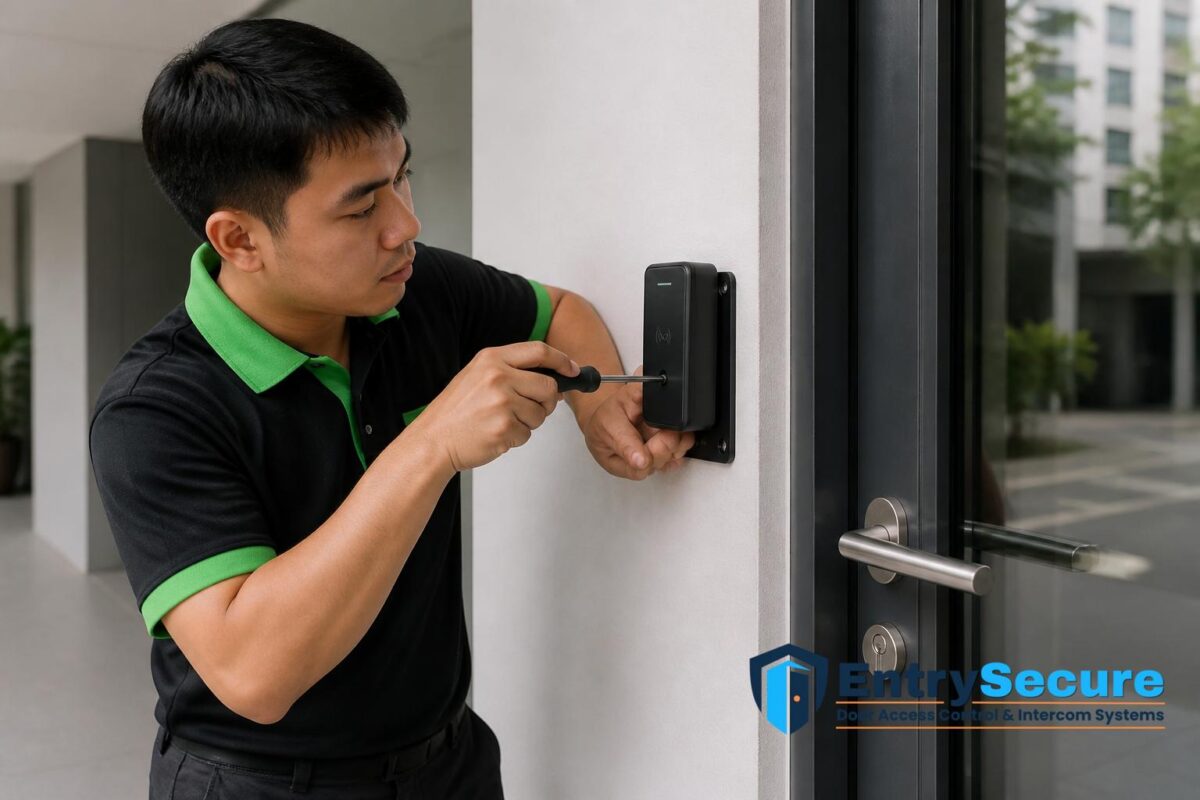
Installing door access control in a Singapore office is not only about fixing devices to the wall. The process usually involves planning the entry point, mounting the hardware, connecting the electrical components, and configuring the system so that authorised users can gain access in the intended way. Each step needs to be handled carefully to avoid unnecessary disruption to the workplace.
Setup should also reflect how the office is operated. For example, the main entrance may need access for staff at all working hours, while internal doors may have more limited permissions. The equipment should be configured in a way that aligns with the office’s actual use, not just the physical layout.
Professional installation is valuable because offices often have existing finishes, access requirements and operational constraints. A competent installer can advise on where the equipment should sit, how it should be wired, and how to reduce disruption while the work is carried out.
Testing, handover and everyday use
Once the equipment is installed, it should be tested at the door to confirm that the reader, controller, lock and release functions are working as intended. Testing also helps check that the door closes properly and that the access operation feels natural for staff using it every day.
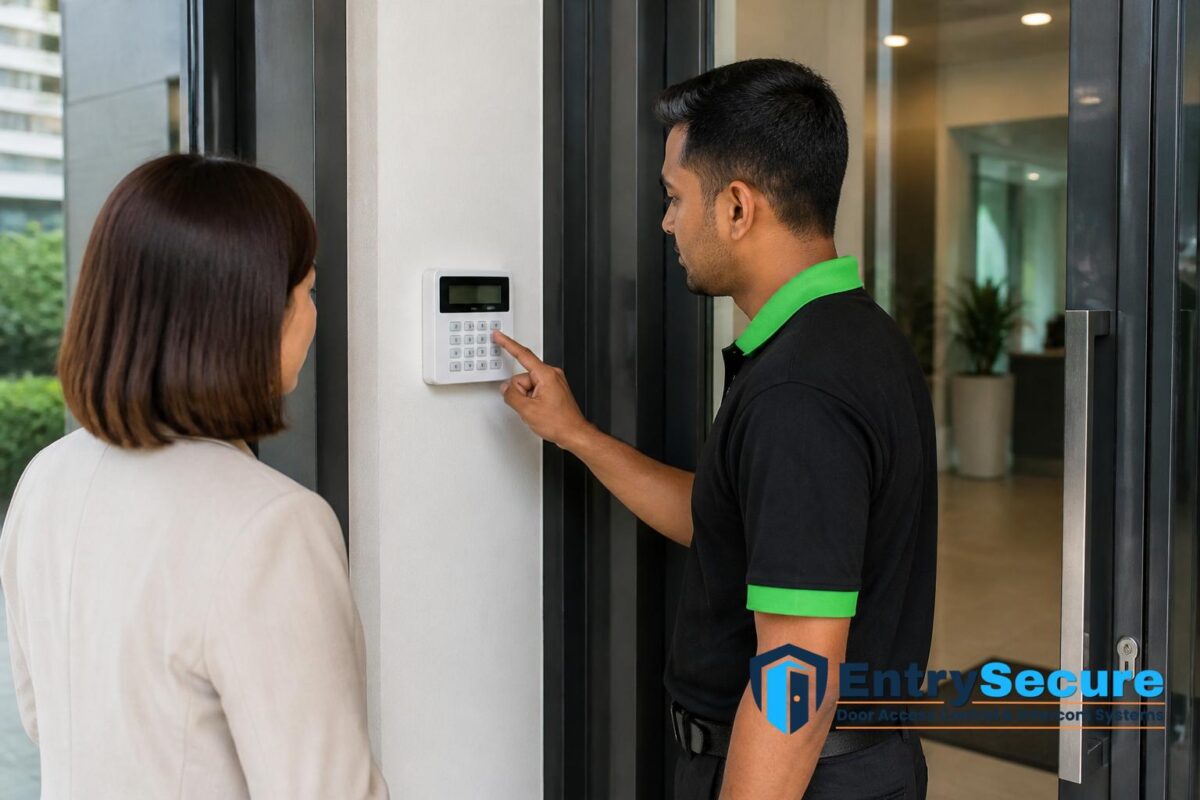
The handover stage is important because office administrators need to understand how to use the system after installation. This may include how to issue credentials, how to manage users, and how to recognise whether the door or device needs attention. Clear handover reduces confusion and helps the office maintain smoother access control from the start.
For commercial properties in Singapore, it is sensible to think about future changes too. Office tenancy changes, staff movement, and internal reorganisation are all common, so the equipment should support practical administration rather than requiring constant rework.
If your Singapore office needs a door access control system, WhatsApp EntrySecure Door Access Control & Intercom Systems Singapore with your office details, entry point photos, current equipment and access requirements so the team can recommend a suitable arrangement and quotation.
Conclusion
A Singapore office typically needs a combination of access controller, reader, credentials, suitable locking hardware, cabling, power supply and door accessories to create a practical door access control system. The exact equipment should be matched to the entry point, the door construction and the way the office operates each day. With the right planning and professional installation, the system can be arranged to suit the workplace without unnecessary complexity.
Choose EntrySecure Door Access Control & Intercom Systems Singapore
EntrySecure Door Access Control & Intercom Systems Singapore offers practical security solutions for residential and commercial premises in Singapore. We provide access control, door access systems, intercom systems, security systems, alarm systems and security alarm systems for customers looking to improve access management and property protection.
Our team can recommend solutions based on your premises, entry points and security requirements, whether you need controlled access for an office, an intercom for visitor communication or an alarm system for added protection. CCTV services are also available for customers who want to include surveillance as part of their overall security setup.
From standalone installations to combined access and security solutions, we aim to provide straightforward recommendations and dependable installation. WhatsApp us at +65 8241 0032 for your door access, intercom, alarm and security system needs.
Frequently Asked Questions
What is the most important equipment in an office door access control system?
The core items are usually the controller, reader, credentials and compatible locking hardware. These components work together to manage who can enter the office door.
Do all office doors need the same equipment?
No. Different doors may have different functions and security needs. A main entrance, internal office door and storeroom door may each need a different equipment arrangement.
Can an existing office door be used for access control?
Often yes, but the door type, frame condition and current fittings need to be assessed first. The installer should confirm whether additional preparation or hardware is required before installation.